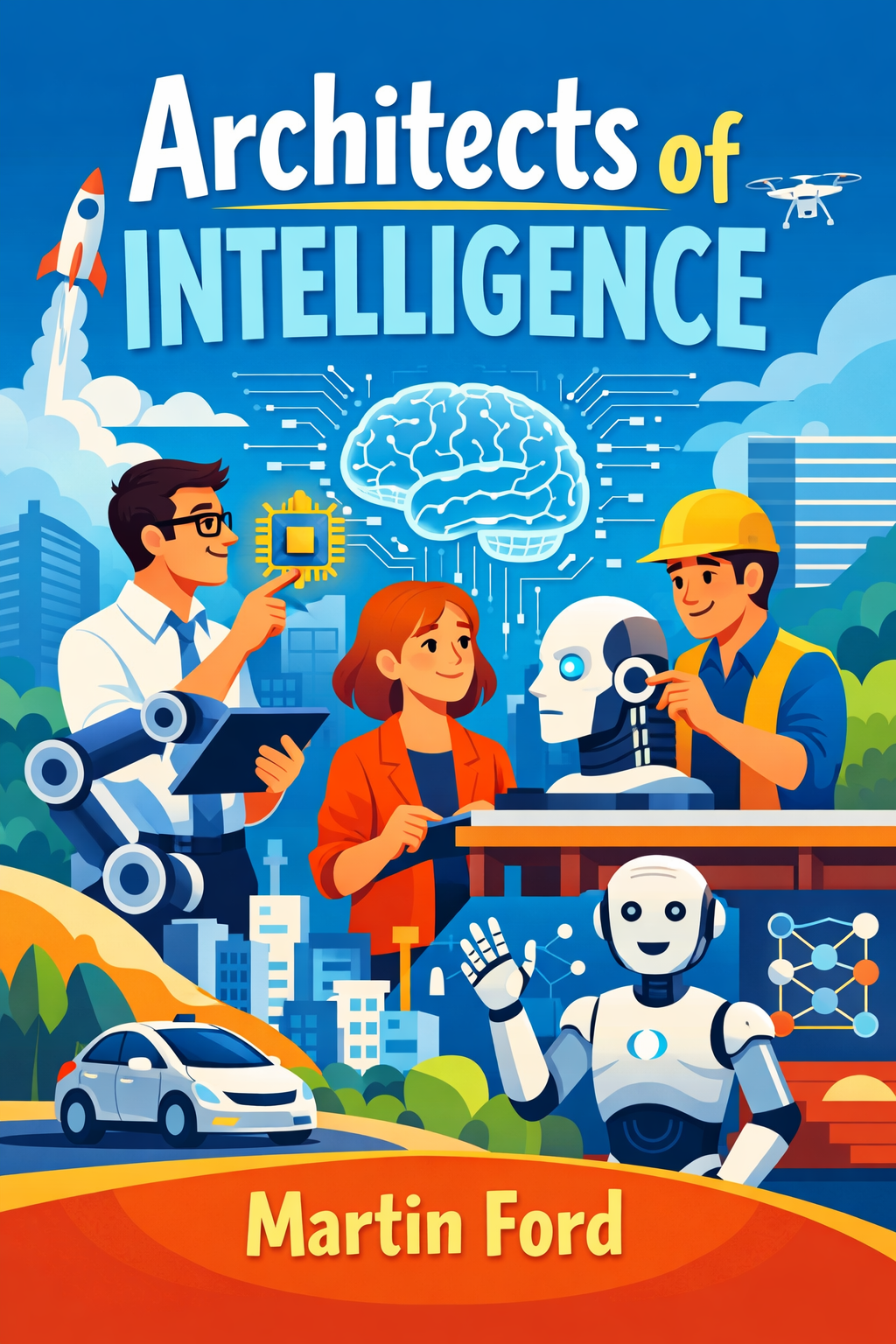
Description
In an era saturated with both hype and fear surrounding artificial intelligence, it is crucial to move beyond sensational headlines and grasp the true nature of this transformative technology. This book serves as a comprehensive guide, distilling wisdom from numerous pioneers in the field to provide a clear-eyed view of AI’s inner workings, its present boundaries, and its possible futures. The journey begins by demystifying how contemporary AI learns. The dominant force behind recent breakthroughs is deep learning, a method where software structures called neural networks are trained on vast amounts of data. Through techniques like supervised learning, where data is meticulously labeled, a machine can be taught to identify a cat in a picture with remarkable accuracy. Another method, grounded language learning, associates words with images or real-world objects, helping AI begin to grasp meaning, not just patterns. These techniques have powered stunning achievements, from digital assistants that understand speech to systems that can defeat world champions in complex games like Go.
However, for all its power, deep learning possesses significant constraints. Current AI excels only at the specific, narrow tasks for which it is trained. A system that masters chess is utterly lost when presented with a game of poker, which involves hidden information and bluffing. This highlights a lack of generalizable intelligence. Furthermore, these systems inherit the biases present in their training data. If historical crime data reflects biased policing, an AI trained on it may perpetuate those same inequities. Most fundamentally, today’s AI lacks common sense—the innate human ability to make reasonable inferences about novel situations. This absence is the primary barrier to creating Artificial General Intelligence (AGI), a machine with the flexible, adaptable understanding of the world that a human possesses.
The path beyond these limitations may lie not in a single technique, but in synthesis. Many researchers believe the key to more advanced AI, and perhaps eventually AGI, is the development of hybrid systems. These would combine the pattern-recognition strength of neural networks with other forms of logic and reasoning. Inspiration is drawn from the human brain, particularly from studying how children learn. Children use a blend of innate cognitive structures, unsupervised exploration, and reinforcement learning—where trying things and receiving feedback strengthens correct pathways. Mimicking this multifaceted approach in machines is a promising frontier. We already see early hybrids in technologies like self-driving cars, which use deep learning to interpret sensor data but rely on pre-programmed rules for critical decision-making in unpredictable scenarios.
Looking at practical applications, AI’s potential to improve daily life is immense and already being realized. Beyond automation, it offers tools to tackle deep-seated human problems like bias. For instance, AI-powered hiring tools that analyze video interviews for nonverbal cues and response quality have been shown to drastically reduce hiring time while increasing workforce diversity. In healthcare, specialized applications like emotion-recognition glasses are helping children with autism interpret social cues, fostering better communication. On a broader scale, AI promises to liberate people from mundane, repetitive tasks, offering the potential for more creative and fulfilling work. Its analytical power is accelerating scientific discovery, particularly in medicine, where it can analyze genetic data, model protein structures, and assist in diagnostics at a scale and speed impossible for humans alone.
Yet, this powerful technology is not without its perils. The same capabilities that can diagnose disease can be weaponized, leading to autonomous weapons systems that make lethal decisions without human intervention. The economic disruption caused by widespread automation is a serious concern, potentially leading to significant job displacement. Thought leaders debate solutions to this, such as universal basic income or state-sponsored education stipends to facilitate career transitions. The ultimate debate, however, swirls around the prospect of AGI itself. Opinions among experts are fiercely divided. Some view it as a distant, overhyped concern, while others warn of an existential risk if a superintelligent system’s goals were to misalign with human values and survival.
This book presents not a single verdict, but a nuanced landscape of informed perspectives. It argues that our future with AI is not preordained; it will be shaped by the choices we make today regarding research, regulation, and ethical implementation. By understanding both the profound benefits and the serious risks, we can steer this powerful architect of change toward a future that enhances human potential, safeguards our society, and reflects our collective values. The narrative we build around intelligence—artificial and human—will ultimately determine the world we inhabit.
Book Title: Architects of Intelligence