Description
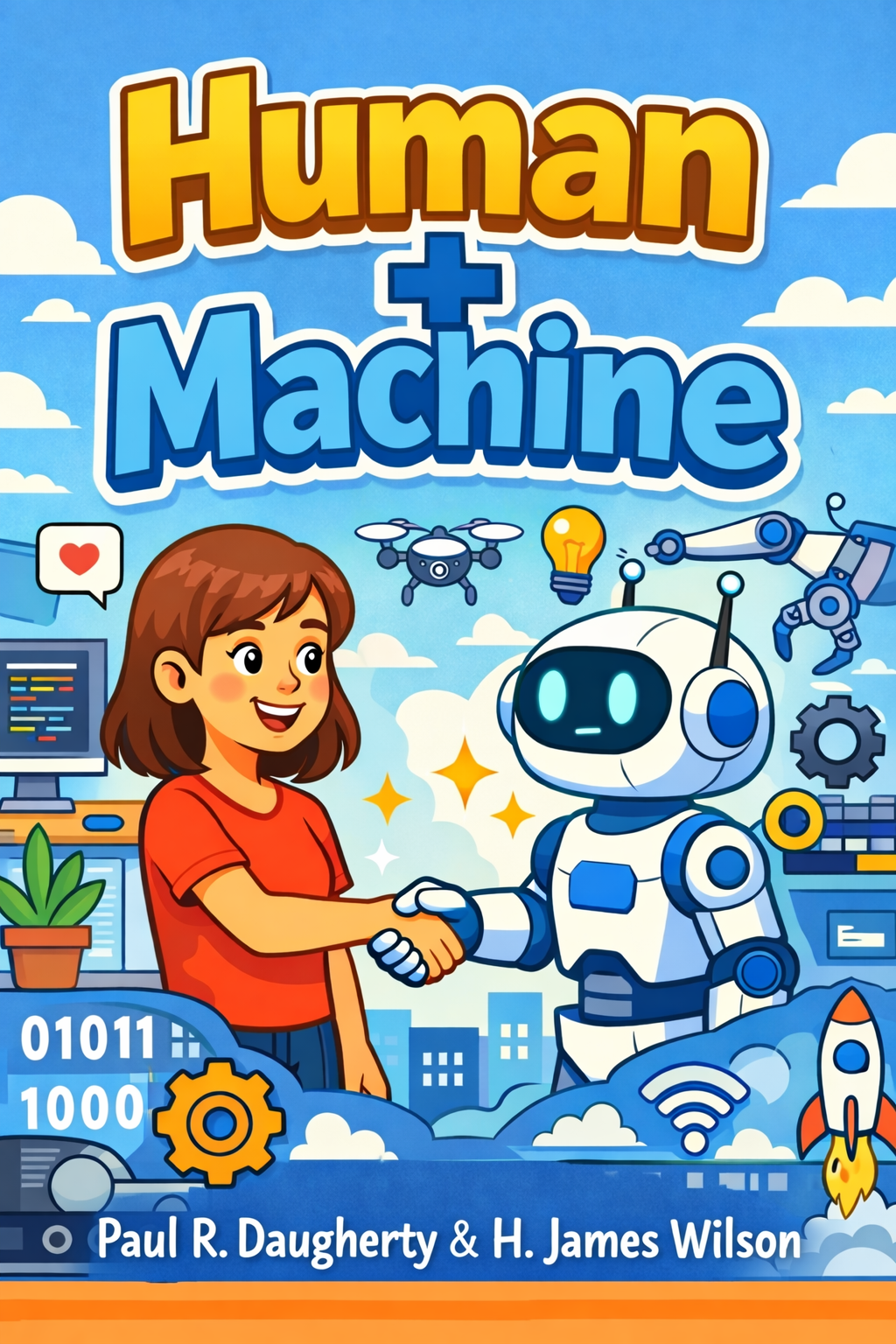
The central premise of this work is that we are not entering an age where machines simply replace humans, but rather a new era of collaboration. The most successful enterprises of the future will be those that master the art of integrating artificial intelligence into their workflows, creating a symbiotic partnership between human intuition and machine power. This partnership is defined by what the authors term “missing middle” jobs—roles and tasks that exist purely at the intersection of human and machine capabilities, which neither could perform alone.
The transformation begins with understanding the fundamental capabilities of AI. The book moves beyond the hype to detail practical applications, focusing on how AI can amplify human skills. Machines excel at repetitive tasks, pattern recognition at vast scale, and predictive modeling. Humans, in contrast, bring to the table critical thinking, emotional intelligence, creativity, and ethical judgment. The magic happens when these strengths are combined. For instance, an AI can analyze millions of customer service interactions to identify common pain points and suggest optimal responses, while a human agent uses empathy and context to deliver the final, nuanced communication. This creates a feedback loop where human actions train the AI, and the AI, in turn, makes the human more effective.
This human-machine symbiosis is revolutionizing every business function. In manufacturing, collaborative robots, or “cobots,” work alongside people on the assembly line, handling dangerous or precise physical tasks while humans oversee strategy and handle exceptions. In healthcare, AI algorithms can review medical images to flag potential areas of concern with superhuman accuracy, but the final diagnosis and compassionate patient conversation remain firmly in the hands of the doctor. The book provides a framework for “reimagining business processes,” urging leaders to deconstruct old workflows and reconstruct them with this new collaborative model in mind. It’s not about automating a job away; it’s about augmenting each step of a process to elevate the human role.
A critical portion of the text is dedicated to leadership and corporate culture in this new age. Implementing AI successfully requires more than just buying software; it demands a shift in mindset. Leaders must foster a culture of continuous learning and adaptability, where employees are encouraged to experiment with AI tools and redefine their own roles. Resistance often stems from fear of obsolescence, so transparent communication about the “augmentation, not replacement” philosophy is vital. Companies must invest in reskilling initiatives, helping their workforce develop the uniquely human skills that will become even more valuable—skills like complex problem-solving, leadership, and creative design. The organization itself must become agile, capable of iterating on AI implementations rapidly based on feedback from both systems and people.
Furthermore, the book delves into the ethical and practical considerations of this partnership. As AI systems make more recommendations and decisions, questions of bias, accountability, and transparency come to the fore. The authors argue for “responsible AI,” where humans remain firmly in the loop for critical judgments, especially those with ethical dimensions. They introduce the concept of “auditing the algorithm,” ensuring that the data feeding AI is unbiased and that its conclusions can be explained and challenged. This human oversight is not a limitation of the technology but its essential safeguard, building trust both within the organization and with the public.
Ultimately, the message is one of optimism and agency. The dawn of AI is not a force of nature to which we must passively submit. It is a tool, and its impact will be shaped by human choices. By proactively designing systems that leverage the complementary strengths of human and machine, we can create a future of work that is more productive, more innovative, and more human. The book concludes that the winners in the next economy will be those who see AI not as a cost-cutting automation engine, but as the ultimate collaborative partner, unlocking potential we have only begun to imagine.