Description
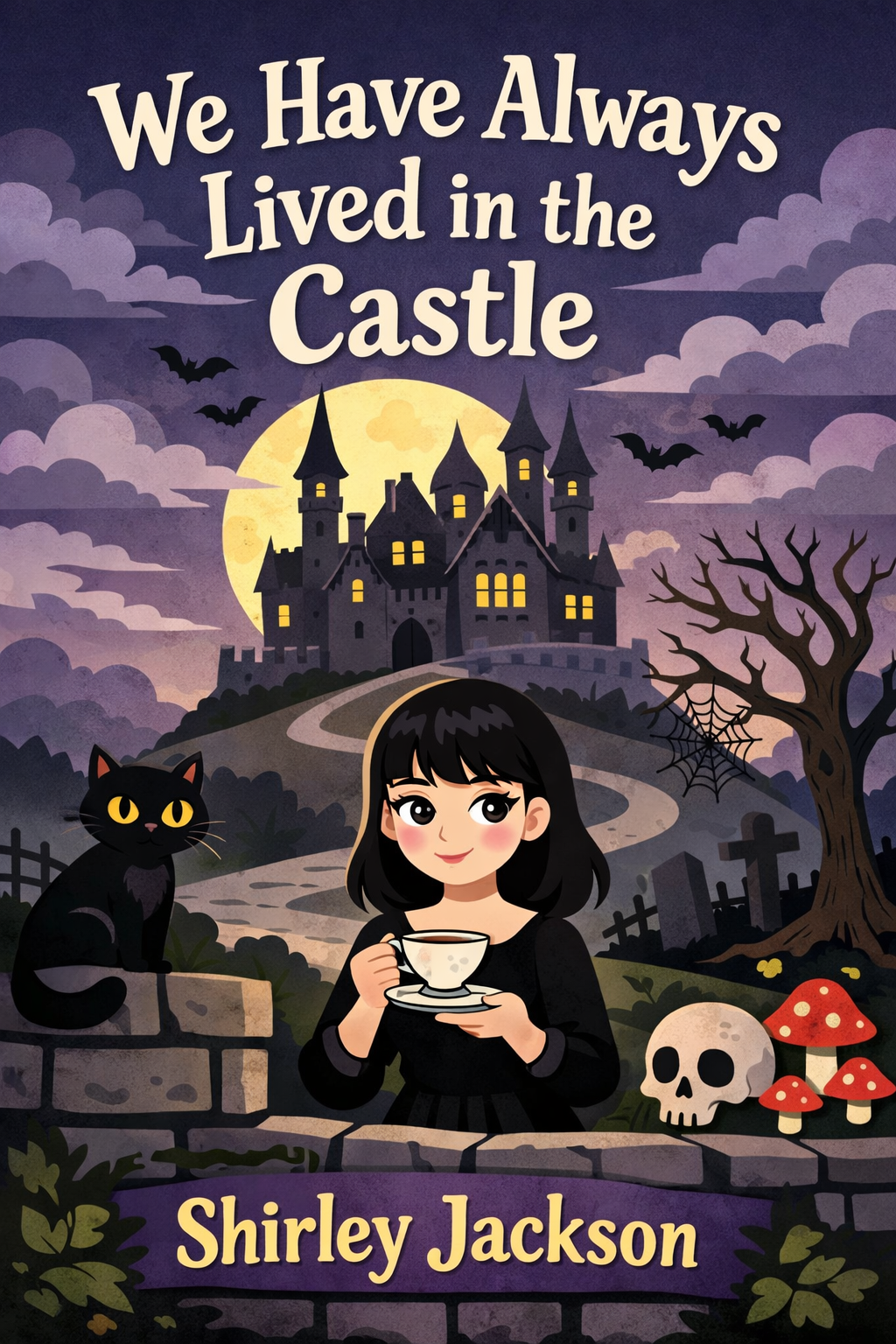
Shirley Jackson’s final novel is a masterful exploration of isolation, persecution, and the creation of a private reality. Told through the singular, unsettling voice of eighteen-year-old Mary Katherine “Merricat” Blackwood, the story unfolds in a cloistered world where the boundaries between protection and imprisonment, love and obsession, are hauntingly blurred. Merricat lives with her gentle sister Constance and their infirm Uncle Julian in a large family home on the outskirts of a hostile village. Six years prior, the rest of the Blackwood family died at the dinner table, poisoned by arsenic sprinkled on blackberries. Constance, who prepared the meal but did not eat the dessert, was tried and acquitted, though the town’s verdict of guilt remains. This event cemented the sisters’ exile, with Constance becoming agoraphobic, tending her garden and kitchen, while Merricat acts as a brittle protector, venturing out only for supplies and enduring the villagers’ taunts and open hatred.
Merricat’s narration immediately establishes her unique psyche. She fantasizes about being a werewolf, collects charms, and buries objects to cast protective spells around the property. Her love for Constance is absolute and possessive, her world neatly divided into the safety of their home and the evil that lies beyond its fence. Uncle Julian, wheelchair-bound and mentally addled by the poison, obsessively documents the details of the fatal night, a living relic of the tragedy. Their fragile equilibrium is shattered by the arrival of Cousin Charles, a figure from the despised outside world who embodies a different kind of threat. Charismatic and manipulative, Charles insinuates himself into the household, focusing his attention on Constance and expressing a keen interest in the family’s finances and silver. To Merricat, he is a ghost, an invader whose presence pollutes their sanctuary. She wages a private, magical war against him, her attempts to drive him out growing increasingly desperate.
The tension Charles introduces culminates in catastrophe. After one of Merricat’s acts of defiance, a fire ignites, gutting the Blackwood home. The villagers, who arrive to fight the flames, transform into a vengeful mob. In a chilling scene, they stand by and even participate in the destruction, hurling stones through the remaining windows and chanting hatefully. This moment of collective violence lays bare the town’s deep-seated animosity, their need to tear down what they have always resented: the Blackwoods’ difference, their wealth, their refusal to conform. In the fire’s aftermath, Charles, seeing nothing of value left to claim, abandons the sisters. With Uncle Julian perishing in the chaos, Merricat and Constance are left alone amidst the blackened ruins of their house.
What follows is not an escape, but a profound retreat. The sisters do not seek a new life elsewhere; instead, they barricade themselves within the scorched, inhabitable shell. They board up the broken windows, creating a permanent twilight, and live in the few remaining rooms, cooking on a makeshift stove. The world they once feared now literally cannot see inside. The villagers, consumed by guilt and shame after their riot, begin to leave offerings of food on their doorstep—a silent, penitent tribute. The house, once a symbol of ostracized wealth, truly becomes their castle: a fortress of their own making, stripped of everything but their absolute devotion to one another. Merricat, finally, has achieved her perfect world. “We are so happy,” she concludes.
Jackson’s genius lies in her ability to make this conclusion feel not like a tragedy, but a dark, twisted victory. The novel is a profound study of the psychology of exclusion and the lengths to which individuals will go to preserve a sense of safety and autonomy. Merricat, for all her childishness and potential madness, is a compelling lens through which to view the cruelty of societal judgment. The story challenges the reader to question who is truly monstrous: the peculiar, possibly murderous sisters who wish only to be left alone, or the “normal” society that persecutes them with such relentless, mob-driven cruelty. In the end, the castle is not a prison, but a sovereign kingdom of two, a chilling and unforgettable testament to the power of shared fantasy to withstand a hostile reality.