Description
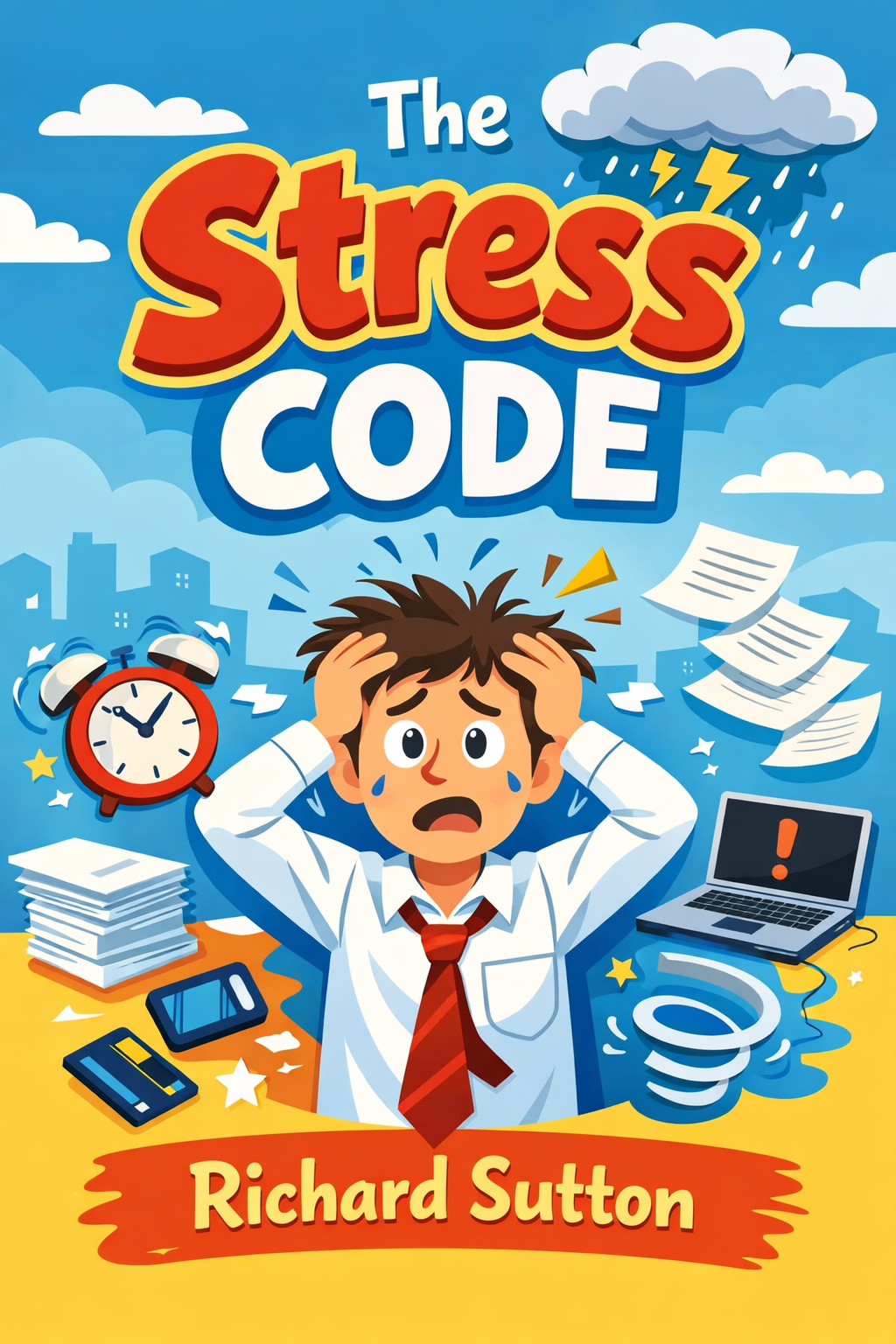
In our modern world, stress has become a constant, unwelcome companion. We wear busyness as a badge of honor, our schedules overflowing as technology erodes the boundaries between work and rest. This relentless pace, coupled with a cultural obsession with success and a deep fear of failure, has pushed our stress levels to unprecedented heights. The consequence is a profound imbalance, where our bodies and minds are stuck in a state of high alert with little opportunity for true recovery. But what if our relationship with stress could be transformed? This exploration argues that stress is not an enemy to be eliminated, but a powerful force to be understood and mastered. The goal is not a stress-free life—an impossible dream—but a life where stress becomes a catalyst for growth rather than a source of decay.
A primary source of this chronic pressure is the workplace, but the root cause might surprise you. It is not responsibility alone that breeds distress, but a pervasive feeling of powerlessness. Landmark studies revealed that employees with the least control over their work and decision-making suffered the worst health outcomes, including a significantly higher risk of early mortality. When we feel like cogs in a machine, with no autonomy or voice, stress becomes toxic. This sense of helplessness triggers a biological cascade that, over time, wears down both mind and body. The solution, therefore, lies not just in personal coping mechanisms but in reshaping our environments. Organizations that foster autonomy, provide social support, and involve employees in meaningful ways don’t just create happier teams—they unlock higher performance and resilience.
To manage stress, we must first understand its mechanics. Our body’s stress response is a brilliant, ancient survival system, activating in two powerful waves. The first is the immediate “fight-or-flight” surge: adrenaline floods the system, sharpening our senses, pumping energy to our muscles, and priming us for action. Following this, the second wave releases cortisol, a hormone designed to regulate the initial frenzy and manage inflammation. In short, acute bursts, this process is heroic—it helps us ace a presentation, react quickly in an emergency, or push through a final challenge. However, our modern lives are filled not with occasional physical threats, but with persistent psychological ones—endless emails, financial worries, social comparisons. This triggers the same primal response, but now it’s stuck on repeat. The constant drip of adrenaline and cortisol, meant for short-term crises, becomes a poison that disrupts nearly every system in the body.
This leads to the insidious reality of chronic stress. It is no longer just about feeling tired or anxious on a tough day; it is a sustained state of wear that fundamentally damages our long-term health. When the stress response fails to shut off, it contributes to digestive disorders, weight gain, cognitive fog, and a weakened immune system. Over years, it significantly elevates the risk for heart disease, stroke, and autoimmune conditions. The author’s own experience—a physical collapse from intense isolation and unrelenting pressure—serves as a stark personal testament to how our bodies eventually rebel when pushed too far for too long. The narrative of burning out for success is not a badge of honor but a path to breakdown.
Yet, there is a flip side. Not all stress is destructive. In measured doses, it is essential for growth, a concept known as eustress. This is the positive tension that stretches us beyond our comfort zones—the nervous excitement before a creative project, the focused drive to learn a new skill, the exhilarating challenge of physical competition. Like athletes who strategically stress their muscles to make them stronger, we can use manageable challenges to build mental and emotional fortitude. The key is the dose and our recovery. Athletes don’t train at maximum intensity every day; they cycle between stress and deep rest. This holistic approach, viewing stress as a training variable rather than a villain, is the model we must adopt for life.
The cornerstone of managing this cycle is learning to activate the body’s built-in “brake” on the stress response: the vagus nerve. This intricate nerve network is the command center of our relaxation system. When engaged, it sends signals to slow the heart rate, deepen breathing, and promote a state of calm. Simple, accessible practices can stimulate this nerve. Controlled, slow exhalations—making your out-breath longer than your in-breath—is one of the most immediate tools. Humming, singing, or gentle gargling can also trigger its calming effects. By regularly practicing these techniques, we build resilience and gain the power to downshift from a state of panic to one of presence.
Our daily lifestyle choices form the foundation upon which our stress resilience is built. Nutrition plays a critical role; consuming whole, anti-inflammatory foods stabilizes our energy and mood, while processed foods and excess sugar can exacerbate stress’s physical toll. Movement is equally vital—not as a punishing regimen, but as a celebration of what our bodies can do. Regular exercise metabolizes excess stress hormones and releases endorphins. Perhaps most profoundly, we must reconnect with the natural world. Spending time outdoors, especially in green spaces, has a measurable, soothing effect on our nervous system, lowering cortisol and restoring a sense of perspective often lost in artificial environments.
Ultimately, mastering stress is about moving from a state of reaction to one of skillful response. It requires recognizing that while we cannot control every external pressure, we have immense power over our internal landscape. By understanding its dual nature—both its destructive potential and its capacity to fuel achievement—we can reframe our relationship with this fundamental energy. The path forward is holistic, integrating moments of deliberate calm through vagus nerve stimulation, nurturing our bodies with mindful nutrition and movement, and designing environments, both at work and home, that foster autonomy and recovery. The code to stress is not a secret to eliminating it, but a manual for harnessing its power, transforming it from a source of fear into a force for a healthier, more vibrant, and accomplished life.