Description
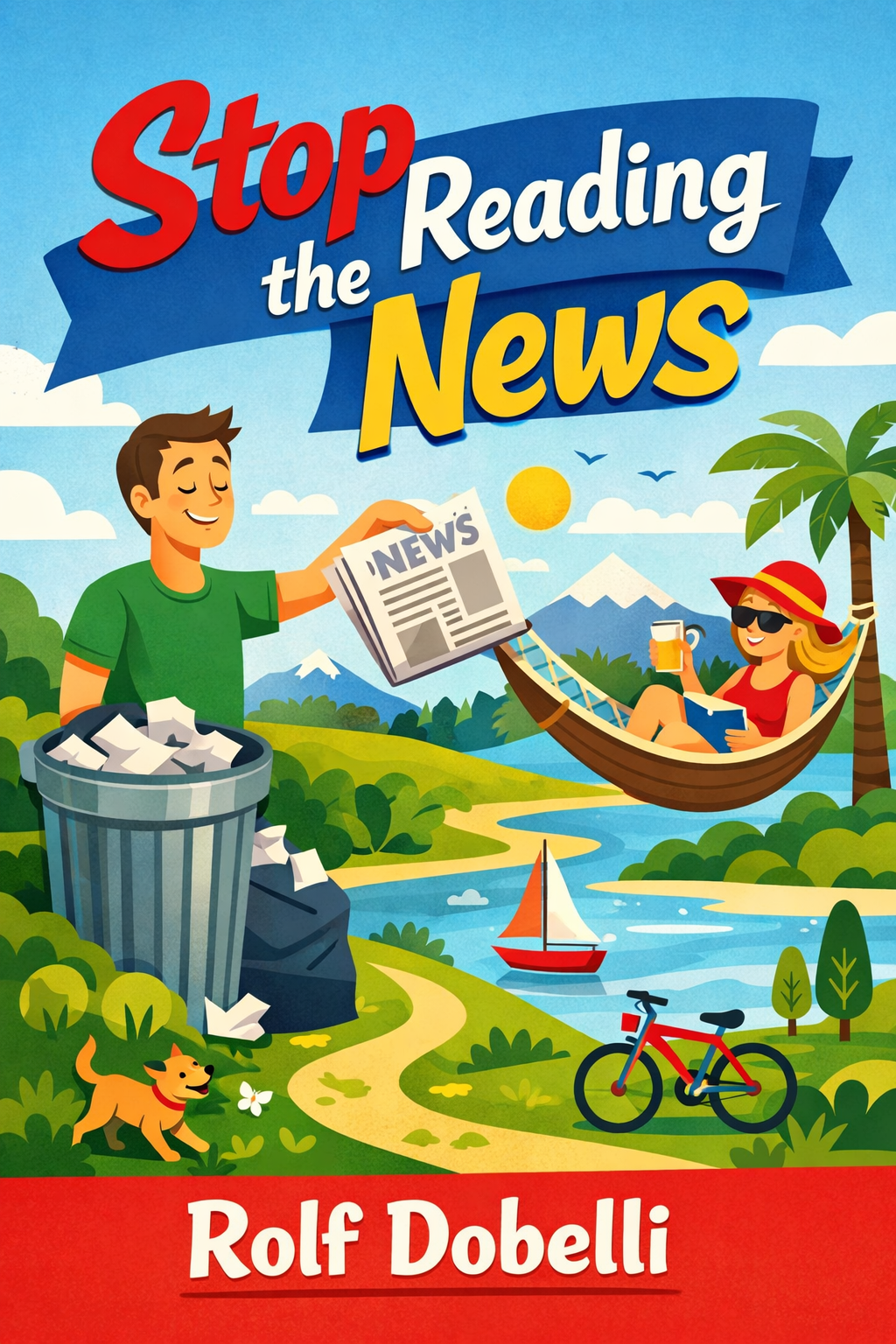
From a young age, the author was captivated by the world of news, associating it with sophistication and intellectualism. What began as a weekend ritual in a library reading room evolved into a compulsive habit, supercharged by the internet and smartphones. He found himself surrounded by a constant stream of headlines, notifications, and updates, feeling perpetually connected to global events. However, this connection came at a steep personal cost: a creeping anxiety, a shattered attention span, and an inability to engage with deeper, longer-form content. This personal crisis sparked a fundamental question about the value of this endless consumption and led to a radical conclusion: the news, in its modern form, is a net negative for our lives.
The very definition of news is part of the problem. Since the first daily newspapers, the industry’s driving force has been novelty, not relevance. The goal has always been to capture fleeting attention, to sell papers or generate clicks, rather than to inform citizens about what genuinely impacts their existence. Today’s digital landscape has amplified this to an extreme, flooding us with minute-by-minute updates on events—celebrity scandals, distant tragedies, political theatrics—over which we have no control and which seldom alter the course of our personal worlds. We are hooked on a cycle of novelty that pulls our focus away from our health, our relationships, and our immediate communities, creating a false sense of being informed while starving us of what is truly meaningful.
This constant consumption actively reshapes our brains for the worse. Neuroscience reveals that our brains are malleable, constantly rewiring based on our habits. Immersing ourselves in the rapid-fire, fragmented nature of news strengthens neural circuits for skimming and multitasking while weakening those essential for sustained concentration, deep reading, and profound thought. Like a muscle that atrophies from lack of use, our capacity for focus diminishes. We become trained to seek the next hit of information, leaving us restless and unable to engage with books, complex ideas, or our own uninterrupted thinking. The author argues we are effectively training our brains to prioritize distraction.
The damage is not merely cognitive; it is physiological. News media exploits our innate negativity bias—an evolutionary trait that makes us pay more attention to potential threats. Consequently, headlines are dominated by disaster, conflict, and fear. This relentless barrage of bad news acts as a chronic psychological stressor, triggering the release of cortisol and adrenaline. Over time, this weakens the immune system, disrupts digestion, and contributes to anxiety. The stress itself then erodes willpower, making it harder to break the very habit that causes the stress, trapping us in a vicious cycle of unhealthy consumption.
Furthermore, the author dismantles the common justification that news consumption makes us responsible citizens. He contends that following the news is not the same as being informed in a way that leads to effective action. The vast majority of news stories are about events we cannot influence, creating a paradox of powerlessness disguised as awareness. Real change happens through deep, focused understanding within our “circle of competence”—the areas where we have genuine knowledge and agency—and through direct, local engagement. The scattered, superficial awareness gained from headlines more often leads to vague outrage or paralysing despair than to constructive contribution.
The solution proposed is intentionally radical: a complete and sudden cessation. Trying to moderate news intake, the author suggests, is like an addict trying to just have one drink; the pull of the habit and the design of the platforms are too powerful. The practical path involves deleting news apps, disabling notifications, avoiding news websites, and perhaps even cancelling subscriptions. It is about creating physical and digital barriers to replace a bad habit with the space for better ones.
This abstinence is not an act of social negligence. Democracy, the author asserts, does not depend on citizens feverishly consuming breaking headlines. It thrives on citizens who can think critically, engage in reasoned debate, and contribute their skills meaningfully to society—all capacities diminished by news addiction. A healthier, more focused populace, free from the anxiety of the endless news cycle, is better equipped to participate in civic life from a place of strength and clarity, not reactive panic.
Ultimately, the book is an invitation to reclaim a precious resource: your attention. It argues that by quitting the news, you are not turning your back on the world, but rather turning toward your own life with greater presence. The time and mental energy recovered can be invested in reading books for depth, nurturing relationships, developing expertise, and engaging with your local community. The promise is a calmer mind, a sharper focus, and a life oriented not by the chaotic agenda of the newsroom, but by your own values and purpose.