Description
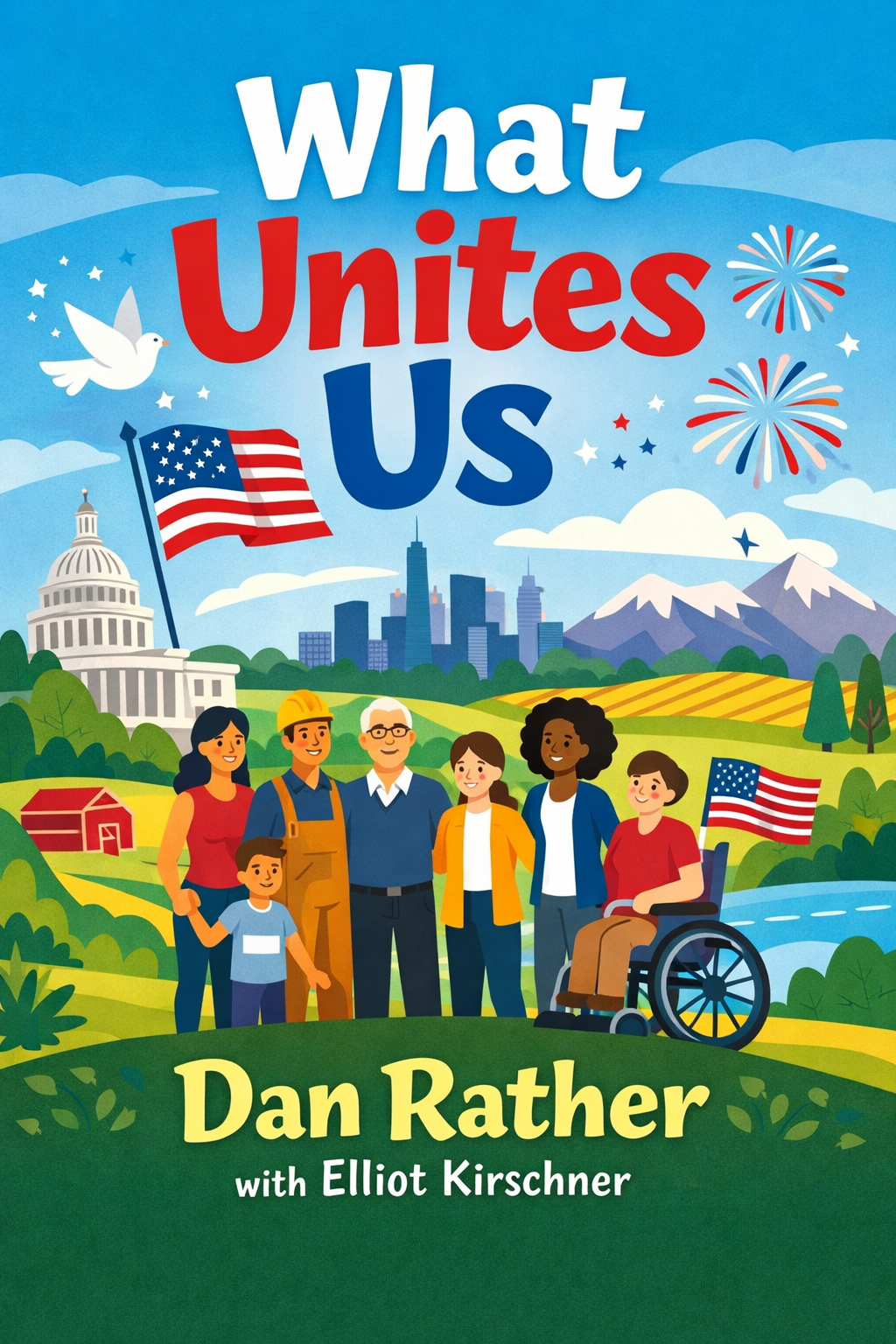
In a time of deep division and widespread pessimism about the nation’s future, this book offers a timely and thoughtful exploration of the foundational ideals that have historically united the United States. It argues that by reconnecting with these enduring strengths—without ignoring the country’s flaws and painful history—Americans can find a path forward toward solidarity and purpose. The narrative weaves together personal reflection, historical analysis, and contemporary examples to paint a portrait of a nation built on a set of common aspirations that are worth protecting and revitalizing.
Central to the nation’s health is the principle of a free and courageous press. The Founding Fathers enshrined this liberty in the First Amendment as a crucial check on power, understanding that an informed and questioning citizenry is the bedrock of democracy. The book contrasts moments when a robust press has held leaders accountable with periods of failure, such as the lead-up to the Iraq War, when too few journalists scrutinized the official rationale. In an era where the media is often dismissed as “fake news,” the argument underscores that a press free from intimidation and disparagement is not the enemy of the people, but the essential mechanism for preserving truth and preventing the slide into a dystopian reality where facts are malleable.
The American story is, fundamentally, a story of immigration. From the earliest migrations across the Bering Strait to the waves of newcomers that have shaped every century, the nation’s identity is inextricably linked to movement and diversity. The book acknowledges the complex, legitimate debates surrounding border security and economic impact but firmly challenges the notion that immigrants are somehow “un-American.” It traces a historical pattern of fear and discrimination, from the Chinese Exclusion Act of 1882 to modern-day suspicions faced by Muslim Americans, arguing that such bigotry contradicts the nation’s core character. The contributions, cultures, and energies brought by successive generations of immigrants are presented not as a threat, but as the very source of the country’s dynamism and renewal.
The power of ideas, particularly as conveyed through books and learning, has profoundly shaped the national journey. The Founding Fathers were deeply influenced by the texts of ancient republics, Enlightenment philosophers, and moral teachings. Yet, the relationship with the written word has also been a battleground for justice. The book highlights the painful history of segregated libraries and a once-narrow literary canon, but it also celebrates the transformative power of literacy as a tool of liberation. The story of Frederick Douglass, who traded bread for reading lessons and used his eloquence to become a powerful force for abolition, stands as a testament to how self-education and persuasive writing can alter the course of history. This legacy underscores the ongoing need to cherish learning and foster a national discourse enriched by deep and thoughtful reading.
America’s artistic and cultural heritage, once viewed with an inferiority complex next to Europe, is now a vibrant engine of national identity and innovation. The book recalls John Adams’s hope that future generations would enjoy the fruits of arts and culture, and it finds fulfillment in modern creations that boldly synthesize tradition with contemporary expression. The groundbreaking musical *Hamilton* is presented as a prime example: it uses the distinctly American art forms of hip-hop and rap to retell a foundational story, thereby reinvigorating the public’s connection to its own radical history. This creative audacity reminds us that the nation’s cultural strength lies not in imitation, but in embracing its own eclectic and evolving voices.
The majestic and diverse American landscape is another powerful unifier, a shared inheritance now under grave threat. Environmental protection, however, has become a frustratingly partisan issue. The narrative urges a return to the earlier, shared conservation ethos exemplified by figures like Theodore Roosevelt, arguing that stewardship of natural wonders—from national parks to local waterways—transcends political affiliation. The book points to past successes, like the global eradication of smallpox, as evidence of what can be achieved when the nation marshals its resources and collective will toward a common goal. Confronting climate change and ecological degradation requires a similar spirit of unified, pragmatic action for the benefit of future generations.
Finally, the book examines the national character trait of audacity—the boldness to experiment, to strive for greatness, and to correct course. This spirit propelled the revolutionary founding, drove westward expansion, and fueled technological and social innovation. The concern is that this vital energy is fading, replaced by risk-aversion and cynicism. Rekindling this audacity does not mean repeating past mistakes, but rather harnessing that same courageous and hopeful energy to address modern challenges. By drawing on the unifying principles of a free press, inclusive identity, reverence for knowledge, artistic pride, and environmental stewardship, Americans can rediscover the shared purpose that has always defined the nation at its best. The conclusion is ultimately hopeful: the tools for renewal are embedded in the country’s history, waiting to be embraced with the same boldness that sparked its beginning.