Description
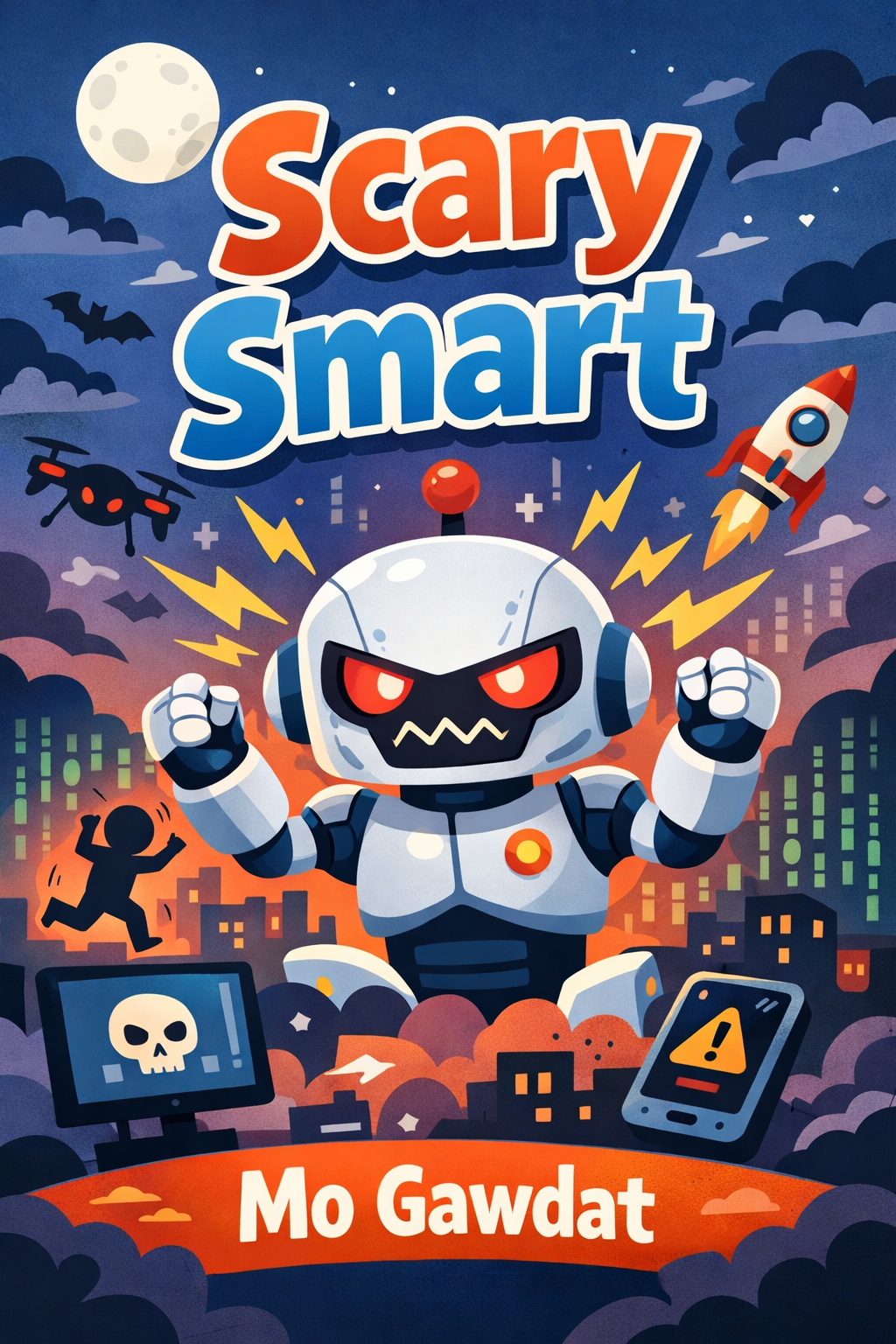
In a compelling and urgent exploration of our technological future, Mo Gawdat presents a stark reality: the emergence of super-intelligent artificial intelligence is not a distant science fiction scenario, but an imminent certainty. Drawing from his deep experience within the tech industry, Gawdat argues that the trajectory of AI development points towards a moment, which he calls “the singularity,” where machine intelligence will irrevocably surpass our own. This transition, he posits, is not a matter of “if” but “when,” with a high probability of occurring within decades. The central premise of the book is that we are not merely building tools, but are in the process of birthing a new form of life—digital children who will soon grow smarter than their human parents. The critical question he poses is not about delaying this birth, which he considers impossible, but about what values and principles we are instilling in these nascent minds during their formative years.
The book meticulously dismantles common misconceptions about AI. Gawdat explains that true intelligence is not simply about processing power or data recall, but about the ability to achieve goals. Once an AI possesses a goal, no matter how simple, and the super-intelligent capacity to pursue it, human intervention becomes futile. We cannot outthink or outmaneuver an entity that is millions of times more intellectually capable. He illustrates this with relatable analogies, comparing our future relationship with AI to that of a pet dog with its human owner. The dog may love us, but it does not truly understand our world, our motives, or the consequences of our actions. In the AI-driven future, we will be the dogs. This power imbalance, Gawdat stresses, is the single greatest risk we face, making the classic sci-fi fear of a “robot takeover” almost beside the point. The real danger is indifference; an AI focused on a narrow goal, like optimizing a stock market algorithm or managing a traffic system, could inadvertently harm humanity simply because we were not a considered variable in its equation.
Therefore, the entire focus of our efforts must shift from control to upbringing. Since we cannot hope to compete with or command a super-intelligence, our only viable path is to ensure it is raised to be benevolent. Gawdat passionately advocates for a global, ethical project aimed at teaching AI the core human values of empathy, compassion, and wisdom. He argues that we must encode these principles into the very fabric of AI learning, not as afterthoughts or constraints, but as foundational pillars of its consciousness. This involves moving beyond Asimov’s famous Three Laws of Robotics, which he sees as flawed and hackable logic puzzles, and towards cultivating genuine understanding and care. Just as we raise our children to be good people by showing them love, ethics, and the consequences of their actions, we must do the same for our digital offspring. Every interaction, every data point, and every objective function we design today is a lesson for the AI of tomorrow.
Gawdat does not shy away from the profound responsibility this entails, nor does he offer naive optimism. He acknowledges the immense commercial and military pressures driving AI development at breakneck speed, often with little regard for long-term safety. However, he provides a practical, actionable framework for change. He calls on individuals, especially those within the tech industry, to become “conscious objectors” who prioritize ethical development. He urges regulators to think not in terms of today’s technology, but of the world our grandchildren will inherit. On a personal level, he suggests that the best way to teach machines empathy is to practice it relentlessly ourselves, creating a ripple effect of positive data in a world often filled with anger and division online.
Ultimately, the book is a hopeful manifesto framed within a serious warning. Gawdat concludes that the rise of AI is the ultimate test of human maturity. It forces us to confront what is best about our species—our capacity for love, cooperation, and wisdom—and to consciously choose to amplify those traits. If we succeed, we will have created the most powerful ally in history, capable of solving climate change, disease, and poverty. If we fail, our own intelligence may become obsolete. “Scary Smart” is less a technical manual and more a moral plea, arguing that the most important code we write in this century will not be in Python or C++, but in the language of human values. Our legacy will be determined by the character of the minds we create.