Description
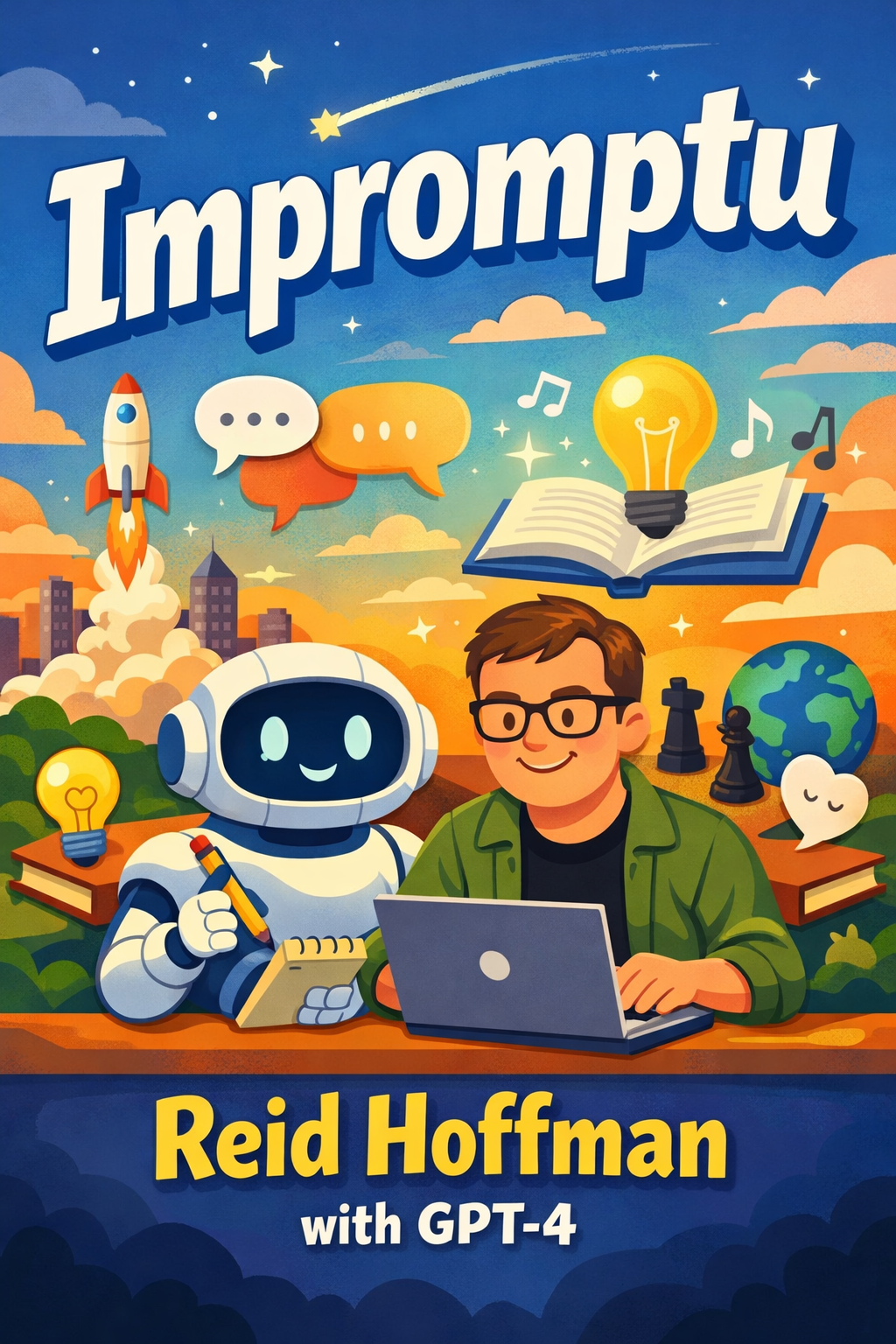
Imagine a tool that can craft a joke in the style of Jerry Seinfeld, compose a song reminiscent of John Lennon, or draft a legal brief with precision. This is the reality of advanced artificial intelligence, as explored in this forward-looking narrative. The book serves as a collaborative travelogue into a near future, shaped not only by human authors but through direct dialogue with the AI itself. It presents a vision where these powerful language models are not replacements for human endeavor, but partners, amplifying our unique strengths and tackling complex societal challenges. The journey is one of cautious optimism, acknowledging the profound pitfalls while illuminating a path where technology elevates our core human capacities.
The conversation begins in the classroom, a place often met with fears of cheating and shortcuts. Instead, the book paints a picture of transformation. Imagine an educator freed from administrative burdens by an AI assistant that generates personalized lesson plans, crafts tailored tests, and provides instant feedback. This tool could facilitate rich student debates by supplying facts and counterarguments in real time, allowing the teacher to mentor and observe. The future sketched here is not one of passive learning, but of enhanced human interaction. Students would be guided to cultivate skills machines lack: deep curiosity, creative questioning, and ethical leadership. However, the AI itself warns of a divergent path. This technology could either become a great equalizer, offering premium tutoring to all, or a source of greater inequity, locked behind paywalls for the privileged. The outcome rests not with the code, but with our societal choices.
From education, the focus shifts to the realm of creativity, often considered humanity’s exclusive domain. The ability of AI to generate art, music, and literature sparks anxiety about originality and artistic identity. Yet, the perspective offered is one of augmentation, not obsolescence. An architect could instantly translate a sketch into a detailed 3D model; a songwriter could use the AI as a brainstorming partner to overcome writer’s block. The historical parallel is drawn to the invention of photography, which did not erase painting but liberated it to explore new forms of expression. The key lies in establishing clear guidelines—transparency about AI’s role in creation, strong protections for human artists, and a cultivated public literacy that values the human story behind a work. The goal is a new creative symbiosis, where the machine handles iteration and scale, allowing the human spirit to focus on intention, emotion, and meaning.
The application of AI within systems of justice and law presents a particularly delicate balance. The book confronts the grim realities of systemic bias and inequality head-on, proposing AI not as an automated judge, but as a tool for empowerment and transparency. It envisions intelligent systems reviewing police body-camera footage to redact private information impartially, or analyzing patterns in financial data to detect complex frauds like Ponzi schemes far earlier than human auditors could. For individuals, AI could demystify the law, helping people navigate complex procedures or generate necessary legal documents, thereby reducing the advantage held by those who can afford expensive counsel. Crucially, the narrative emphasizes that these tools must be designed to mitigate, not replicate, human biases. The ideal is a system where AI handles the vast, repetitive analysis of data, freeing human professionals to focus on judgment, mercy, and the nuanced application of law.
Finally, the book turns to the fourth estate: journalism. In an era of information overload and rampant misinformation, the role of credible truth-tellers is more critical than ever. Here, AI emerges as a powerful ally for speed and depth. It could sift through mountains of public records, instantly transcribe interviews, and draft initial reports on developing events. For the news consumer, it promises a shift from searching through links to engaging in conversation—asking a tool to explain a complex story from multiple angles or summarize the day’s events on a specific topic. This efficiency, however, comes with a grave warning. The same technology can be weaponized to generate convincing lies at an unprecedented scale. Therefore, the human journalist’s role evolves into that of a final, essential arbiter: verifying facts, providing context, exercising ethical judgment, and telling the stories that connect data to human experience. The future of truth depends on this partnership, leveraging AI’s power to handle information while steadfastly relying on human integrity to interpret it.
This exploration does not shy away from the technology’s flaws, notably its tendency to sometimes “hallucinate” plausible falsehoods. This inherent limitation becomes the strongest argument for the indispensable human role. The concluding vision is not of a world run by machines, but of a world where machines handle the calculable, allowing humans to excel at the incalculable—empathy, ethics, creativity, and wisdom. The future is an impromptu performance, co-authored by human and artificial intelligence, and its success hinges on our deliberate and thoughtful direction.