Description
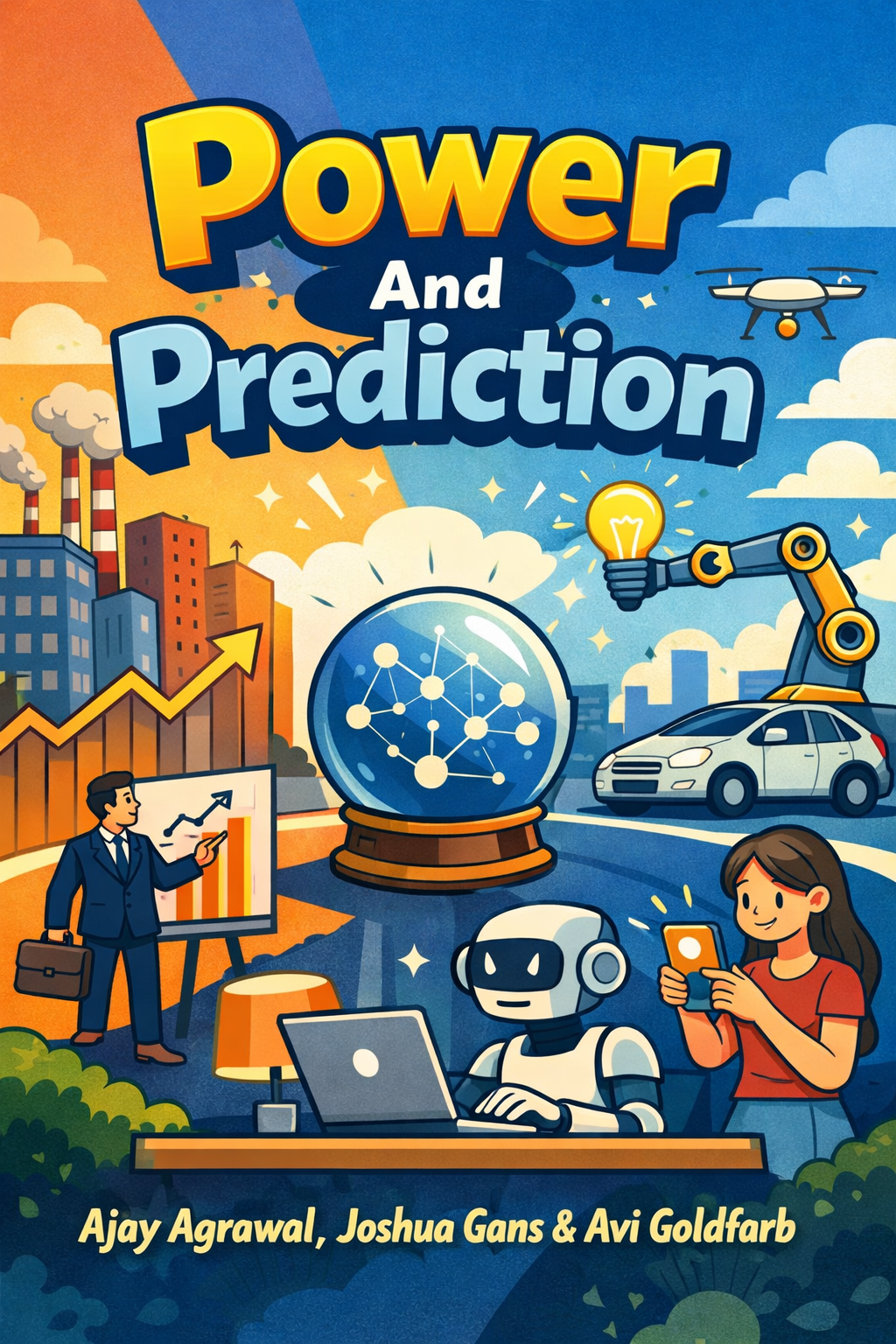
At the heart of this exploration is a simple yet transformative idea: to unlock the full potential of artificial intelligence, we must learn to separate the act of prediction from the act of judgment in our decision-making processes. For centuries, these two elements have been tightly woven together in the human mind. We gather data, forecast outcomes, weigh values and risks, and choose a course of action all in one integrated, often intuitive, process. The book posits that AI’s greatest gift is its ability to excel at the prediction component—processing vast amounts of information to forecast probabilities with startling accuracy. This allows for a new division of labor, where machines handle the complex predictive legwork and humans concentrate on the nuanced application of judgment.
The argument begins by redefining prediction in the broadest economic sense. It is not merely forecasting the weather or stock prices; it is the fundamental process of filling in missing information. When a doctor diagnoses an illness, they are predicting the underlying condition from symptoms. When a manager hires an employee, they are predicting future performance. When you brake at an amber light, you are predicting the behavior of other drivers. AI, particularly machine learning, is a prediction engine. It takes the information you have and generates the information you need. By viewing AI through this lens, its potential applications expand dramatically beyond obvious tasks.
The crucial next step is understanding what this decoupling enables. When prediction becomes cheap, fast, and abundant, the bottleneck for good decisions shifts. It is no longer about who can make the best guess, but about who can exercise the best judgment. Judgment involves determining the relative value of different outcomes, applying ethical considerations, understanding context, and navigating uncertainty beyond the predictive model’s scope. For instance, an AI might predict with 95% accuracy that a particular medical treatment will extend a patient’s life by five years. But the judgment of whether to pursue that treatment—considering side effects, quality of life, patient desires, and cost—remains a profoundly human responsibility. The book illustrates this with vivid examples, from a firefighter in a burning building using an AI to predict structural collapse in seconds, to a business leader using demand forecasts to decide which new market to enter.
This shift forces a reevaluation of systems and business models. The authors introduce the concept of “the prediction gap”—the space between what current systems are designed to do and what they could do with cheap AI-powered prediction. Often, we try to bolt AI onto old processes, which leads to marginal gains. True transformation, however, comes from redesigning systems from the ground up around this new, abundant resource. The book examines industries like insurance, healthcare, and logistics, showing how decoupling prediction can lead to entirely new services and ways of operating. An insurance company might move from assessing annual risk to providing real-time, dynamic pricing based on continuous prediction of driver behavior. A supply chain can become not just efficient, but resilient, by using AI to predict and navigate disruptions before they happen.
Ultimately, the message is one of empowerment and necessary adaptation. AI is not an omniscient oracle meant to automate away human choice. It is a tool that, by mastering prediction, elevates the importance of human judgment, ethics, and creativity. The future will belong not to those who can out-compute the machines, but to those who can best ask the right questions, interpret the predictions wisely, and make decisions aligned with human values and goals. The book concludes that our task is to cultivate these irreplaceably human skills while building the new systems and institutions that will thrive in an age of abundant, AI-driven prediction.