Description
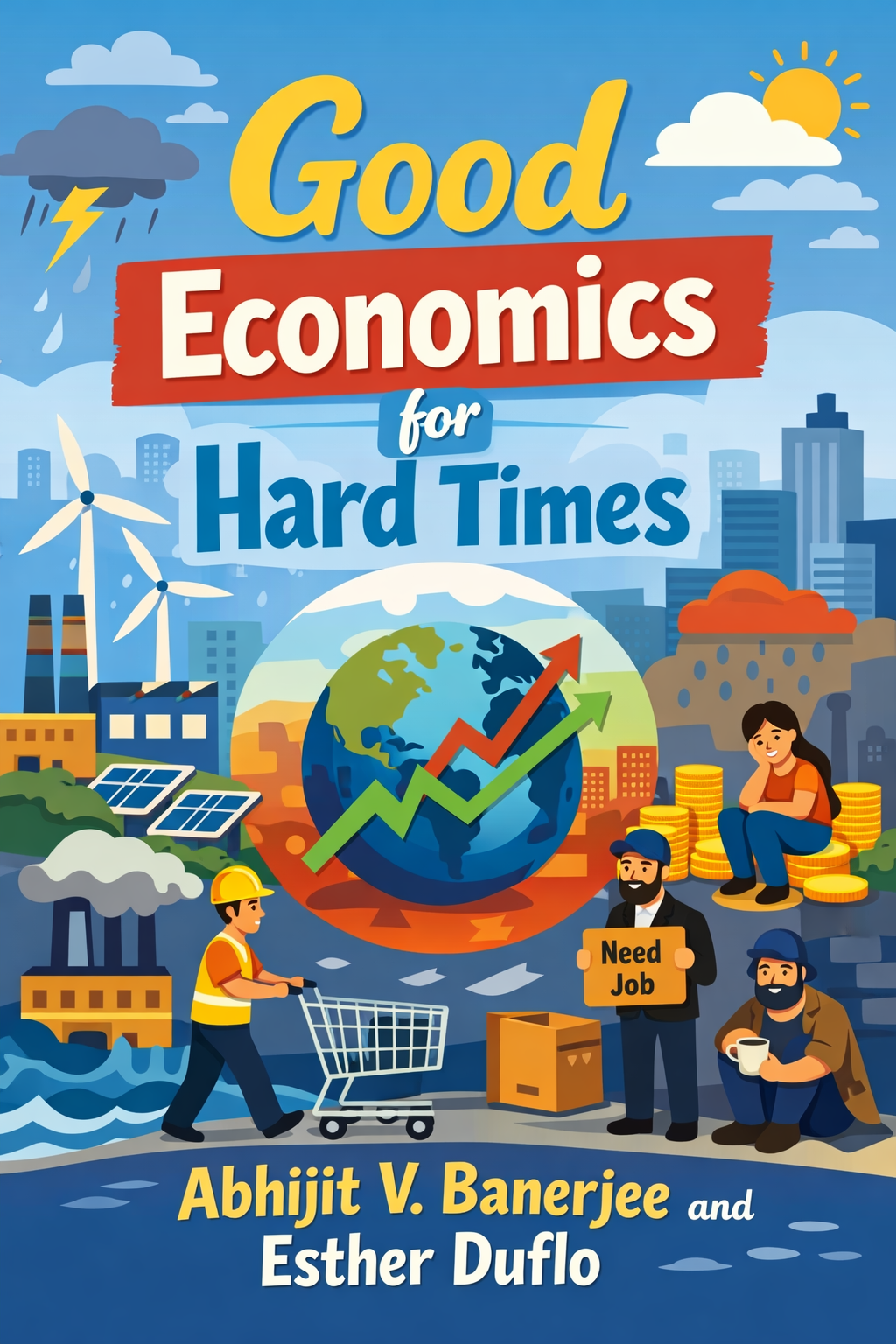
In an era defined by polarized debates and seemingly insurmountable global challenges, the field of economics has often been dismissed as either overly technical or ideologically compromised. Yet, when stripped of political agendas and grounded in rigorous evidence, economic thinking provides a vital compass for navigating our hardest times. This book argues that the true power of economics lies not in abstract theories but in its practical, humane application to the issues that shape our daily lives: migration, trade, technological disruption, inequality, and climate change. The journey begins by rebuilding trust. Economists must move beyond being partisan commentators and become clear communicators, openly sharing their data and reasoning while admitting uncertainty. This transparency is the foundation for engaging with public fears and misconceptions, particularly around immigration.
Contrary to the alarmist narrative that immigrants steal jobs and depress wages, the evidence reveals a more nuanced and positive story. People are profoundly reluctant to leave their homes, meaning mass, uncontrolled migration is a myth. For those who do migrate, their impact on host communities is often beneficial. Immigrants not only supply labor but also boost demand for local goods and services, stimulating the economy. They frequently fill essential roles that native workers are moving away from, and their entrepreneurial spirit has been a historic engine of job creation. The simplistic supply-and-demand model fails because employers value reliability and local knowledge, advantages held by established workers. In reality, immigration can create upward mobility, allowing native workers to shift into higher-skilled positions while immigrants support the economy’s foundation.
The discussion of global trade reveals a similar gap between theory and reality. While textbook models promise mutual benefit through specialization, they assume a flexibility that doesn’t exist. Workers cannot easily relocate or retrain to switch industries, and companies in developing nations struggle to pivot from unprofitable product lines. Banks are often reluctant to finance new, innovative ventures, instead propping up failing incumbents. Furthermore, the free movement of goods is not matched by the free movement of people or capital, creating imbalances. Trade shocks can devastate local communities, and the promised retraining and transition programs frequently fall short. The answer, however, is not a retreat into protectionism. Tariffs and trade wars are blunt instruments that often harm more people than they help, including consumers and workers in other sectors. A smarter approach involves building robust social safety nets and adaptive policies that help communities weather economic transitions without resorting to self-defeating isolation.
Perhaps the most pressing intersection of issues is between climate change and economic inequality. Framing environmental action as a trade-off between jobs and the planet is a false and destructive dichotomy. The costs of climate change fall disproportionately on the world’s poorest, who are most vulnerable to drought, famine, and extreme weather. Effective solutions must therefore be progressive, ensuring that the financial burden of the green transition does not crush low-income households. Similarly, the anxiety over automation and artificial intelligence displacing workers is often misplaced. While AI will transform the job market, history shows that technological change does not automatically lead to mass unemployment; it reshapes work. The deeper, more entrenched problem is economic inequality, which long predates intelligent machines. The concentration of wealth and the stagnation of wages for the majority are political and policy choices, not inevitable outcomes of technology.
Addressing this inequality requires thoughtful intervention, particularly through tax policy. Well-designed progressive taxation can curb extreme wealth concentration and fund public goods—like education, healthcare, and infrastructure—that create genuine opportunity. Yet, economic tools alone are insufficient. The fight against global poverty demonstrates that there is no universal blueprint. Successful interventions must respect the agency and dignity of the poor, involving them in designing solutions that address their specific contexts and constraints. This principle of respect and listening is the final, crucial ingredient. Our societies are being torn apart not just by economic disparity but by profound political polarization and prejudice. Rebuilding a functional democracy and a cohesive society requires us to move beyond echo chambers, to engage with evidence, and to genuinely listen to those with whom we disagree. Economics, at its best, doesn’t provide all the answers, but it equips us with the clarity and empathy needed to ask the right questions and build a more hopeful, shared future.