Description
The world of advertising, once a realm of charismatic creative visionaries crafting iconic campaigns, has undergone a seismic and irreversible shift. This transformation charts the journey from the art of persuasion to the science of precision, where big data and digital technology now reign supreme. The industry that connected buyers and sellers through clever slogans and beautiful imagery now operates on a landscape defined by algorithms, real-time tracking, and hyper-personalization. This change has not only altered how products are sold but has fundamentally reshaped the economic models, professional roles, and ethical boundaries of the entire field.
Gone are the days when a marketing professional focused solely on a single medium or creative concept. The modern marketer is a jack-of-all-trades, navigating a vast spectrum that includes public relations, crisis management, social media influence, and corporate rebranding. At the center of this new universe is the smartphone—a device of unprecedented power that lives in the pocket of billions. This tool is more than just a screen; it is a portal for constant interaction, commerce, and surveillance, offering advertisers the ability to engage with and monitor consumers in real time. Platforms like China’s Tencent demonstrate the staggering potential, creating entire ecosystems where communication, shopping, and advertising merge into a single, seamless experience, generating billions of data points daily.
This new reality stands in stark contrast to the industry’s golden age, epitomized by the mid-century Madison Avenue elite. For decades, advertising agencies enjoyed a lucrative and secure existence, funded by a cushy system of dual commissions from both media outlets and clients. This arrangement, while profitable, often bred complacency and conflicts of interest. The 2008 financial crisis acted as a catalyst for change, forcing corporate clients to scrutinize every dollar spent. As marketing budgets tightened, the old commission model crumbled, leaving traditional agencies vulnerable and forcing a reckoning with a new, more accountable economic reality.
The true engine of this revolution is big data. The digital breadcrumbs we leave online—tracked through cookies and countless other means—have turned consumer behavior into a quantifiable science. This shift has dramatically altered the industry’s balance of power. Traditional creative agencies, whose value was once rooted in the “big idea,” find themselves sidelined by media agencies that now wield data as their primary weapon. These media companies, once mere buyers of ad space, now employ armies of data scientists to segment audiences into microscopic groups and deliver customized messages at scale. Campaigns like Revlon’s “Love Is On” exemplify this new paradigm, where success is driven not by a universal creative vision but by the ability to deliver a unique ad to each individual woman.
This valuable data exists in tiers, with first-party data—information collected directly from a customer by a company like Amazon or a department store—being the most prized. When anonymized and shared or sold, it becomes second-party data. Further aggregated and traded, it turns into third-party data. Media agencies hunger for all of it, but face significant hurdles. Tech behemoths like Google and Facebook sit atop mountains of rich first-party data but are notoriously reluctant to share it, consolidating their own power. Furthermore, the very device that drives modern advertising—the mobile phone—presents technical challenges, such as compatibility issues, that can disrupt the seamless data collection and ad delivery that the industry seeks.
This relentless pursuit of data raises profound questions about privacy. Internet giants, in their quest to refine targeting, are engaged in a continuous, often invasive, collection of personal information. The line between useful customization and unsettling surveillance has blurred, threatening individual autonomy. The implications of this data-driven landscape extend far beyond commerce, as evidenced by its impact on democracy itself. The 2016 U.S. presidential election served as a stark case study. Donald Trump’s campaign leveraged the tools of modern advertising—micro-targeting, A/B testing, and real-time feedback loops on social media—with a ruthless, data-informed efficiency. In contrast, Hillary Clinton’s campaign relied more on traditional, broad-based methods and large-scale ad buys. This disparity highlighted a critical new truth: understanding the voter as a consumer, susceptible to the same personalized messaging techniques used to sell shoes or software, had become a decisive political advantage.
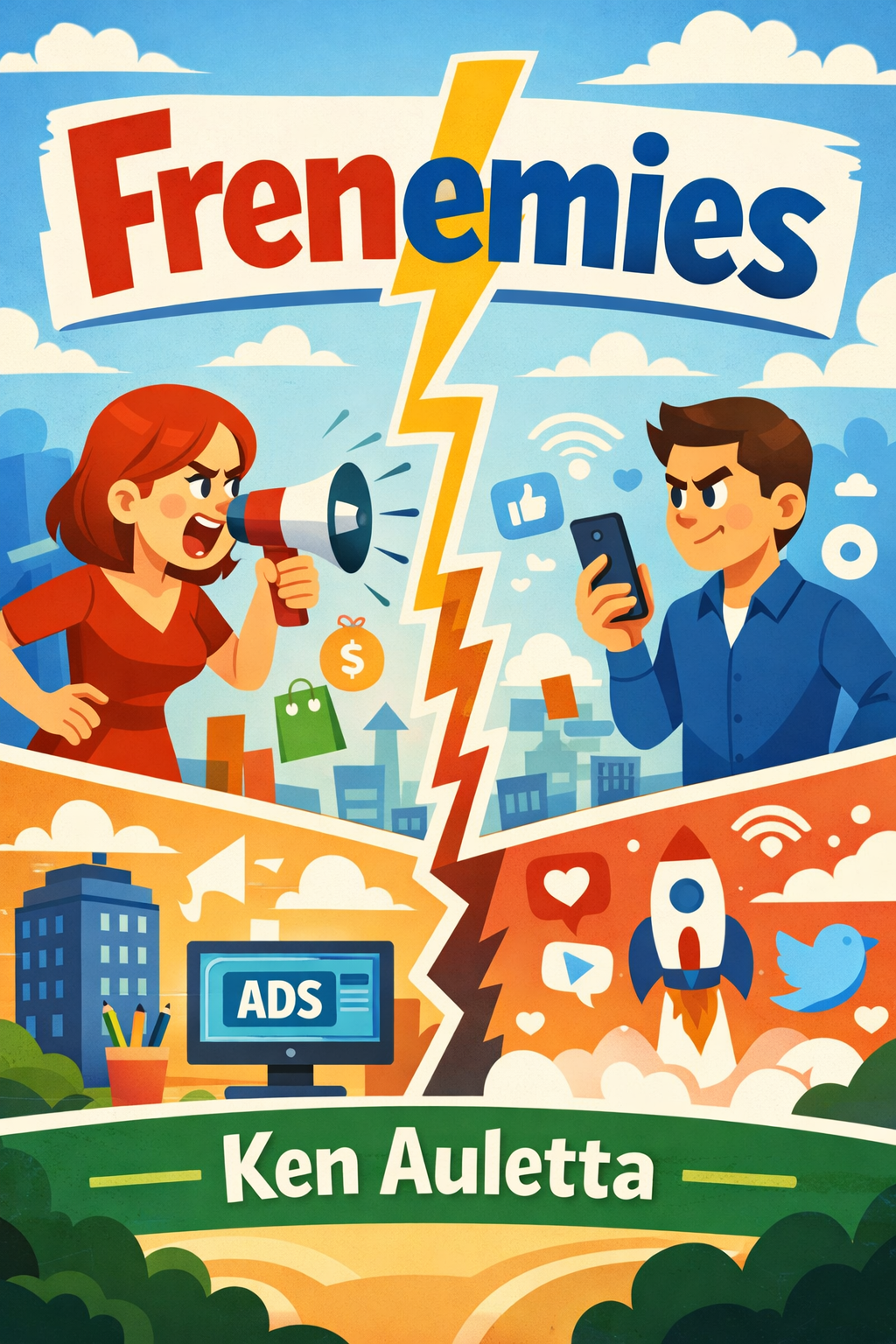
In conclusion, the advertising industry is now a field of “frenemies,” where old rivals and new giants coexist in a state of tense interdependence. Creative agencies, media buyers, tech platforms, and clients are all locked in a struggle for value, control, and relevance in a world ruled by data. The smartphone is the battlefield, privacy is the contested frontier, and the very nature of persuasion has been fundamentally rewritten. The era of the charismatic creative director has given way to the age of the anonymous data scientist, and the consequences of this quiet revolution continue to ripple through our economy, our politics, and our daily lives.