Description
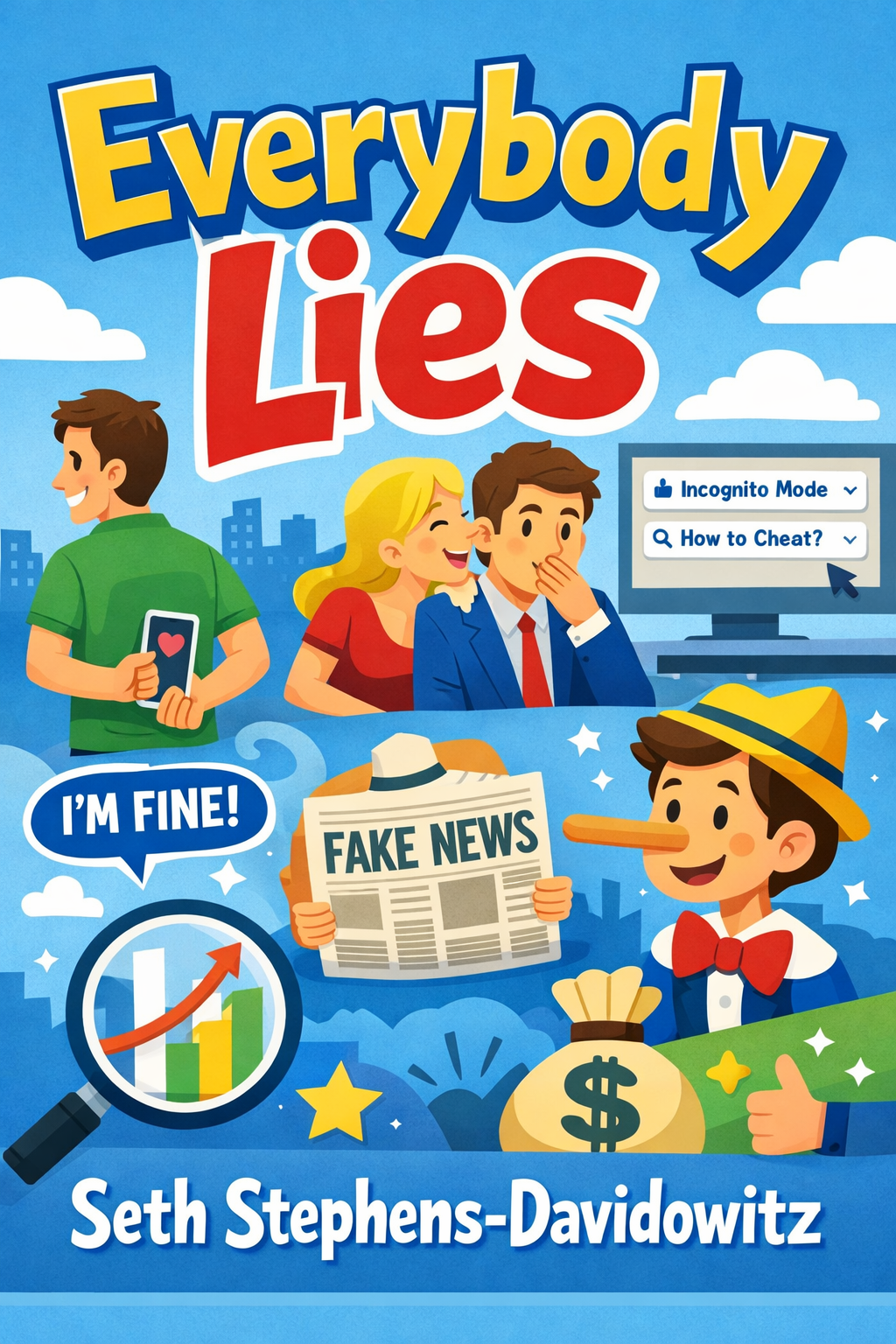
In a world where people routinely disguise their true thoughts and desires in polite conversation, a revolutionary new window into the human psyche has opened. This window is not a therapist’s couch or a survey form, but the vast, digital trail we leave behind in our unguarded moments online. When we are alone with our screens, we ask questions we would never voice aloud, confess fears we keep hidden, and explore curiosities we publicly deny. This treasure trove of honest data, known as big data, is now allowing scientists to understand humanity with a startling new clarity, moving beyond what we say to uncover what we truly think and do.
The journey begins by recognizing that data science, for all its computational complexity, is rooted in a very human instinct: pattern recognition. We all do it intuitively, drawing conclusions from our life experiences. However, personal intuition is limited and often flawed, built on a small, biased sample size. Big data corrects for this by analyzing patterns across billions of data points, refining our gut feelings into measurable truths. For instance, while your grandmother might swear that sharing friends strengthens a couple, an analysis of millions of Facebook connections reveals the opposite trend. This power to test and correct our assumptions is foundational.
What makes this data so uniquely powerful? First, it provides a constant, real-time stream of new information about our world. Before the digital age, tracking economic trends or disease outbreaks required slow, manual surveys. Now, by analyzing the volume of related search queries, we can estimate unemployment rates or map the spread of the flu almost instantly, as Google searches become a digital pulse of societal concerns. This immediacy transforms how we monitor and respond to large-scale phenomena.
The second, and perhaps most profound, power of big data is its brutal honesty. Traditional surveys are notoriously unreliable due to “social desirability bias”—the natural urge to make ourselves look good. People lie about their grades, their habits, and their private lives. But when typing a search into Google or visiting a website, there is no interviewer to impress. This unfiltered digital id reveals truths that surveys never could, from the prevalence of secret anxieties to the existence of niche and surprising personal interests that would rarely be admitted to another person.
Third, the sheer scale of big data allows us to zoom in with remarkable precision. Because the datasets are so enormous, we can isolate and study very small subgroups—a specific neighborhood, a rare demographic—and still draw statistically reliable conclusions. Researchers used this power to examine the geography of the American Dream by analyzing over a billion tax records. They found that while upward mobility for the poor is low nationally, it thrives in specific cities and collapses in others, painting a nuanced, street-by-street picture of economic opportunity that broad national statistics completely obscure.
Furthermore, big data revolutionizes our ability to establish cause and effect through inexpensive, large-scale experiments known as A/B testing. Instead of relying on observed correlations, which can be misleading, organizations can now test ideas directly. By randomly showing different website layouts to millions of users, for example, a political campaign can scientifically determine which design drives more donations. This turns decision-making from an art into a science, allowing for precise optimization in everything from marketing to public policy.
However, this powerful tool has significant limitations. Big data analytics struggle when faced with problems involving a large number of interconnected variables or non-quantifiable human elements like emotion, ethics, and justice. A model might predict behavior but cannot capture the full complexity of human motivation. Most critically, the use of big data by governments and institutions raises serious ethical questions. While it can be used for public good, employing it to target or judge individuals risks creating a surveillance state and perpetuating biases embedded in the data itself. The book argues that big data should be used to understand broad societal patterns and help groups, not to make definitive decisions about individual lives.
Ultimately, the world revealed by big data is both fascinating and unsettling. It shows us a species more curious, anxious, and complex than our polished social selves suggest. It provides tools of incredible power for understanding and improving society, but it also demands a new framework for responsibility and ethics. By listening to the truths we tell only in the privacy of our search bars, we gain not just knowledge, but a profound reminder of the gap between our public personas and our private, honest selves.