Description
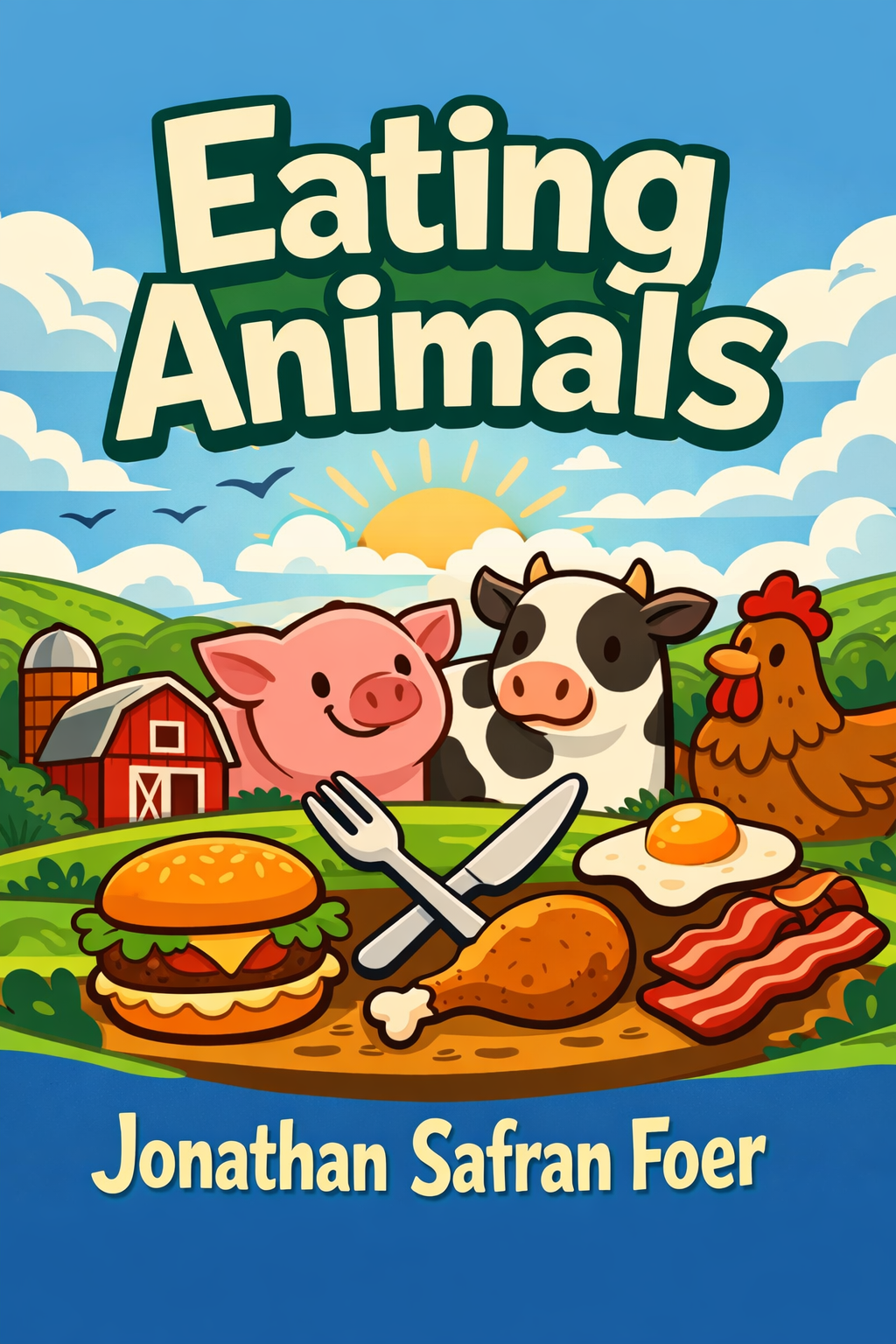
The modern reality of where our meat comes from is a stark departure from the pastoral imagery we often hold. The vast majority of animals raised for food in the United States exist within a system that prioritizes efficiency and low cost above all else, creating a hidden world of profound suffering and systemic consequences. This system, a far cry from the family farm, operates on an industrial scale where animals are treated as units of production. They are bred for unnaturally rapid growth, confined in intensely crowded conditions, and denied their most basic natural behaviors. The result is a life of chronic pain and stress for billions of creatures, from chickens who never see the sun to pigs who cannot turn around.
Poultry production exemplifies this model. Birds bred for meat grow so quickly their legs often buckle under their own weight, while egg-laying hens spend their lives in cages so small they cannot spread their wings. To prevent injury from stress-induced aggression, their sensitive beaks are seared off. The process continues at slaughter, where high-speed lines frequently fail to render animals insensible, leading to immense suffering. The final product is often manipulated, with meat injected with solutions and cooled in communal baths that spread contamination, prioritizing profit over purity and safety.
The plight of pigs is equally disturbing. Highly intelligent and social animals are subjected to a life of extreme deprivation. Breeding sows are confined in metal gestation crates barely larger than their bodies, unable to nest or move for nearly their entire lives. Piglets have their tails cut and teeth clipped without pain relief to mitigate the wounds inflicted by confinement-induced frustration. The industry’s own publications admit that overcrowding is a calculated financial strategy, with weaker animals often brutally culled. This systematic cruelty is not an anomaly but a built-in feature of the production line.
The impact extends beyond land to our oceans, where industrial fishing and aquaculture wage a war of attrition against aquatic life. Wild fish are caught by methods like trawling, which scours the ocean floor and results in enormous bycatch—untargeted species like dolphins, turtles, and sharks that are killed and discarded. Fish farms confine species like salmon in pens so dense that disease and parasites run rampant, with many fish dying from infections or injuries before slaughter. The scale of harvesting is so vast that scientists warn of the collapse of entire fisheries within decades, making our current practices a direct threat to marine biodiversity.
The violence of the system also corrupts the humans within it. Slaughterhouse and factory farm work is among the most dangerous and psychologically traumatic jobs, with high turnover and desensitization leading to documented acts of intentional animal abuse. This environment, where killing and processing are repetitive, high-speed tasks, can erode empathy, creating a cycle of brutality that management often ignores or tacitly condones.
The environmental footprint of industrial animal agriculture is staggering and unsustainable. It is a leading contributor to greenhouse gas emissions, surpassing the entire transportation sector. It consumes vast quantities of grain and water that could otherwise feed human populations, and generates monumental amounts of toxic waste. This waste, stored in open lagoons, contaminates waterways, poisons wildlife, and creates health hazards for nearby communities, who suffer from polluted air and water. The choice to eat industrially produced meat is, therefore, one of the most significant environmental decisions an individual makes.
Despite these profound costs, the industry remains powerfully insulated. Through intensive lobbying and political influence, it shapes regulations in its favor and weakens oversight. Government agencies tasked with both promoting agricultural products and protecting public health find themselves in a paralyzing conflict of interest. Even when overwhelming public sentiment supports better welfare laws, the industry’s political clout ensures minimal change, keeping the true nature of production hidden from consumers.
This opacity is maintained by a pricing structure that externalizes the real costs. The cheap price tag at the supermarket does not account for the environmental cleanup, the public health consequences, or the ethical burden. It is subsidized by taxpayer money and paid for in other, less visible currencies. Furthermore, the system is a public health crisis in waiting. The crowded, unsanitary conditions are ideal breeding grounds for zoonotic diseases, and the routine overuse of antibiotics in animal feed is accelerating the rise of drug-resistant superbugs, posing a direct threat to human medicine.
The book ultimately confronts the reader with a fundamental moral inconsistency. We extend compassion and legal protections to animals like dogs and cats, recognizing their capacity for pain and social bonds. Yet pigs, who are more intelligent than dogs, chickens, who form complex social structures, and fish, who feel pain, are excluded from this circle of concern simply because they are categorized as food. This arbitrary distinction is challenged, asking why the suffering of one being is trivialized while another’s is not.
Concluding, the argument presents a clear, though difficult, summation: given the overwhelming evidence of cruelty, environmental devastation, and health risks inherent in the industrial system, the only way to eat ethically is to remove oneself from it entirely. The book is not merely an exposé of a broken system, but a deeply personal and philosophical inquiry into the choices we make every day, urging a reconsideration of tradition, convenience, and the true meaning of a meal. It makes the case that what we put on our plates is a moral act with far-reaching consequences, connecting us to a hidden chain of suffering and destruction that demands our attention.