Description
The story unfolds in the rugged landscape of eighth-century Spain, where the great Christian emperor Charlemagne has waged a long and successful campaign against the Muslim Saracens. After seven years of conflict, only the city of Saragossa remains under the control of the Saracen king, Marsile. Facing defeat, Marsile devises a cunning plan. He sends messengers to Charlemagne’s camp, offering lavish gifts, hostages, and a promise of fealty and conversion to Christianity if the emperor will withdraw his forces back to France. Charlemagne, weary of war, is inclined to accept, but he seeks counsel from his trusted knights.
The heart of the epic lies in this council and its tragic consequences. Charlemagne’s nephew, the valiant and headstrong Roland, urges rejection of the offer, suspecting treachery. His stepfather, Ganelon, argues passionately for peace, seeing a chance to end the bloody campaign. A fierce, prideful quarrel erupts between the two men. When Charlemagne decides to accept the terms and needs an envoy to deliver the response to Marsile, Roland spitefully nominates Ganelon for the perilous duty. Seething with resentment at this perceived death sentence, Ganelon travels to Saragossa. There, his bitterness curdles into treason. He conspires with Marsile, revealing that the rear guard of Charlemagne’s departing army, which will be led by Roland, will be vulnerable to attack. He guarantees that with Roland dead, the emperor’s spirit for war will be broken.
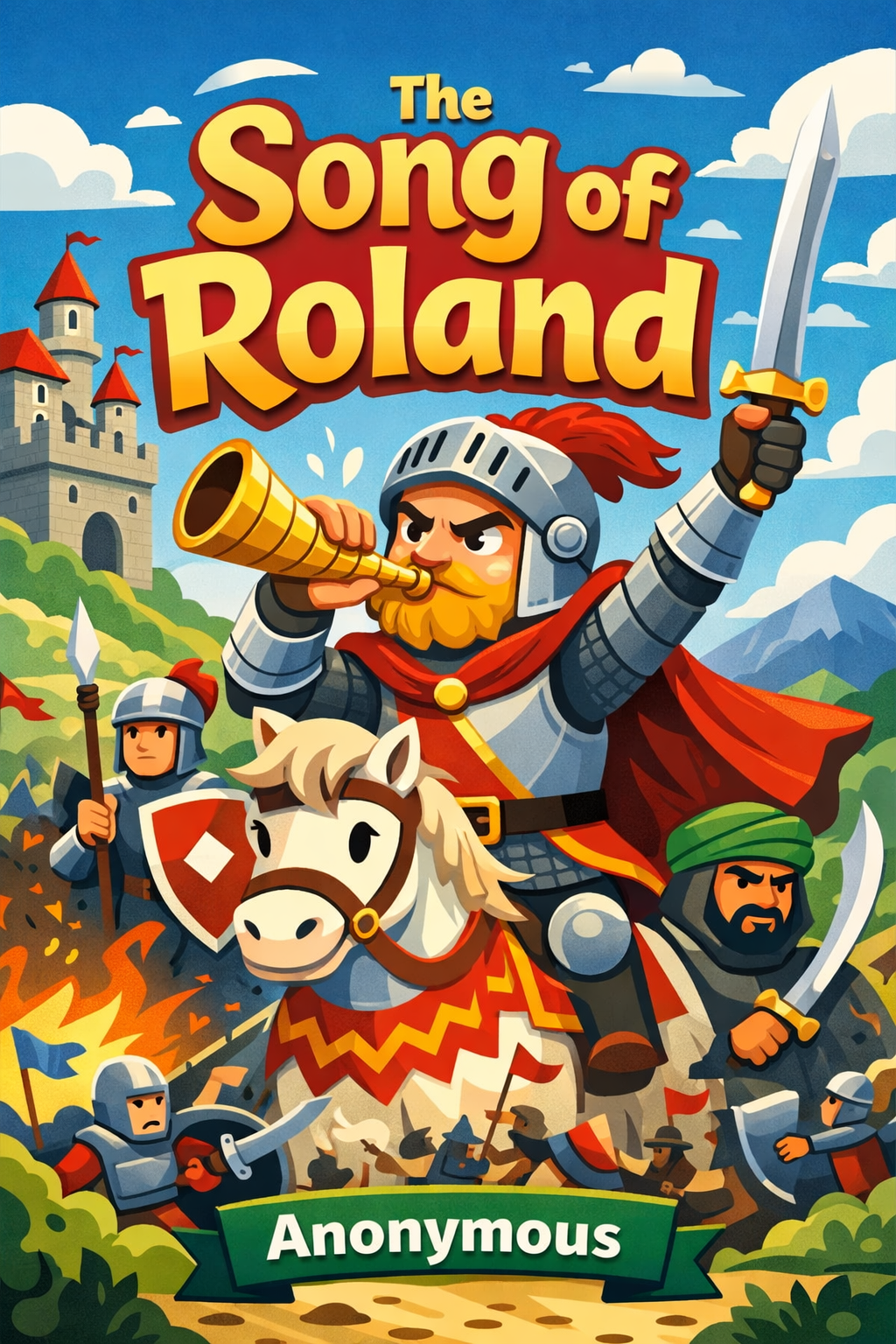
As the Frankish army begins its march home through the Pyrenees, Ganelon ensures that Roland is appointed commander of the formidable twenty-thousand-strong rear guard. Roland’s closest companion, the wise Oliver, and the fierce Archbishop Turpin stand with him. When an immense Saracen force emerges to ambush them in the mountain pass of Roncevaux, Oliver, scanning the overwhelming numbers, pleads with Roland to sound his oliphant, a horn made from an elephant’s tusk, to summon Charlemagne and the main army. Roland, however, is a prisoner of his own heroic code. To call for help would be an act of cowardice, a stain upon his honor and that of France. He insists on standing and fighting, declaring that they will win a glorious victory for their emperor.
What follows is a relentless and brutal depiction of battle. The Franks, though vastly outnumbered, fight with superhuman prowess. Roland is a whirlwind of destruction, his legendary sword Durendal hewing through men and horses. Oliver and Turpin fight with equal ferocity. The poet lingers on vivid, gruesome details of combat—shattered shields, severed limbs, and fields running red—elevating the slaughter into a form of sacred martyrdom. They inflict catastrophic losses on the Saracen host, but one by one, the Frankish heroes are worn down. Seeing his men dying around him, Roland’s pride finally cracks. He admits to Oliver that he was wrong not to sound the horn. But now, Oliver argues it is too late; blowing it would no longer save them, only rob them of their hard-won glory. Turpin intervenes, reasoning that while the living cannot be saved, Charlemagne could return to avenge them and ensure their bodies receive a Christian burial.
With his last strength, Roland blows the oliphant with such cosmic force that his temples burst, a symbolic rupture of his mortal pride. The sound carries across the mountains to Charlemagne, who instantly understands the betrayal and disaster. The emperor turns his army around, but the return is a long, agonizing journey. Back at Roncevaux, the tragedy reaches its climax. Roland, dying, attempts to destroy Durendal to prevent it from falling into pagan hands, but the indestructible sword symbolizes the enduring legacy he cannot break. He lays himself down facing Spain, his sword and horn beneath him, and offers his glove to God as a final act of fealty. Angels descend to carry his soul to Paradise.
Charlemagne arrives to a scene of utter devastation: the entire rear guard annihilated, the flower of his chivalry dead among the corpses of their enemies. His grief is titanic, but it swiftly turns to wrath. In a miraculous extension of daylight, he pursues and destroys the fleeing Saracen army, forcing Marsile to die of his wounds. The epic then broadens to a divine scale. The emir of Babylon, Baligant, arrives with a vast fleet to aid the pagan cause. The narrative culminates in a monumental single combat between the two aged rulers, Charlemagne and Baligant, a duel that frames the conflict as a cosmic war between Christendom and Islam. With angelic encouragement, Charlemagne triumphs, and Saragossa finally falls.
The final act is one of grim justice and lingering sorrow. The Franks return to their capital at Aix, where the news of Roland’s death breaks his betrothed, Aude, who dies of grief at Charlemagne’s feet. Ganelon’s treason is exposed. He defends himself not as a traitor to France, but as a man who sought just vengeance against his arrogant stepson, claiming his act was personal, not political. His kinsman, Pinabel, champions his cause in a trial by combat. It falls to Thierry, a knight of lesser stature but pure heart, to fight for divine justice. Against the odds, Thierry slays Pinabel, proving God’s judgment. Ganelon is brutally executed by being torn apart by horses, and his loyal supporters are hanged. Justice is served, yet the victory is hollow. In a quiet, haunting conclusion, the angel Gabriel visits the weary, grieving Charlemagne. The emperor has no time to rest; a new threat looms in another land, and God commands him to ride forth once more. The cycle of war, duty, and sacrifice is eternal, leaving the hero with no peace, only the endless burden of his divine mission.