Description
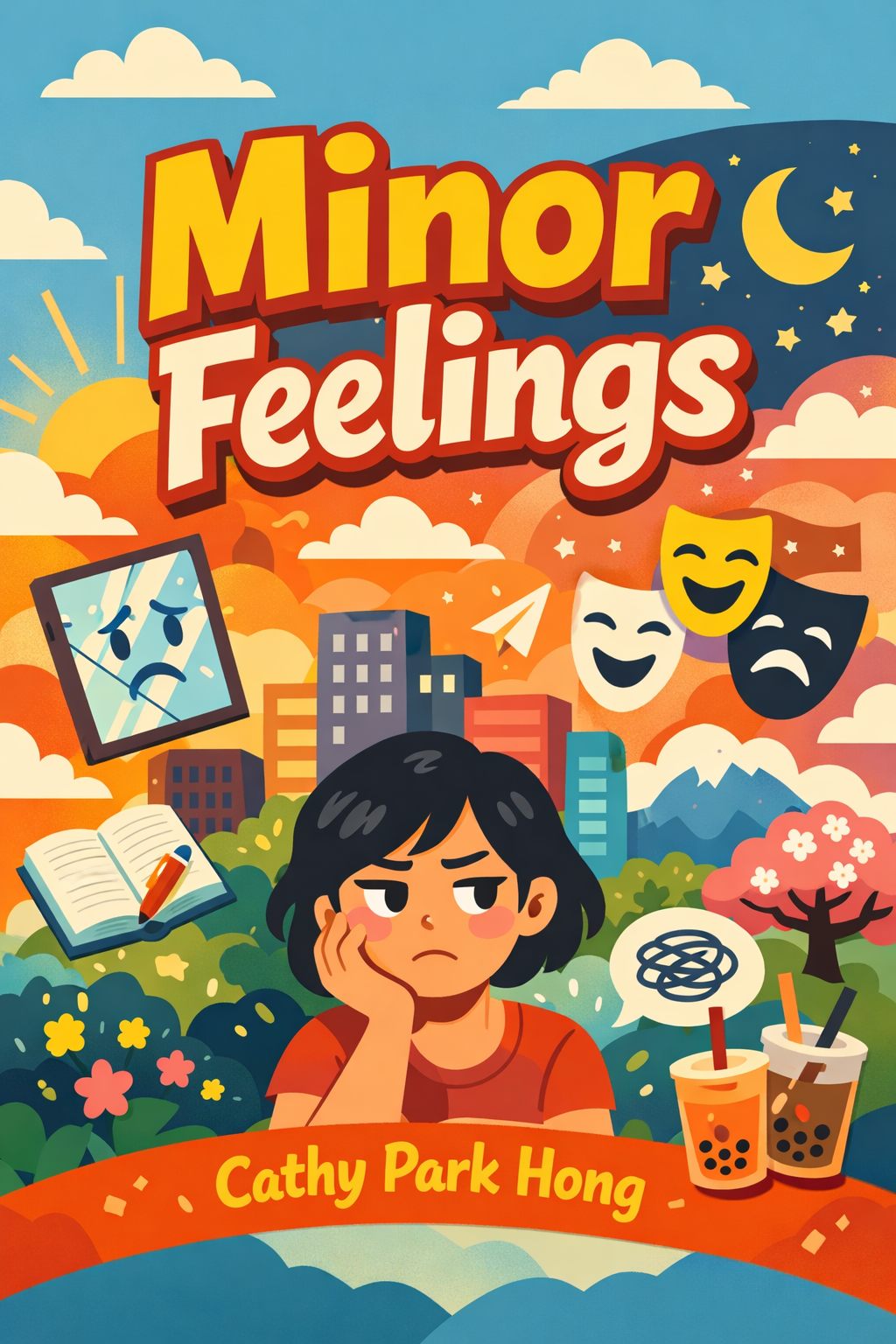
Cathy Park Hong’s “Minor Feelings” is a piercing and genre-defying work that dismantles the comfortable stereotypes surrounding Asian American identity. Through a blend of memoir, cultural criticism, and history, Hong articulates the peculiar psychological landscape of being Asian in the United States—a space defined by racial ambiguity, unspoken shame, and what she terms “minor feelings.” These are the corrosive emotions—the depression, the irritation, the anxiety—that arise from the daily grind of racial microaggressions and the dissonance between the upbeat, optimistic narrative of the American dream and one’s own lived reality. The book argues that Asian Americans occupy a purgatorial racial position, perpetually viewed as neither white nor Black, their experiences often rendered invisible or dismissed as inconsequential within the nation’s binary racial discourse.
Hong begins by grounding this abstract condition in the visceral details of her own life. She recounts a depressive episode where even the act of giving a poetry reading becomes a fraught performance of racial self-consciousness. This personal narrative expands to examine the collective Asian American psyche, using the viral video of Dr. David Dao being dragged from an airplane not as a story of universal outrage, but as a specifically Asian American trauma, layered over memories of war and displacement. The “model minority” myth, she contends, is not a badge of honor but a tool of erasure, a way to dismiss racial grievance and pit minorities against each other while obscuring a history of violence and exclusion.
The search for a language to describe this experience leads Hong to an unlikely guide: the Black comedian Richard Pryor. She finds in his fearless, raw dissection of race a model for artistic truth-telling, even as she notes the ways his Black-white binary excludes her. Pryor’s work validates her belief that race colors every aspect of life, a truth thrown into stark relief during the 1992 Los Angeles riots. Hong analyzes the complex position of Korean American shopkeepers, caught between a system that failed to protect them and their own role in tensions with the Black community, refusing easy moralizing in favor of sitting with the uncomfortable contradictions.
The heart of the book explores the origins of minor feelings within the immigrant family. Hong contrasts the Anglo-American ideal of an innocent childhood, exemplified by Holden Caulfield in *The Catcher in the Rye*, with her own upbringing measured in shame and the relentless pressure to succeed. Her father’s “success story”—from eating sparrows in postwar Korea to becoming a businessman in Los Angeles—is revealed as a narrative that masks immense hardship and silent suffering. A harrowing memory of her grandmother being mocked and assaulted by white children, and her father’s impotent rage in response, crystallizes the humiliations that seed a deep, internalized sense of inferiority.
Hong discovers her artistic voice not by assimilating, but by developing an adversarial, creative relationship with the English language itself. She celebrates “bad English”—the mis-translations, the accents, the pidgin—as a site of resistance and innovation. Recalling her formative years in art school with two other Asian women, she describes a fleeting, powerful solidarity where they felt the arrogant confidence of “white men,” a confidence that dissipated in the wider world. As a poet, she seeks to “other” English, to twist and consume it like the suffocating octopus in the film *Oldboy*, before it consumes her.
This artistic struggle is framed by the tragic story of Theresa Hak Kyung Cha, the Korean American artist and author of *Dictee* who was murdered shortly after her book’s publication. Hong sees in Cha’s experimental, fragmented text a profound attempt to articulate a displaced history and identity, an attempt that was ultimately met with the ultimate violence of erasure. Cha’s fate underscores the high stakes of Hong’s own project. The book concludes by rejecting the conditional acceptance offered by American society, where Asian Americans are tolerated only as long as they remain polite and non-confrontational. Hong calls for a shedding of shame and a embrace of genuine solidarity, arguing that Asian Americans must move beyond the model minority trap to forge an identity based on shared grievance and political action, finally giving full, unapologetic voice to their long-suppressed minor feelings.