Description
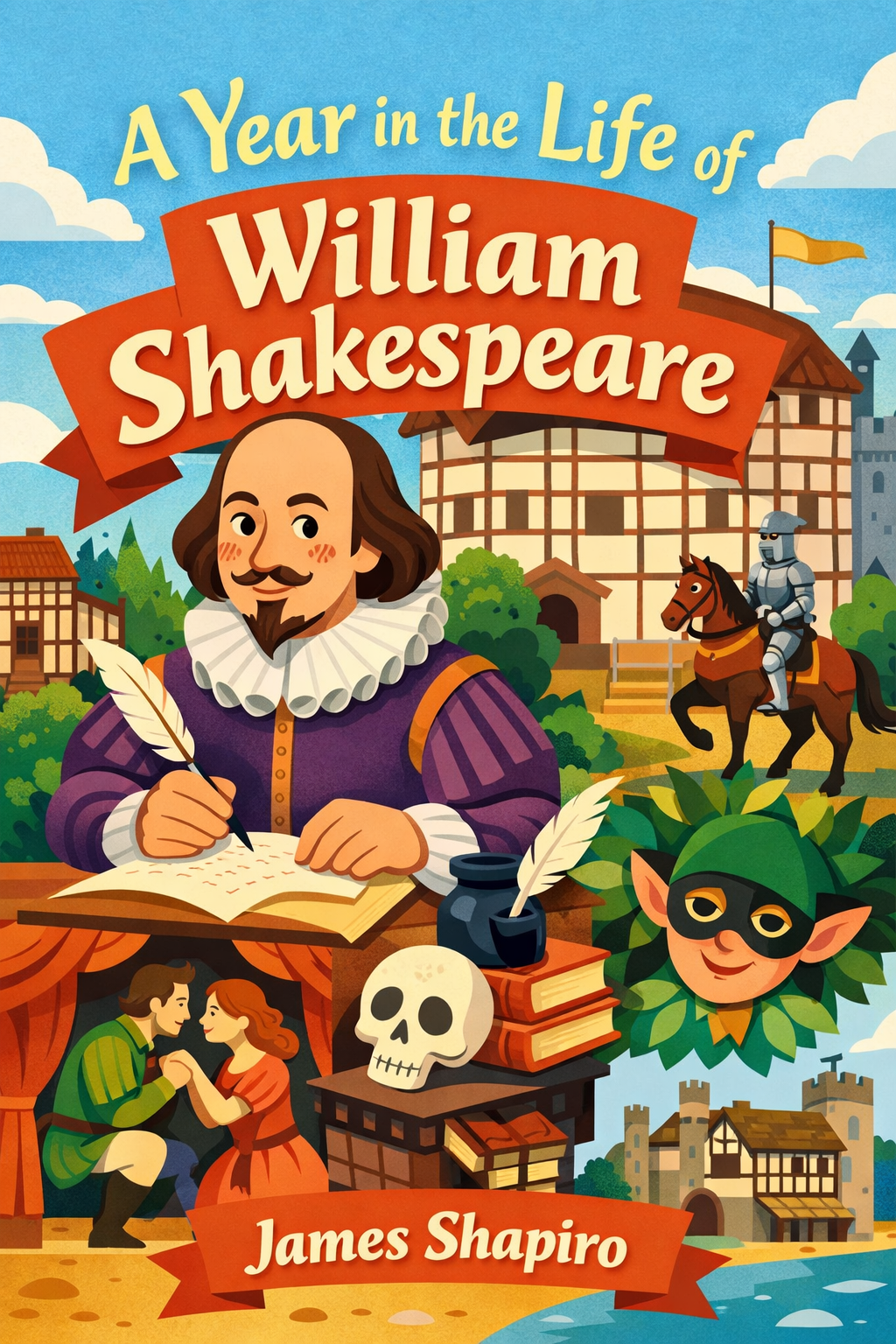
This exploration delves into a single, transformative year in the life of William Shakespeare, revealing how the turbulent events of Elizabethan England directly shaped his work and legacy. While his plays possess timeless themes, they were forged in the specific fires of political intrigue, religious conflict, and cultural ferment. The year 1599 emerges not just as a personal milestone for the playwright, but as a crucial moment in English history, with Shakespeare’s art serving as a sensitive register of the national mood.
London in the late 16th century was a city obsessed with the theater. Vast playhouses regularly drew crowds numbering in the thousands, representing a significant cross-section of society from groundlings to aristocrats. This created a unique cultural arena, though one viewed with suspicion by authorities who associated theaters with crime and disorder. For an ambitious writer like Shakespeare, who had arrived from Stratford years earlier, this demand was an opportunity. By 1599, he found himself in a unique position. The great playwrights of a previous generation had died, and a new wave was only just emerging. Shakespeare stood between these two eras, no longer a novice but not yet the undisputed master. The competitive landscape was fierce, with rival companies establishing new venues. This commercial pressure prompted a daring venture from Shakespeare and his fellow shareholders in the Lord Chamberlain’s Men: to finance and build their own permanent playhouse, the Globe.
This decision was a profound financial gamble. Shakespeare and four actor-colleagues each contributed a substantial sum, equivalent to many years’ wages for a laborer, to cover half the construction costs. This investment was a strategic move to secure their futures. Instead of working for a wage or selling plays to businessmen, owning a share of the theater meant they would directly profit from its success. The Globe, with its thatched roof and circular stage rising in the bustling, disreputable Southbank district, became more than a building; it was a stake in stability and middle-class prosperity. Its very location seeped into Shakespeare’s writing, adding a layer of contemporary grit and recognizable local color for his audience.
The world outside the theater, however, was fraught with danger. England’s identity was defined by its Protestant Reformation, a break from the Catholic Church initiated by Henry VIII and solidified under Queen Elizabeth I. This theological shift placed the nation in perpetual conflict with the mighty Catholic empire of Spain. By 1599, this long-simmering rivalry had reached a new peak. Memories of the attempted Spanish Armada in 1588 were fresh, and intelligence suggested a new invasion fleet was being prepared. Simultaneously, England was mired in costly and draining military campaigns to support Protestant rebels in the Spanish Netherlands and to suppress a Catholic uprising in Ireland. The treasury was empty, soldiers were mutinying over lack of pay, and a palpable sense of dread settled over London, particularly as troops massed to defend the city from the anticipated attack via the Thames.
Shakespeare, preparing the inaugural season for his new Globe, channeled this climate of anxiety and martial tension into his work. His historical plays, like *Henry V*, could stir patriotic fervor, while the contemporary repertoire included brutally graphic dramas about Spanish atrocities. His new play for that summer, *Julius Caesar*, resonated deeply with current events. Its themes of political assassination, civic turmoil, and the crumbling of a state mirrored English fears of instability and hidden threats. The famous quarrel between Brutus and Cassius over withheld funds for soldiers would have struck audiences as a direct commentary on the very real grievances of England’s underpaid armies abroad.
The question of political murder, so central to *Julius Caesar*, was not merely a historical abstraction. It was a live and urgent debate in 1599, fueled by radical tracts arguing that a tyrannical monarch could be justly deposed. As Elizabeth I aged without a clear heir, fears of chaos and succession crises grew. Shakespeare’s nuanced treatment of regicide in *Caesar*—presenting both the idealistic rationale and the catastrophic consequences—engaged directly with this dangerous political discourse, offering no easy answers but holding a mirror to the nation’s deepest anxieties.
Ultimately, the Globe proved to be the catalyst that solidified Shakespeare’s artistic supremacy. The security and creative control afforded by his financial stake, combined with a state-of-the-art venue designed for his company’s needs, provided an unparalleled platform. The success of the theater was intertwined with his own. In the years following 1599, from this stable base, he would produce his greatest tragedies and comedies—*Hamlet*, *Othello*, *King Lear*, *Macbeth*. These works, while universal in scope, are rooted in the crucible of that single year: a year of investment and risk, of national peril and existential doubt. The story of 1599 shows us that Shakespeare’s genius was not isolated from the world but was profoundly shaped by it, transforming the urgent stuff of history and contemporary strife into enduring art for all time.