Description
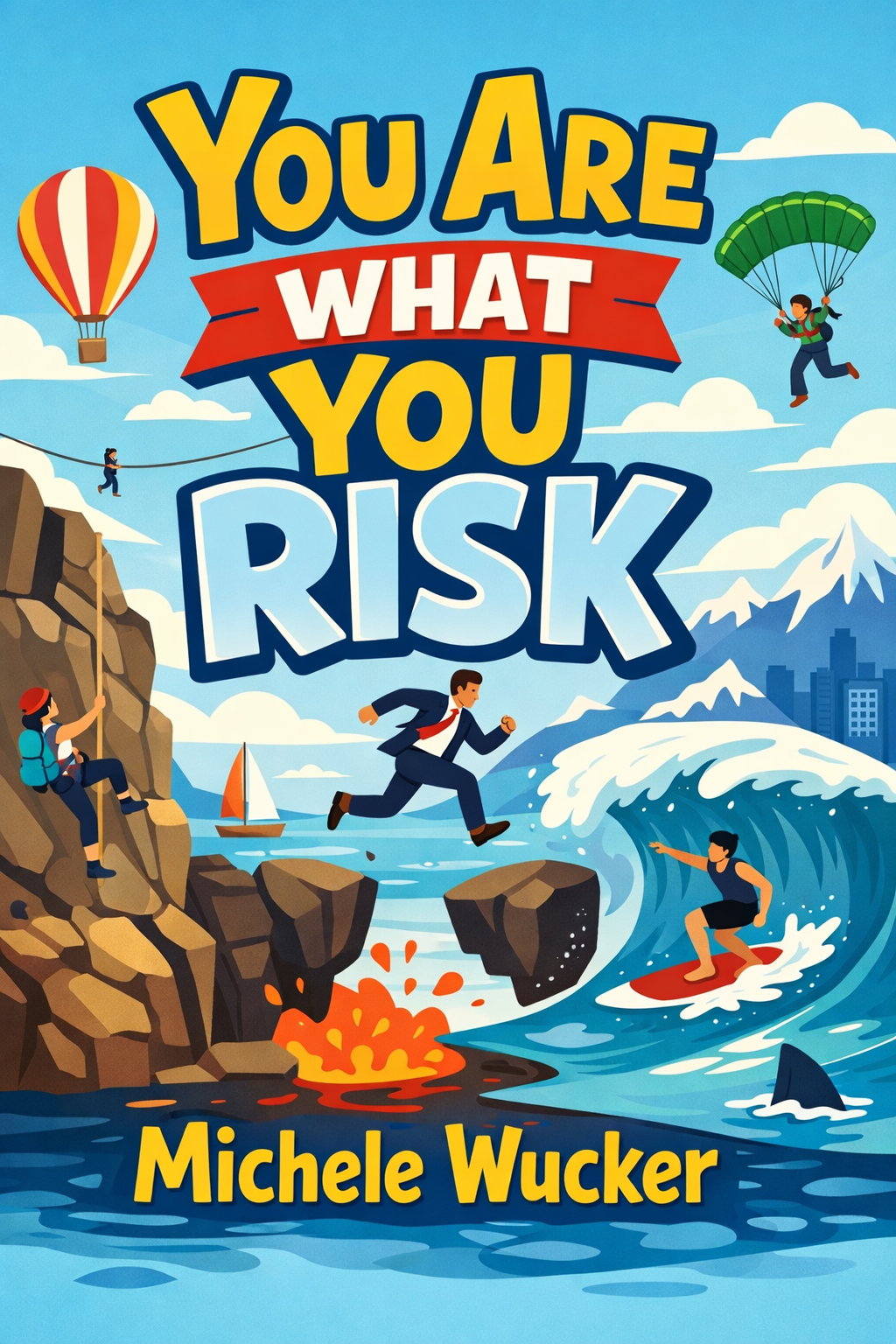
We live in a world defined by uncertainty, yet we often navigate it without truly understanding the forces at play. This book presents a compelling exploration of risk, not as a dry financial concept, but as the fundamental material from which our lives are built. The central idea is that we are, in essence, the sum of the risks we choose to take and those we choose to avoid. Our identities, relationships, careers, and societies are all sculpted by our individual and collective risk fingerprints. The author argues that by learning to see these patterns, we can make more conscious, aligned, and ultimately more fulfilling decisions.
The journey begins by dismantling the common perception of risk as purely negative—something to be minimized or feared. Instead, risk is reframed as a spectrum of potential, encompassing both danger and opportunity. Every significant human endeavor, from falling in love to starting a business, from moving to a new city to advocating for social change, involves a calculus of risk. The book delves into the psychology behind this calculus, examining why two people facing identical circumstances can arrive at wildly different conclusions about what is “risky.” It explores the cognitive biases, emotional baggage, cultural narratives, and personal experiences that color our risk perception, making it a deeply subjective and often irrational process.
Our personal risk fingerprint is formed early and is surprisingly stable. It is shaped by a complex interplay of innate temperament, childhood environment, pivotal life events, and the stories our families and cultures tell us about safety, danger, and reward. Some are raised to see the world as a place of abundance where boldness is rewarded, while others are taught to perceive threats everywhere. The author provides tools for readers to audit their own risk profile, encouraging introspection on questions like: What do I truly fear losing? What potential gain makes my heart race? Which risks feel exhilarating and which feel paralyzing? Understanding this internal landscape is the first step toward managing it with intention rather than being driven by unconscious impulses.
The narrative then expands to show how these individual fingerprints aggregate to form our shared reality. The risks a society prioritizes—whether pandemics, climate change, economic collapse, or social unrest—are a mirror reflecting its collective values, history, and anxieties. The book examines how risk is communicated, politicized, and often weaponized. It looks at the role of media in amplifying certain fears while muting others, and how institutions from governments to corporations attempt to manage public risk perception, sometimes to protect and sometimes to control. This societal layer adds immense complexity, as we must constantly negotiate between our personal risk tolerance and the risks imposed upon us by the world around us.
A crucial insight offered is the concept of “risk ecosystems.” We do not make choices in a vacuum. Our decisions are influenced by the people in our immediate circle—our “risk tribe.” Are your friends adventurers or homebodies? Is your workplace culture conservative or innovative? These networks create powerful social feedback loops that can either encourage or stifle risk-taking. The book advises consciously curating these ecosystems and seeking out “risk mentors”—people who model a healthy, thoughtful relationship with risk that we aspire to emulate. Conversely, it warns of the perils of echo chambers that amplify our existing fears or recklessness.
Ultimately, the book is a call for developing what the author terms “risk maturity.” This is not about becoming fearless or reckless, but about achieving a state of informed and empowered agency. Risk maturity involves several key practices: learning to distinguish between measurable uncertainty and true ambiguity; balancing intuitive “gut” feelings with deliberate analysis; building resilience to absorb inevitable setbacks; and cultivating the courage to take calculated risks in pursuit of what matters most. It emphasizes that a life devoid of risk is not a safe life, but a stagnant and unfulfilled one.
The final sections are profoundly practical, moving from theory to application. How do we apply this framework to the core domains of life: love, health, wealth, and purpose? The author explores how to intelligently risk vulnerability in relationships, how to navigate the trade-offs in health decisions, how to construct a financial life that aligns with our personal risk tolerance, and how to find the courage to pursue a path with purpose despite the uncertainty. The goal is not to eliminate anxiety but to redirect it—to feel the fear that accompanies meaningful action and proceed anyway, armed with greater self-knowledge and a clearer map of the terrain ahead.
In closing, the book leaves the reader with a transformative perspective: Risk is not the enemy of a good life but its essential ingredient. By accepting that we are inherently what we risk, we can move from a passive stance of being acted upon by chance to an active authorship of our own stories. The most significant risk of all, it suggests, may be the risk of never daring to find out who we could become. This is an invitation to see every choice not as a threat to our stability, but as an opportunity to sculpt a life of intention, growth, and profound engagement with the unpredictable wonder of being human.