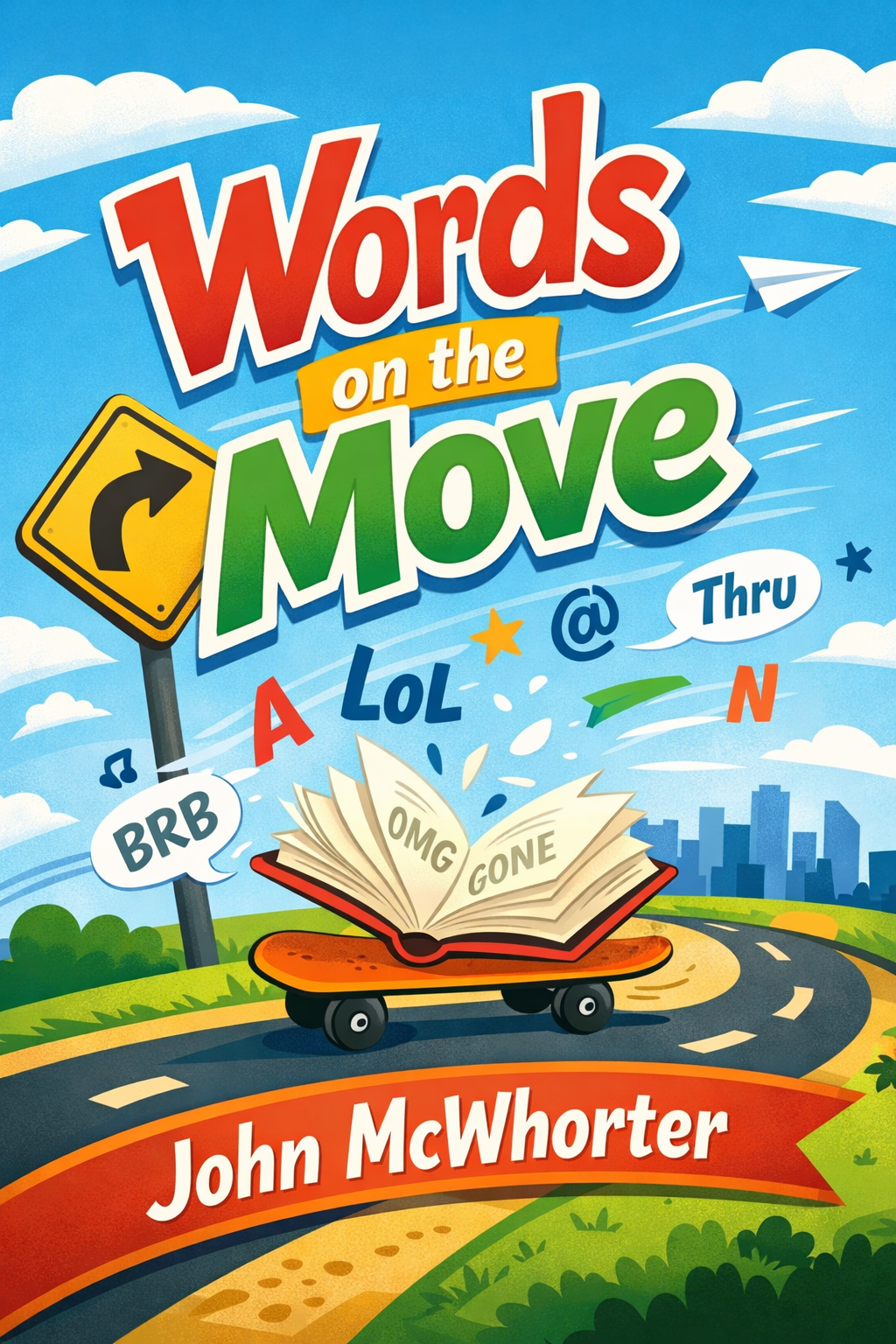
Description
Language is not a static artifact preserved under glass but a vibrant, restless force constantly in flux. This exploration dives into the heart of English, revealing its inherent fidgetiness and remarkable talent for reinvention over its 1,400-year journey. The central, liberating truth is that change is not decay; it is the very engine of a language’s vitality. From the emotional weight carried by tiny words to the modern dance of emoticons, every shift in how we speak and write continues a deep historical tradition of adaptation. By understanding this perpetual motion, we can move beyond anxious pedantry and appreciate the creative, human story embedded in our everyday speech.
The desire to express emotion through language is ancient, far predating its celebrated role in the arts. Consider a simple word like “well,” used as far back as the Old English “wel.” Its power lies not in a concrete definition but in its emotional nuance, allowing a speaker to gracefully correct or acknowledge another’s point without causing offense. This embedding of subjective feeling into the fabric of communication is foundational. The recent rise of emoticons and emojis is merely the latest chapter in this long story, a digital tool to inject the tone and warmth of spoken conversation into our rapid-fire written texts. They function not as a replacement for words, but as new members of the emotional lexicon, performing a role similar to particles in other languages that convey attitude or seek connection.
At the core of linguistic evolution is the gradual, inevitable transformation of word meanings. Very few terms remain anchored to their original sense across millennia. What we now narrowly call “science” was once synonymous with all knowledge. The words “dog” and “hound” have completely swapped their general and specific meanings since medieval times. This process is often a slow drift, as seen with “innumerable,” which shifted from describing something fundamentally uncountable to simply meaning “a very large number.” English possesses a particular fluidity in how it reshapes its own parts of speech. It readily transforms verbs into nouns, a flexibility less common in languages with more rigid grammatical markers. A “walk” or a “scratch” are now everyday nouns born from actions. This process continues today in professional jargon, where “the ask” or “a solve” emerge not as lazy abbreviations for “request” or “solution,” but as new terms carving out their own nuanced, context-specific meanings.
This spirit of change extends even to our punctuation. The exclamation mark has undergone a dramatic shift in social function. Once reserved for strong emphasis or surprise, its overuse in digital communication has led to a kind of inflationary pressure. Today, it often serves less to convey excitement and more to signal attentiveness and polite engagement, a softener to make a brief message feel warmer and less abrupt. This evolution in usage demonstrates how language adapts in response to new social technologies and cultural contact, refining its tools to meet the needs of human connection.
Pronunciation itself is a driving force of change. The way we stress syllables can, over generations, wear words down, merge them, or birth entirely new ones. This phonetic erosion is key to understanding the gulf between Old English and modern speech. A word like “like” exemplifies this relentless progression. Its journey from meaning “body” in Old English to a verb of preference, and then to a ubiquitous filler word and a marker of reported speech, showcases the multi-layered, creative ways language repurposes its core components. Each new usage, often derided when it first appears, is simply a step in an unbroken historical chain.
Ultimately, the story of English is a story of motion. Words migrate in meaning, grammatical categories blur, and symbols find new purposes. This constant transformation is not a sign of weakness but a testament to the language’s resilience and its intimate tie to the human experience. To grasp this is to exchange fear for fascination, seeing in every new tweet, slang term, or evolving grammar rule not the end of English, but its vibrant, ongoing life.