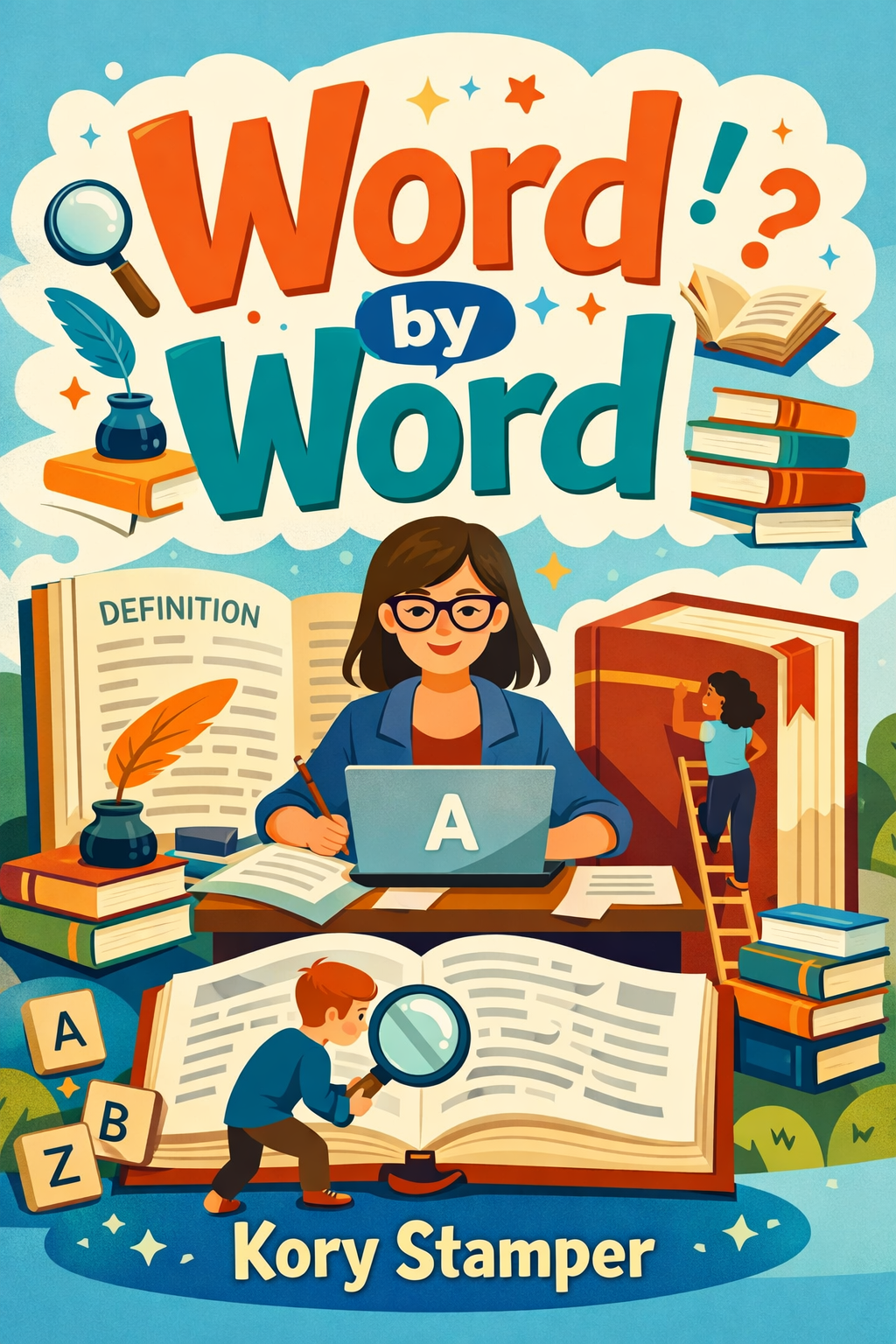
Description
What if everything you assumed about language, grammar, and the authority of the dictionary was up for debate? This book invites you into the hushed, cubicle-filled world of lexicographers, the people who compile dictionaries. Far from being dusty arbiters of right and wrong, these individuals are dedicated observers of the living, breathing entity that is English. Their work is less about issuing decrees and more about capturing a snapshot of how words are actually used, a task that is fraught with complexity, nuance, and occasional controversy.
The profession attracts a peculiar and diverse set of minds—sports fans, mathematicians, literature buffs—united by a love for words and a tolerance for profound silence. The job requires long hours of solitary focus, analyzing citations and debating classifications. This solitude is necessary for the meticulous work of categorizing words, a task that quickly reveals grammar to be a fluid and often messy system. The smallest words, like “but” or “the,” can become hours-long puzzles, defying easy placement into the standard eight parts of speech. Lexicographers often find themselves making practical, sometimes traditional, compromises, realizing that the rulebook is often written in pencil, not ink.
This leads to a core principle of modern lexicography: recording language as it exists, not as some believe it should be. The common perception of grammar as a tool for judgment—correcting “who” to “whom” or “good” to “well”—is a misunderstanding. In reality, usage dictates correctness. A word like “good” has functioned as both an adjective and an adverb for centuries, and the lexicographer’s duty is to document that evidence, not to side with a schoolmarm’s preference. The dictionary is a mirror, not a mold.
This philosophy is tested when dealing with words widely scorned as “wrong.” Take “irregardless.” To many, it’s a redundant and erroneous blend of “irrespective” and “regardless.” Yet, through reader correspondence and historical digging, lexicographers find that such words have a long, documented life in the language. They might emerge from regional dialects or serve as unintentional intensifiers. The decision to include them isn’t an endorsement but an acknowledgment of their use. The dictionary becomes a historical record, showing that today’s error might be tomorrow’s standard, and yesterday’s forgotten meaning might still linger on the tongues of a few.
A major source of public frustration with dictionaries stems from a confusion about their purpose. People often seek a “real definition”—the profound, essential truth of concepts like “love” or “truth.” However, lexicographers deal in “lexical defining.” They are not philosophers or theologians. Their task is to describe how a word is used in practice. So, the definition of “love” will cover the strong affection for a person, the enthusiasm for pizza, and the zero score in tennis. It will not, and cannot, capture the full, transcendent human experience. This practical approach can feel inadequate to someone searching for deeper meaning, but it is the only objective ground a dictionary can stand on.
The process of selecting words for inclusion is rigorous. A word must meet three key criteria: widespread use, sustained use over time, and meaningful use. It must appear in a broad range of sources, not just specialized jargon or fleeting internet slang. It must stick around. And it must carry a distinct meaning that isn’t already covered by an existing word. This gatekeeping relies on a mountain of evidence: citations gathered from a vast array of published and digital sources. Finding the perfect citation—one that clearly illustrates a word’s meaning in a natural context—is a constant challenge. While lexicographers might occasionally craft their own examples for clarity, invented usage is a last resort; the real, messy evidence from the wild is always king.
Ultimately, this work carries an unexpected weight of authority, which inevitably draws lexicographers into political and cultural battles. To define a word is to wield power. Debates over the definitions of “marriage,” “torture,” or “racism” are not merely academic; they reflect and influence societal conflicts. Lexicographers must navigate these waters carefully, balancing their evidence-based mission with the understanding that their choices will be scrutinized and weaponized. They are not passive observers but active participants in the story of language, a story that is fundamentally human—full of beauty, inconsistency, debate, and endless change. The dictionary, therefore, is not a fortress of absolute truth but a vibrant, ongoing conversation, captured word by careful word.