Description
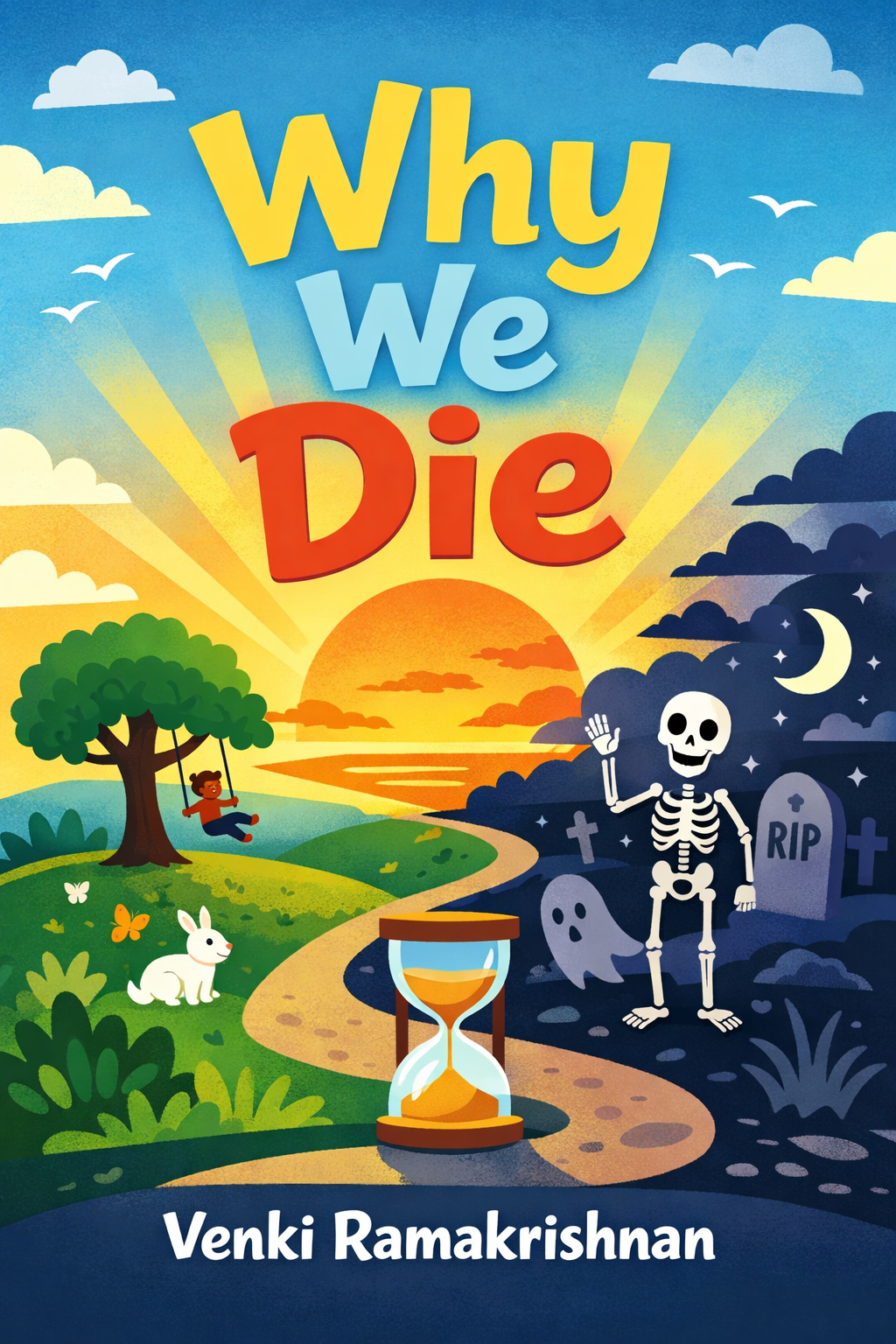
Why We Die ventures into one of humanity’s most profound and universal questions, not through mythology or spirituality, but through the rigorous lens of modern science. The book begins by dismantling the common perception of death as a sudden event, arguing instead that it is the final stage in a lifelong biological process we call aging. This process is not a simple wearing out of parts, but a complex, regulated, and ultimately dysfunctional series of biological events. The author guides us through the cellular and molecular machinery that, while essential for growth and development in youth, gradually becomes misdirected, leading to the hallmarks of aging: genomic instability, telomere attrition, epigenetic alterations, loss of proteostasis, deregulated nutrient sensing, mitochondrial dysfunction, cellular senescence, stem cell exhaustion, and altered intercellular communication. We see how these interconnected failures manifest as the diseases and frailty we associate with getting old, making aging the single greatest risk factor for most human mortality.
Having established aging as the root cause, the narrative shifts to the cutting edge of biogerontology—the science of slowing, halting, or even reversing this process. The book surveys the promising, and often controversial, frontiers of longevity research. It details the science behind caloric restriction and its mimetics, the quest to clear senescent “zombie” cells, the potential of telomerase activation, the reprogramming of epigenetic clocks, and the application of drugs like rapamycin. These are not presented as mere science fiction but as active areas of investigation with tangible, if preliminary, results in animal models. The author carefully distinguishes between extending “healthspan”—the period of life spent in good health—and merely extending “lifespan,” arguing that the former is the more urgent and ethical goal. This section is grounded in realism, acknowledging the immense technical hurdles, the potential for unintended consequences, and the vast gap between mouse studies and human therapies.
The final, and perhaps most compelling, part of the book confronts the philosophical, ethical, and societal ramifications of significantly extending human life. If the biological causes of aging are amenable to treatment, then death from old age may become optional for future generations. This prospect forces a radical re-examination of what gives life meaning. The author explores arguments that mortality is essential for creativity, ambition, and the renewal of generations, while also considering the counter-argument that a finite lifespan is a biological tragedy, robbing us of potential experiences and wisdom. The ethical dilemmas are staggering: Who would have access to life-extending therapies? Would they exacerbate global inequality? How would population dynamics, pensions, relationships, and even personal identity be affected in a world where people live for centuries? The book does not provide easy answers but insists that these conversations must accompany the scientific progress.
Ultimately, Why We Die presents a dual narrative. It is a lucid primer on the biology of aging, making a compelling case that it is the most legitimate target for medicine to improve human health. Simultaneously, it is a profound meditation on what it means to be human in a potential future where our oldest companion—mortality—might be held at bay. The journey leaves the reader with a deepened understanding of the intricate dance of life at a cellular level and a heightened awareness of the precious, finite nature of our current existence. It suggests that by truly understanding why we die, we might not only learn how to live longer, but also how to live better.