Description
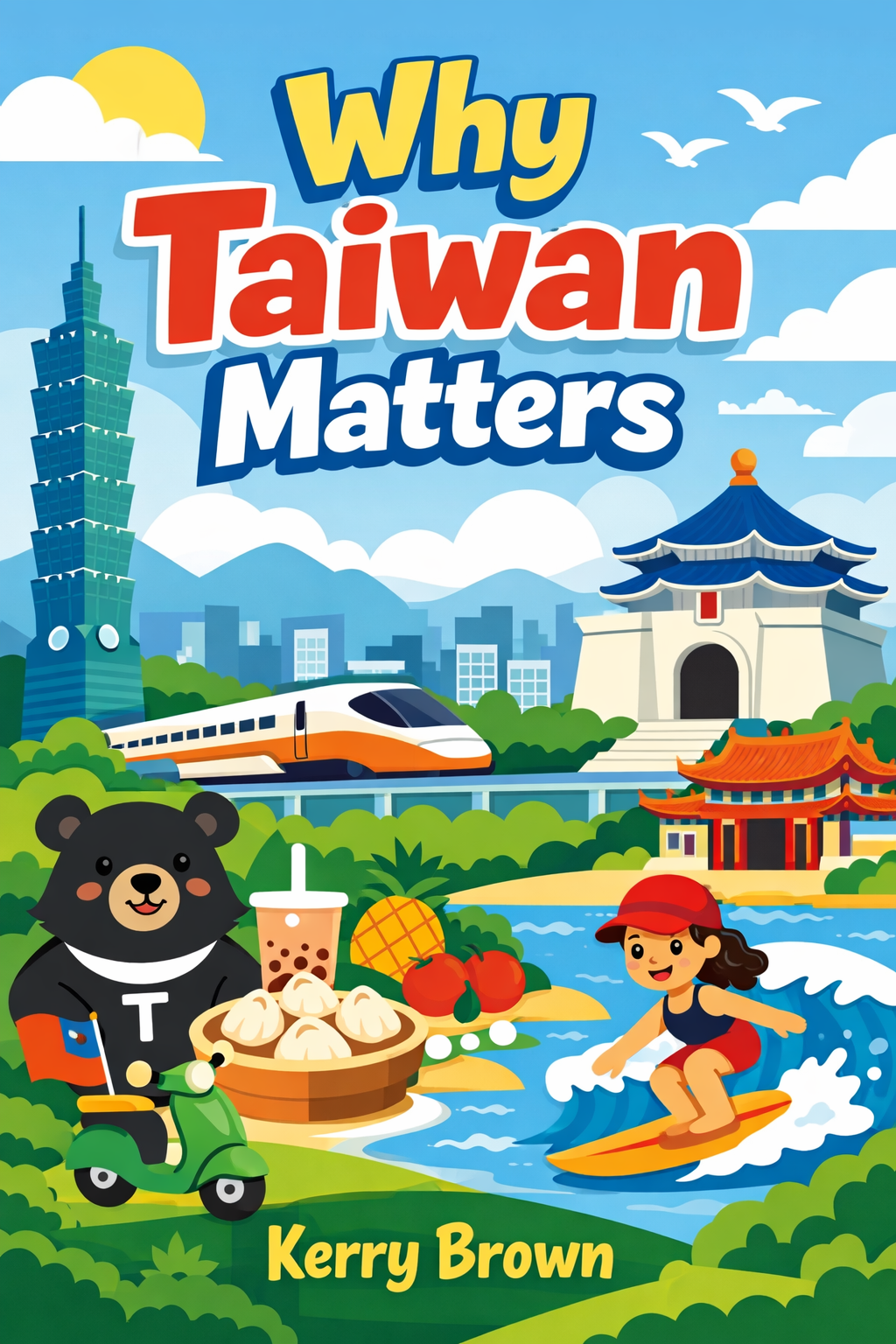
A road sign in Taipei points to an air raid shelter while, just steps away, a crowd gathers for bubble tea. This juxtaposition of looming threat and vibrant daily life captures the essence of modern Taiwan. An island roughly the size of the Netherlands has become one of the most strategically significant places on Earth, a democracy living in the shadow of an authoritarian giant, whose future could determine the course of the 21st century.
Taiwan’s peculiar normalcy exists under constant pressure. Chinese military aircraft breach its airspace thousands of times a year, yet society functions with remarkable calm. This resilience is rooted in a complex identity forged through a tumultuous history. The island’s political status stems from the unresolved Chinese Civil War of 1949, which left two governments claiming to represent “China.” For decades, a delicate diplomatic ambiguity—recognizing only one China without defining what that meant—preserved an uneasy peace. Over time, the paths of Taiwan and mainland China radically diverged. While the mainland embraced communist rule, Taiwan evolved from authoritarianism into a thriving capitalist democracy, creating a distinct society where today, a vast majority of people identify primarily as Taiwanese.
This unique identity is a tapestry woven from many influences. Indigenous peoples inhabited the island for millennia before significant Chinese migration began. European traders, fifty years of Japanese colonial rule, and the influx of two million Nationalist Chinese after 1949 all left indelible marks. This history is physically preserved in Taipei’s National Palace Museum, home to imperial treasures spirited away from the mainland, making Taiwan both a guardian of traditional Chinese culture and a society that has charted its own course. A brutal crackdown by Nationalist forces in 1947, known as the 228 Incident, created deep societal wounds, but an unexpected reprieve came with the Korean War, which distracted China and saved Taiwan from imminent invasion. The subsequent “economic miracle,” fueled by manufacturing for global companies, propelled Taiwan to prosperity even as it faced increasing diplomatic isolation.
Today, Taiwan’s vibrant democracy is a point of immense pride and a key fault line with Beijing. Political life is dynamic, with generational divides shaping support for different parties, all navigating the central question of how to manage relations with China while preserving autonomy. The dramatic erosion of freedoms in Hong Kong has served as a sobering lesson for Taiwanese, with an overwhelming majority now rejecting China’s “One Country, Two Systems” model. The United States plays a crucial, if legally ambiguous, role as Taiwan’s primary security partner, providing advanced weaponry and maintaining a balance of power in the Taiwan Strait, all while officially adhering to a one-China policy.
Perhaps Taiwan’s most powerful asset is not its military but its economic indispensability. At the heart of this is the Taiwan Semiconductor Manufacturing Company (TSMC). Nestled in unassuming buildings in Hsinchu Science Park, TSMC is the world’s most advanced chipmaker, producing over 90% of the planet’s most sophisticated semiconductors. These tiny components are the brains of everything from smartphones and cars to advanced weapons systems. TSMC’s pure manufacturing model, which prioritizes client trust and relentless innovation, has made it irreplaceable to the global tech ecosystem, including China’s own industries. This creates what some call a “silicon shield”—the theory that Taiwan’s technological value deters aggression because conflict would catastrophically disrupt the global economy. Others fear it makes the island an even more tempting prize.
Relations across the strait are a tense dance of economic interdependence and political hostility. Billions of dollars in trade flow annually, with over a million Taiwanese living and working in China. Yet diplomatic exchanges are rare and fraught. A historic 2015 meeting between leaders, held on neutral ground in Singapore, highlighted the potential for dialogue but did not break the fundamental deadlock. China continues to press for unification, employing tactics from military intimidation to poaching Taiwan’s diplomatic allies. For Taiwan, the challenge is to engage economically without compromising its sovereign democracy, a balancing act that defines its politics and its future.
The island thus stands at a crossroads, a thriving society of 23 million people whose existence is a geopolitical anomaly. It is a testament to democratic resilience, a hub of irreplaceable technology, and a potential trigger for conflict between superpowers. Understanding Taiwan is not merely about understanding an island; it is about understanding the fragile web of technology, identity, and power that will define the coming era. Its story is one of quiet determination in the face of immense pressure, where the everyday act of buying bubble tea becomes a subtle statement of normalcy against a backdrop of world-altering stakes.