Description
In a world obsessed with rationality, the true drivers of human behavior are often delightfully absurd. This book serves as a guided tour through the bizarre and counterintuitive realities that govern our daily decisions, revealing that the principles of economics are not confined to stock markets and policy debates but are woven into the fabric of our most ordinary moments. The authors, through a collection of curious observations and reader-submitted anecdotes, demonstrate that our actions are frequently at odds with logic, guided by hidden incentives and unexamined fears. By examining the peculiar patterns in everything from crime to baby names, they invite us to question the world as it appears and to look for the strange sense within the nonsense.
Consider the simple act of naming a child. What appears to be a matter of personal taste is, in fact, a landscape of wild social contagion and eerie coincidences. A name can explode in popularity overnight due to a single celebrity mention, transforming an obscure spelling into a national trend. Beyond trends, names sometimes carry an almost prophetic awkwardness, as evidenced by professionals whose surnames bizarrely match their occupations, suggesting that life often imitates a bad pun. These patterns are not mere curiosities; they are windows into how information spreads and how identity is shaped by forces larger than individual choice.
This irrationality extends directly to our wallets in the realm of pricing. The difference between 99 cents and one dollar is mathematically trivial, yet psychologically profound. This manipulation is just the surface of a deeply confused marketplace. Identical generic medications can carry hundred-dollar price differences between pharmacies, preying on the assumption that prices are standardized. Even businesses themselves are often baffled by basic economics, creating “deals” where buying more costs you more per unit, like a third chicken wing priced higher than the first two combined. These are not signs of cunning but of widespread confusion, a theme echoed by government policies like minting coins that cost more to produce than they are worth.
Our misjudgments are perhaps most dangerous when applied to risk. Society collectively fixates on dramatic, rare threats while ignoring the mundane dangers that pose a far greater statistical threat. Data reveals that horseback riding is more injurious per hour than motorcycle riding, yet it lacks the same fearful reputation. More critically, we are culturally conditioned to fear strangers, when the hard numbers tell a different story: violence is overwhelmingly perpetrated by people known to the victim. From domestic murders to assaults and abductions, the familiar face is, by a large margin, the more likely threat. This miscalibration of fear leads us to allocate our anxiety and resources toward the sensational and away from the probable.
Dishonesty, too, operates under its own perverse economic logic. People will lie even when the truth would serve them better, as seen in welfare applicants who underreport cars but overreport basic amenities like toilets, trading practical benefit for personal dignity. Conversely, the marketplace actively incentivizes fabrication. A book sold as a “memoir” will generate more attention and sales than the same book labeled a “novel,” creating a powerful financial incentive for authors and publishers to blur the lines between fact and fiction. The lie, in this case, is simply a rational response to a market that rewards a compelling story more than a truthful one.
Our well-intentioned efforts to protect the environment are frequently undermined by similar miscalculations. Common sense actions like walking to the store or planting a vegetable garden are championed as green victories, yet a deeper analysis of their full lifecycle often reveals surprising inefficiencies. The calories burned on a walk, if replaced by certain foods, can have a carbon footprint equivalent to a car ride. Similarly, the “food miles” associated with transporting produce are a fraction of the emissions generated by its production, particularly for meat. Thus, choosing a plant-based meal once a week does more to reduce emissions than maintaining a personal garden, upending the typical narrative of local sustainability.
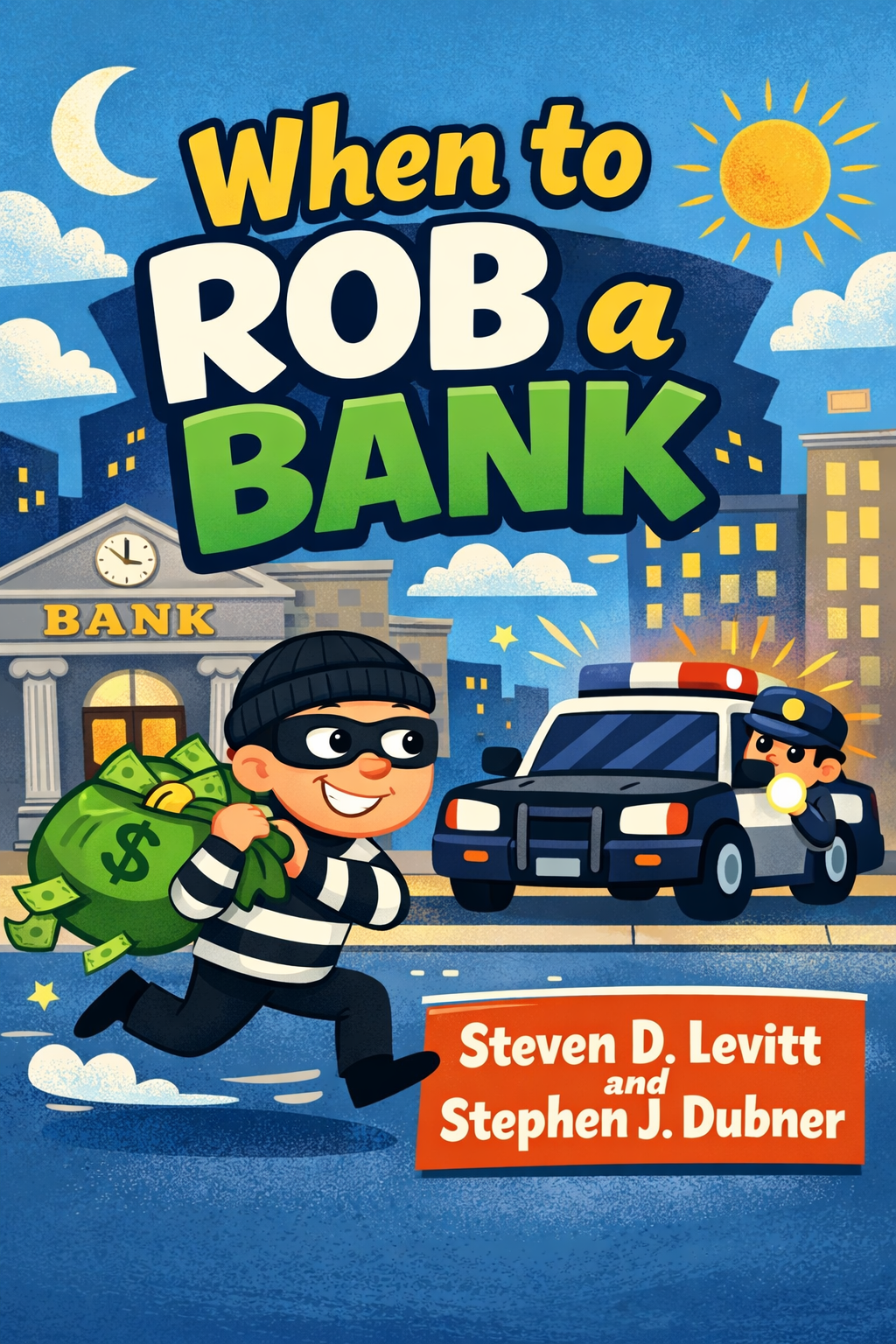
The irrational economic principles even govern the worlds of crime and law enforcement. A seasoned bank robber might advise that Thursday is the optimal day for a heist, a nugget of absurd professional wisdom. On the other side of the law, psychological concepts like “priming” suggest that subtly reminding someone of criminality can actually increase dishonest behavior, implying that our methods of deterrence can sometimes backfire in predictable ways. These insights reveal that both criminals and those who chase them operate within systems that do not always follow a script of pure logic.
Ultimately, this journey through the oddities of everyday life leads to a single, powerful conclusion: economics is not a dry science of graphs and equations, but a lively study of human incentives and their frequently unintended consequences. It is present in our living rooms, our shopping carts, our fears, and our white lies. By learning to spot these hidden forces, we can make better sense of a world that often seems senseless, make wiser decisions as consumers and citizens, and perhaps develop a healthier appreciation for the wonderfully strange logic that actually makes the world go round.