Description
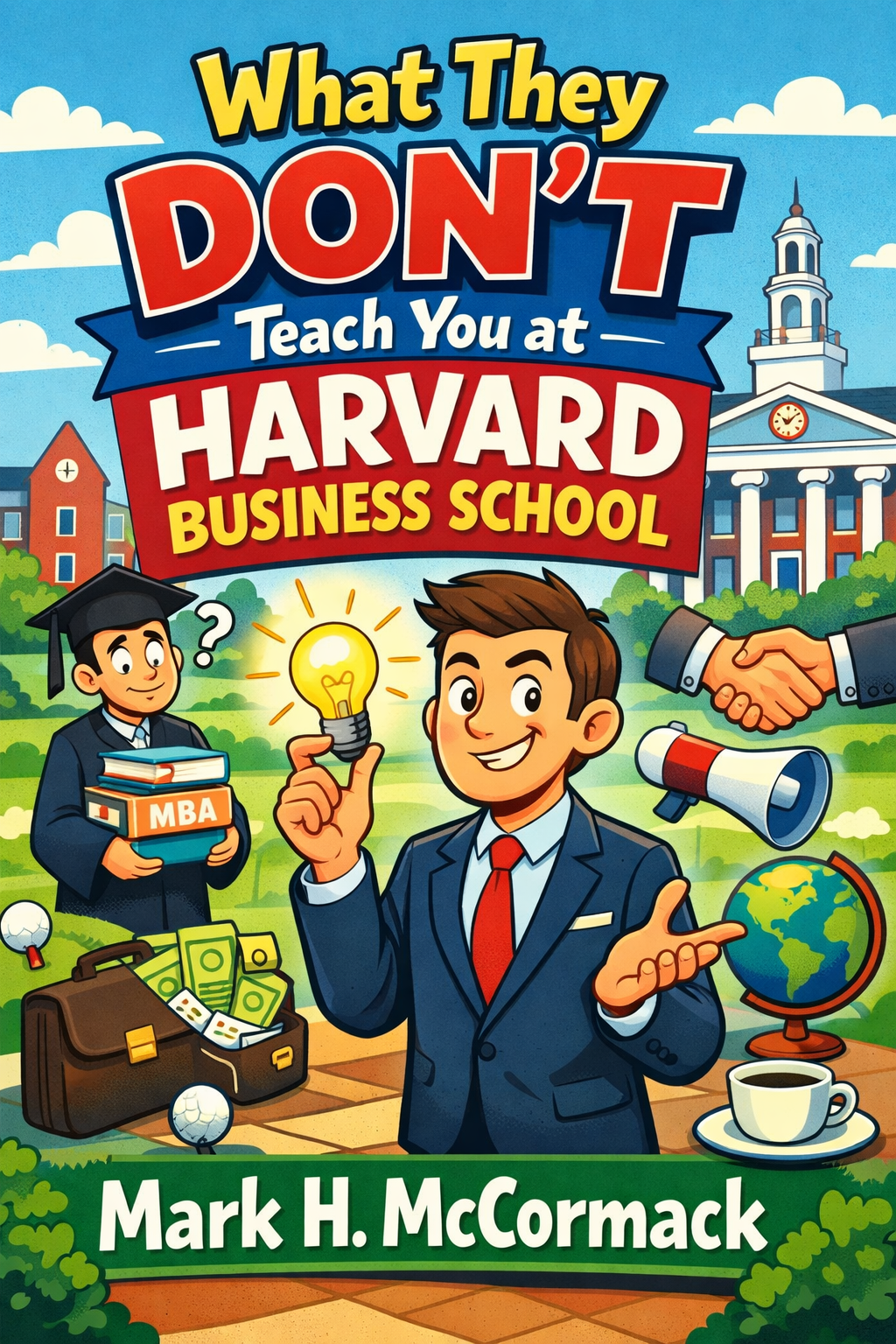
Mark McCormack’s classic work bridges the gap between the polished case studies of the business school classroom and the messy, human reality of the professional world. The book argues that while Harvard teaches finance, marketing, and strategy—the science of business—true success is governed by the unwritten rules, the subtle art of reading people, and the street-smart tactics that are learned through experience, not lecture. It is a masterclass in practical wisdom, focusing on the psychological and interpersonal elements that ultimately determine who wins and who loses.
The core premise is that people do business with people they know, like, and trust. Therefore, the fundamental skill in any enterprise is the ability to understand, connect with, and influence others. McCormack delves deeply into the art of “reading” people—observing their behavior, listening not just to their words but to their silences and hesitations, and discerning their true motivations, which often differ from their stated positions. He provides actionable insights on how to gather this kind of intelligence in everyday interactions, from a handshake and a first meeting to a formal negotiation. This human intelligence becomes the critical data that informs every other business decision.
A significant portion of the book is dedicated to the dynamics of selling and negotiation, framed not as adversarial battles but as processes of guided discovery and mutual benefit. McCormack advises against the hard sell, advocating instead for a style where you listen your way to a solution. The key is to ask the right questions, uncover the other party’s real needs and pressures, and then position your offering as the answer to their problem. He emphasizes preparation and the strategic use of time, silence, and patience as powerful tools. Understanding what the other side truly values—which may not be the price on the contract—allows for creative deal-making where both parties feel like victors.
Beyond deal-making, the book offers crucial lessons on internal management and personal effectiveness. McCormack stresses the importance of time management, but with a twist: it’s less about rigid systems and more about prioritizing people and opportunities. He introduces concepts like leveraging your time by focusing on the “what” rather than the “how,” and the necessity of clear, direct communication to avoid the corporate paralysis of assumptions and misunderstandings. Managing upwards and sideways is given as much weight as managing downwards, highlighting the political savvy required to navigate an organization and get things done.
The work also serves as a candid guide to personal advancement and creating opportunity. McCormack discusses the power of self-packaging, the importance of building and nurturing a network before you need it, and the critical habit of following up. He argues that success often comes from seeing and seizing opportunities that others miss because they are too focused on formal plans or hierarchies. This requires a blend of confidence, hustle, and the willingness to take calculated risks based on your read of the people and the situation.
Ultimately, the book’s enduring power lies in its focus on applied psychology and integrity. McCormack repeatedly returns to the theme of trust as the ultimate business currency. Short-term tricks and manipulation are exposed as futile strategies. Real influence is built on reliability, honesty, and the consistent delivery of results. It is a pragmatic, sometimes cynical, but always human-centric view of the corporate landscape. It reminds the reader that behind every spreadsheet, contract, and corporate strategy are individuals with egos, fears, and aspirations. Mastering the unwritten curriculum of human nature is what separates the theoretically sound manager from the genuinely effective leader.