Description
Have you ever found yourself reacting to a situation in a way that felt disproportionate or confusing, as if your response came from a place you couldn’t quite access? Or perhaps you’ve felt powerless to break cycles of behavior that you know are harmful, like seeking comfort in food or withdrawing from relationships when stressed. These patterns, often perplexing to our conscious minds, are frequently the legacy of past trauma. Trauma is a complex force, difficult to treat precisely because its roots are often invisible, woven into the very fabric of our developing brains and our earliest experiences of the world. If we experienced neglect, abuse, or profound instability as children, those events don’t just live as memories; they shape our fundamental interpretations of safety, threat, and self-worth. Without conscious awareness of this shaping, we remain at the mercy of these hidden blueprints.
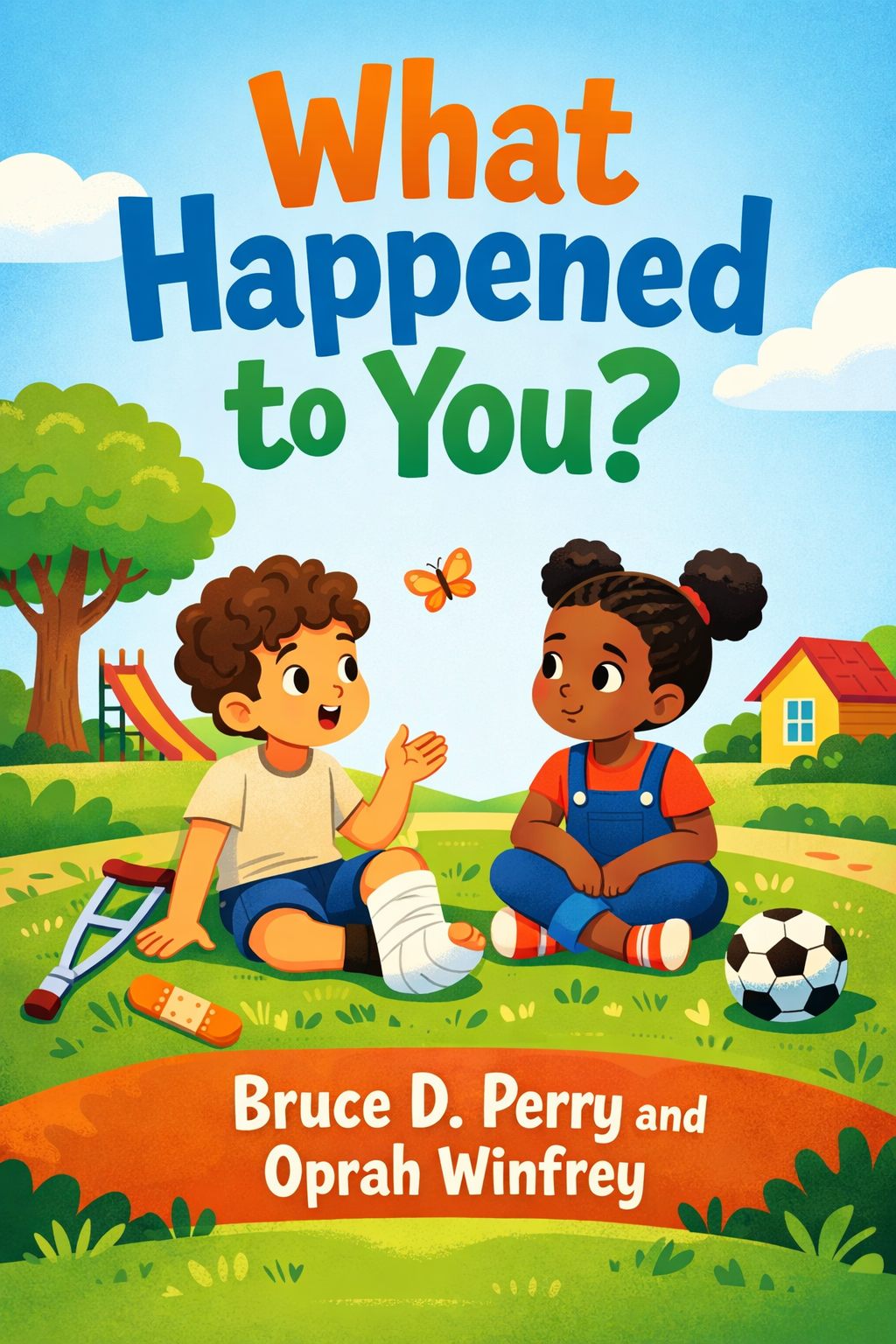
This understanding is central to the dialogue between Oprah Winfrey and Dr. Bruce Perry. Oprah speaks from personal experience, having endured childhood neglect and abuse. For her, comprehending this history was the key to unraveling lifelong coping mechanisms like people-pleasing and using food to numb emotional pain. Together with Dr. Perry, a leading neuroscientist and psychiatrist, they explore a fundamental shift in perspective: instead of asking “What’s wrong with you?” we must learn to ask “What happened to you?” This simple but profound re-framing moves us from a place of judgment to one of curiosity and understanding, opening the door to genuine healing.
The journey begins with recognizing that our brains are literally sculpted by our unique childhood experiences. The rational, thinking part of our brain—the cortex—takes years to fully develop. Contrary to the belief that very young children won’t remember or be affected by early events, the opposite is true. The younger the child, the more profound the impact, as the brain is forming connections at an astonishing rate. Every experience, especially repeated patterns of care or threat, is logged into a personal, often non-verbal, “codebook.” Later in life, elements from this codebook—a scent, a tone of voice, a specific time of day—can trigger overwhelming reactions that seem to come out of nowhere. A veteran, for instance, might dive for cover at the sound of a car backfiring, his brain stem reacting to the trauma-coded noise before his cortex can remind him he is safe. These responses are not logical failures; they are the brain’s survival systems, formed in a different time, firing in the present.
Therefore, you cannot effectively address trauma without understanding how the brain processes it. Traumatic memories embed themselves not just in the cortex but deep in the more primitive, reactive parts of the brain responsible for survival. When these systems become sensitized, they can hijack a person, launching them into fight, flight, or freeze mode before conscious thought has a chance to intervene. Therapeutic approaches must be tailored to this reality. Healing must start by calming these sensitized survival systems and helping the individual achieve a state of regulation. Practical strategies like establishing consistent sleep routines, engaging in rhythmic exercise like walking or swimming, or receiving calming touch like a massage are not mere adjuncts to therapy; they are foundational. They soothe the brain stem, creating the internal safety required for the higher brain to later engage in the work of processing and making sense of the past.
This leads to a core principle: learning positive self-regulation strategies is essential for dealing with trauma. Our brains possess innate self-regulation systems, networks designed to keep us in a balanced state. Dr. Perry visualizes this as a “Tree of Regulation.” When caregivers consistently meet a child’s needs with tenderness and predictability, this tree grows strong roots and resilient branches. The child learns, through repeated experience, how to calm down when upset and how to connect with others for comfort. However, if caregivers are frightening, inconsistent, or absent, the Tree of Regulation becomes impaired—a state known as dysregulation. The individual may become hypervigilant, struggle to form secure relationships, and lack healthy internal tools for managing distress. In this void, addictive behaviors often take root. Substances, compulsive eating, or other harmful habits provide a powerful, albeit temporary, counterfeit form of regulation, lighting up the brain’s reward circuits and creating a destructive cycle. The path to healing involves consciously identifying these patterns and cultivating healthy alternatives—learning to recognize the body’s stress signals, setting boundaries, and discovering soothing activities that genuinely restore balance.
A powerful and often overlooked avenue for restoring this balance is rhythm. Our lives are built upon rhythms, starting with the first sound we ever hear: our mother’s heartbeat in the womb. Rhythmic rocking soothes a distressed infant, and rhythmic activities like walking, dancing, drumming, or even mindful breathing can soothe a distressed adult brain. Modern life, with its cacophony of arrhythmic noises and its disconnect from natural cycles, can be particularly jarring for a nervous system sensitized by trauma. Intentionally reconnecting with rhythm is a therapeutic tool. It might involve walking in nature and syncing your breath to your steps, engaging in dance, or simply creating predictable, rhythmic routines for your day. These practices communicate safety to the deep, reactive parts of the brain, signaling that the chaos is over and a steady, predictable pattern has returned.
Ultimately, healing from trauma is not a solitary process. Our brains are wired for connection, and positive, attuned relationships are the most powerful regulatory tool we have. Trauma often damages our capacity to trust and connect, leaving us isolated. Healing involves slowly rebuilding this capacity, often starting with safe, therapeutic relationships and extending into our personal lives. It requires the presence of others who offer consistent, patient, and empathetic support. Furthermore, we must acknowledge that trauma is not only individual but can be collective and historical. The profound, chronic stress of systemic racism, for example, inflicts a trauma that is transmitted across generations, affecting brain development and health outcomes. Addressing such deep-seated wounds requires both personal healing and a commitment to creating more just and equitable communities.
The message of this exploration is ultimately one of hope and resilience. Our brains, shaped by past adversity, retain a lifelong capacity for change—a quality known as neuroplasticity. With the right support, understanding, and strategies, we can re-pattern our neural pathways. We can learn to decipher our personal codebooks, calm our sensitized alarm systems, and build new, healthier trees of regulation. The goal is not to erase the past, but to integrate it, transforming our relationship with our own history so that we are no longer controlled by it, but informed by it. The journey asks for compassion, starting with the question, “What happened to you?” and leading to the empowering realization that while our past shaped us, it does not have to define our future.