Description
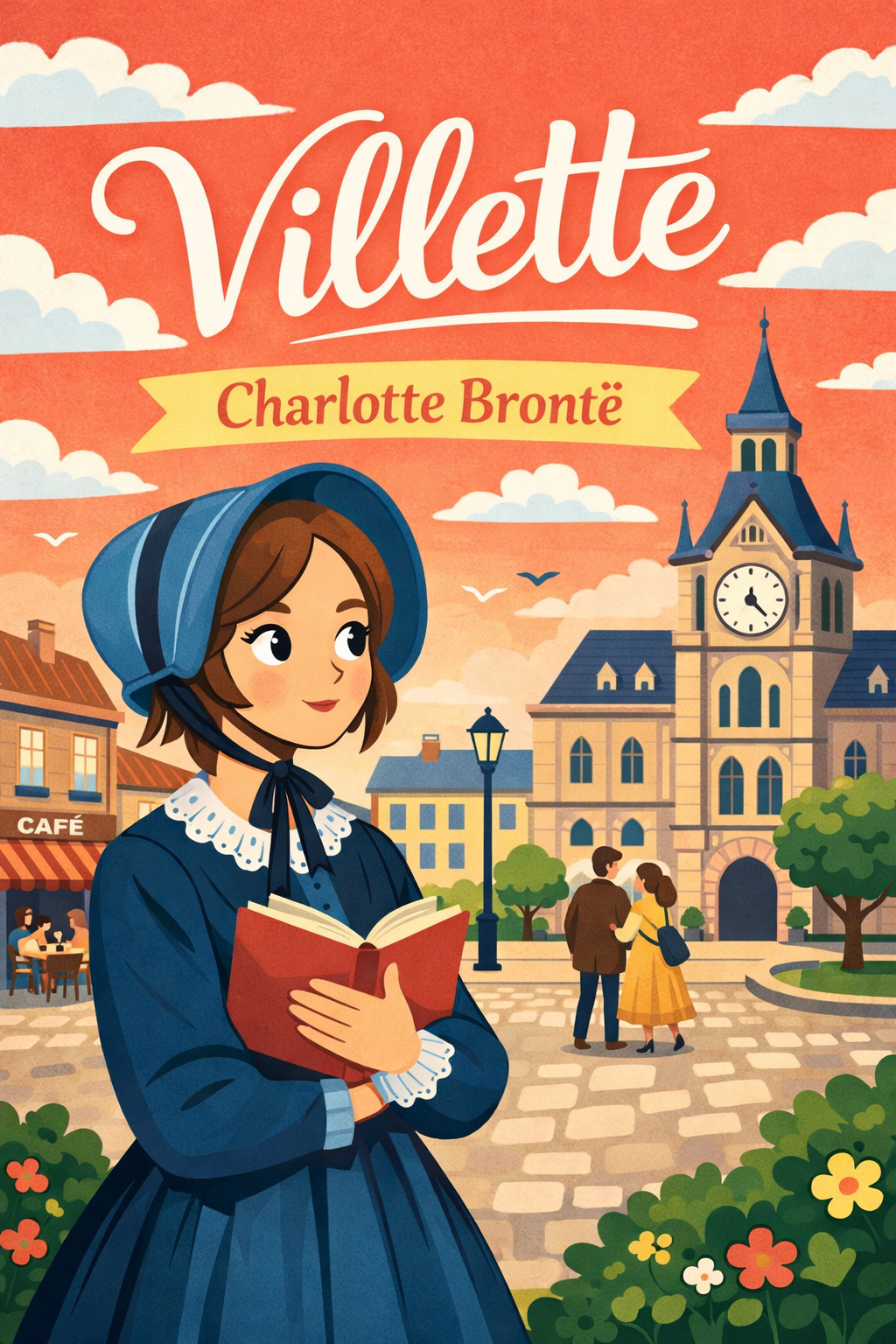
Charlotte Brontë’s final novel, *Villette*, is a masterful and deeply psychological portrait of a woman forging a self against the grain of society’s expectations. Narrated by the reserved and seemingly passionless Lucy Snowe, the story begins with a series of quiet losses in England that strip her of family and home. With a characteristic, almost brutal practicality, Lucy decides to cross the Channel alone, armed with scant resources and basic French, to seek a livelihood in the fictional French-speaking city of Villette.
Her journey is one of profound isolation. As a foreigner and a single woman of no fortune, she exists on the margins, her inner life a vast, unspoken landscape. She finds employment at a boarding school for girls run by the shrewd and surveillant Madame Beck. The school is a world of petty intrigues and constant noise, which only amplifies Lucy’s internal silence. Yet, here she discovers a tenacious strength, earning respect through her work and carving out a fragile autonomy. This hard-won independence is both her solace and her prison, protecting her but also deepening her seclusion.
The narrative is punctuated by the reappearance of figures from her past. John Graham Bretton, the charming doctor she knew as a girl, re-enters her life, reawakening a poignant, unrequited affection. She watches, with a mixture of stoicism and pain, as his attentions turn toward others—first the flirtatious Ginevra Fanshawe and then Paulina Home, the once-childish Polly now grown into a lovely woman. These relationships highlight Lucy’s role as an observer, one who feels destined to witness the happiness of others from a distance.
The heart of the novel, however, lies in Lucy’s complex and fiery relationship with Paul Emanuel, a professor at the school. Irascible, dogmatic, and fiercely intelligent, he is her intellectual equal and emotional opposite. Their interactions are battles of will and ideology, charged with an unacknowledged passion. Paul sees beyond Lucy’s quiet exterior to the keen mind and passionate soul within, and he becomes the one person who truly challenges her. Their connection grows amidst a tangle of misunderstandings, cultural clashes, and the ghost of Paul’s own past commitment. Lucy’s love for him is not a simple romance but a tumultuous negotiation of power, faith, and identity.
Throughout, Lucy confronts invisible but formidable barriers. As an English Protestant in a Catholic country, she is a perpetual outsider. Language, customs, and religious dogma create a chasm between her and the world of Villette. Societal norms dictate how a woman should behave, feel, and hope, constraints that Lucy continually pushes against. Her entire existence becomes a testament to emotional endurance, to the quiet, fierce resilience required to maintain one’s spirit in a world that offers little place for it.
Brontë’s genius is in the novel’s uncompromising perspective. Lucy is an unreliable narrator by omission, often obscuring her deepest feelings or the novel’s most dramatic events, forcing the reader to read between the lines of her calm prose. The ending remains famously ambiguous, refusing the conventional comforts of Victorian storytelling. It suggests a life defined not by grand, publicly celebrated triumphs, but by private integrity and the courage to face an uncertain future alone. *Villette* is ultimately a profound exploration of interiority, a celebration of a woman’s intellectual and emotional survival, and a haunting meditation on the price and power of self-possession.