Description
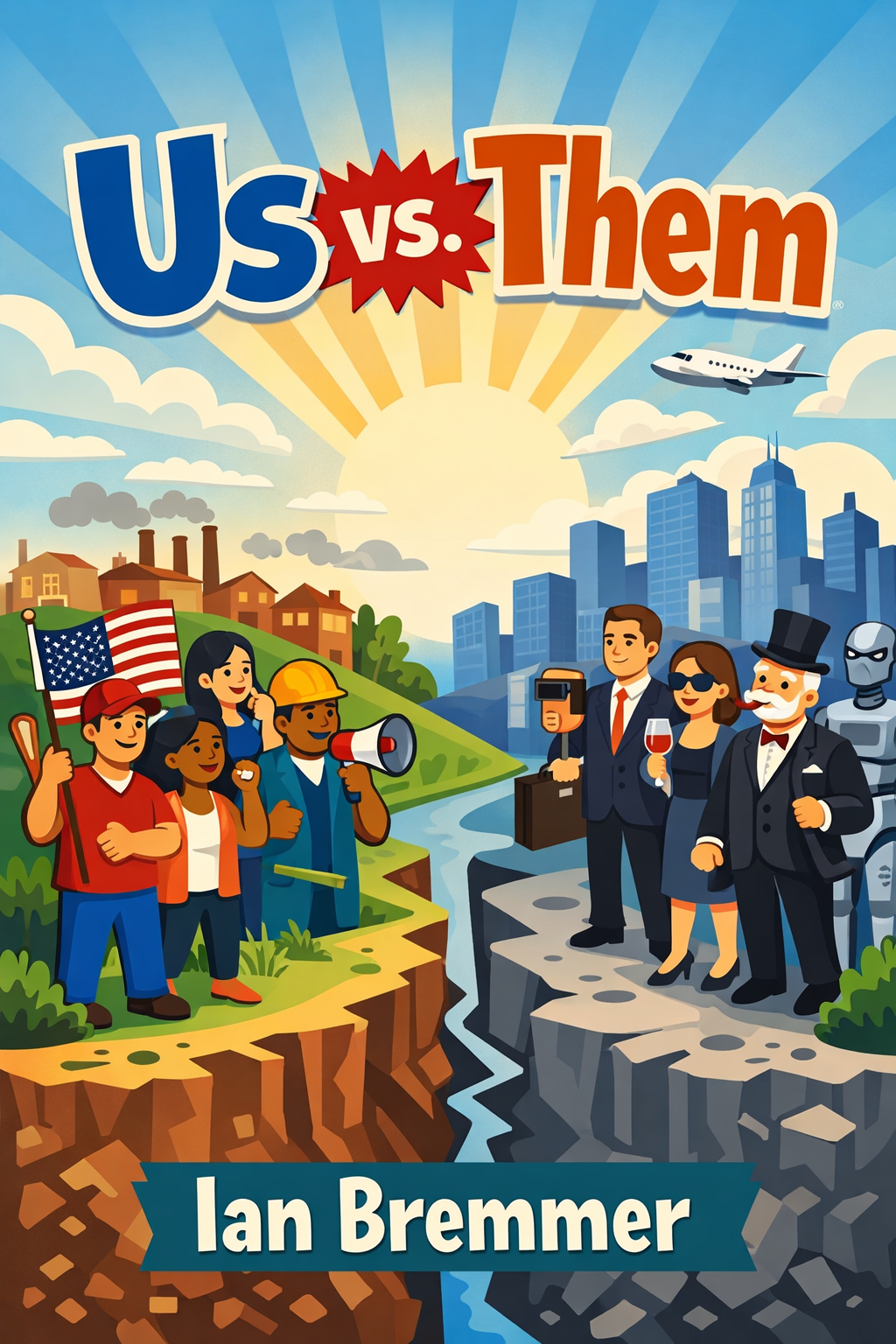
The human mind possesses a powerful, innate tendency to sort the world into categories of “us” and “them.” This book delves into the profound consequences of this simple mental shortcut, arguing that it is the fundamental engine behind societal conflict, political polarization, and even everyday workplace tensions. It is not merely about differing opinions, but about a primal psychological shift that occurs when we identify with a group. Once we see ourselves as part of an “us,” those outside the group—”them”—are subtly and often subconsciously diminished in our minds. They are perceived as less complex, less moral, and less human. This is the foundational crack into which prejudice, distrust, and outright hostility flow.
The author meticulously traces the biological and evolutionary origins of this groupish instinct. Forming tight-knit bands was essential for survival in our ancestral past; loyalty to the tribe meant protection and shared resources. This hardwired impulse for coalition and cooperation, however, came with a shadow side: a readiness for competition and suspicion toward outsiders. The modern world has transformed these ancient tribal circuits. Today, our “tribes” are often political parties, nationalities, religious affiliations, or even sports teams. The digital age has supercharged this dynamic, creating echo chambers where “us” is constantly reinforced and “them” is caricatured and vilified from a safe distance. The result is a world that feels increasingly bifurcated, where dialogue collapses and compromise is seen as betrayal.
A central and compelling thread of the analysis focuses on how group identity alters our very perception of reality. Through a wealth of psychological studies and historical examples, the book demonstrates that people do not simply disagree on solutions; they begin to disagree on basic facts. When a piece of information aligns with a group’s narrative, it is accepted uncritically. When it challenges the group’s stance, it is rejected, regardless of its veracity. This “identity-protective cognition” means that reasoning often becomes not a tool for finding truth, but a weapon for defending our team. We become brilliant lawyers for our own side and ruthless prosecutors of the other, all while believing we are being perfectly objective.
The middle sections explore the specific mechanics of division. The author examines how symbols, language, and rituals strengthen in-group bonds while erecting barriers to the out-group. They dissect how leaders, from populist politicians to charismatic influencers, can manipulate these divides for power, casting themselves as the sole champion of “us” against a threatening “them.” The book also looks at economic and social anxiety as fertile ground for division, showing how fear and uncertainty make people more likely to retreat into rigid group identities and seek scapegoats. It becomes clear that “us vs. them” is not an accidental byproduct of society but a recurring pattern that is easily triggered and exploited.
Yet, this is not a work of despair. After laying bare the depth of the problem, the book pivots toward hope and practical solutions. It argues that while the tendency to form groups is innate, the hostility that often accompanies it is not inevitable. The key lies in challenging the binary, zero-sum mindset. The most effective antidotes are contact and shared goals. When individuals from opposing groups are brought together to cooperate on a common task—a project, a community effort, a literal shared space—the rigid boundaries of “us” and “them” begin to blur. Personal relationships form, and the abstract “other” becomes a specific human being with complexities and common hopes.
The path forward requires intentional effort. It involves cultivating what the author calls “meta-awareness”—the ability to recognize when our own tribal instincts are being activated. It calls for creating what the book terms “superordinate identities,” larger group affiliations that can encompass smaller ones. For instance, two people might identify as members of rival political parties, but they can also both identify as concerned parents, loyal community members, or citizens of the same nation. Highlighting these broader, shared identities can dampen conflict. The book advocates for institutions, from schools to corporations to media organizations, to design processes and narratives that emphasize common humanity and complex, multi-faceted identities rather than simplistic divisions.
Ultimately, the message is one of sober optimism. The “us vs. them” instinct is a deep part of our psychology, but human beings also have a profound capacity for empathy, reason, and bridge-building. The conflict we see is not a sign of irredeemable brokenness, but the output of default psychological settings operating in a complex world. By understanding these settings—by seeing the gears of division at work in our own minds and our societies—we gain the power to intervene. The book concludes that moving beyond a world of “us vs. them” does not mean erasing our differences or our group loyalties, but rather transcending the instinct to let those differences define all of our interactions. It is about building a society where we can have a fierce “us” without needing a despised “them,” recognizing that our fates are inextricably linked in a shared, fragile world.