Description
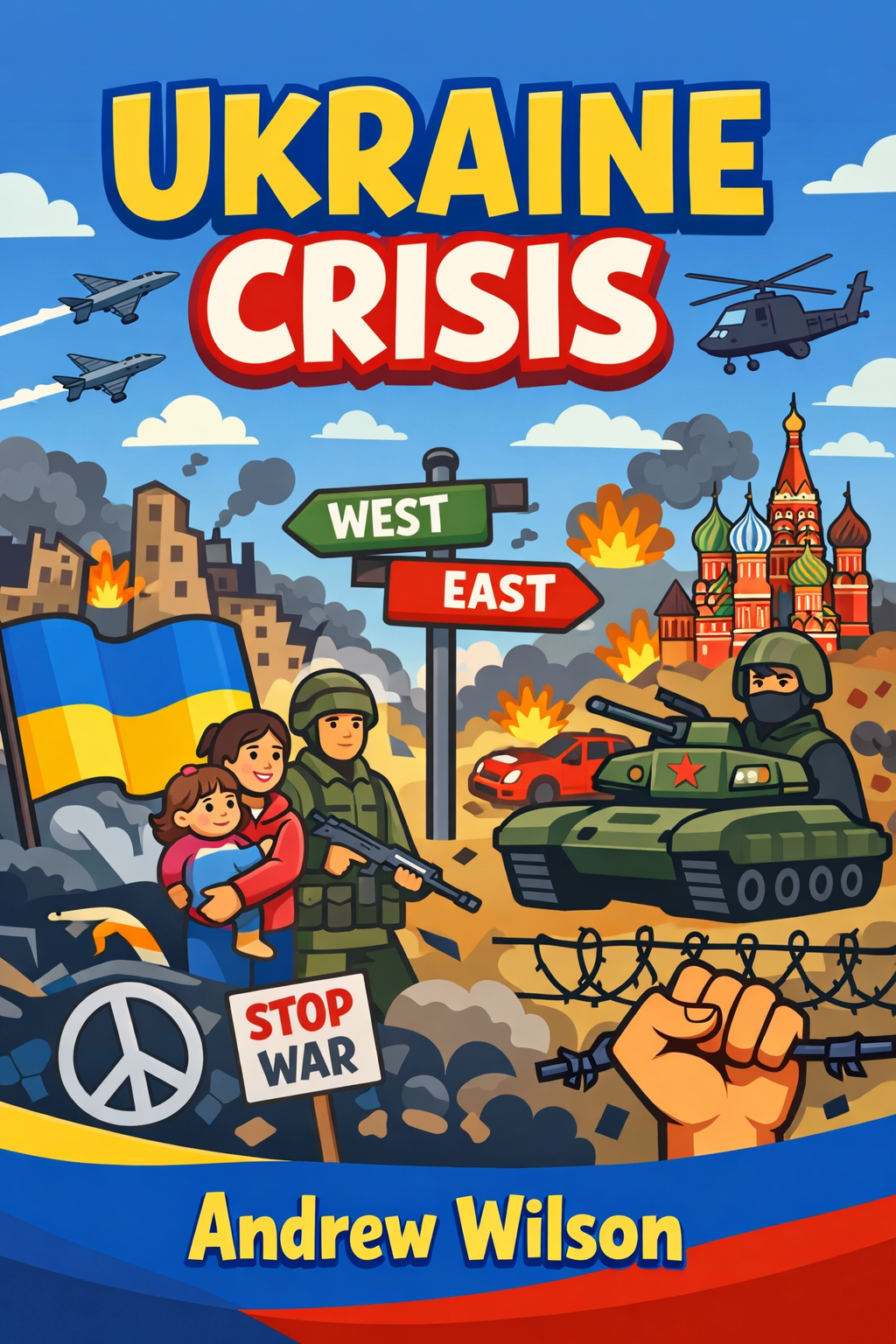
The crisis in Ukraine is not a sudden eruption but the culmination of centuries of complex history and decades of post-Soviet struggle. At its heart lies a nation perpetually caught between competing spheres of influence, its identity and sovereignty contested by powerful neighbors and internal divisions. For years, Ukraine has grappled with a political system riddled with corruption, where oligarchs and shadowy interests often held more power than democratic institutions. This internal weakness created fertile ground for external manipulation, setting the stage for a profound national rupture.
Ukraine’s geographic position, straddling the frontier between Russia and the European Union, has long defined its destiny. This has created a nation torn by old and new loyalties, where historical ties to Moscow clash with aspirations for a European future. Russia, seeking to reclaim its diminished influence following the collapse of the Soviet Union, has consistently leveraged its economic power—particularly its control of vital gas supplies—to pressure Kyiv. Simultaneously, the eastward expansion of Western institutions like the EU and NATO has been viewed by Moscow as a direct threat, prompting a fierce and often covert campaign to pull Ukraine back into its orbit. The European Union, for its part, initially pursued a policy of engagement tempered by caution, often prioritizing stability and energy security over robust support for Ukrainian reform, a stance that inadvertently allowed tensions to fester.
Internally, Ukraine’s journey since independence in 1991 has been a turbulent one. The initial promise of democracy quickly gave way to a system dominated by powerful business oligarchs and pervasive corruption. The 2004 Orange Revolution, sparked by a fraudulent presidential election, showcased a powerful civic desire for change but ultimately failed to dismantle the entrenched networks of graft. The man at the center of that fraud, Viktor Yanukovych, eventually ascended to the presidency in 2010, presiding over a government where corruption became not merely a flaw but the operating system. His refusal in late 2013 to sign a landmark Association Agreement with the European Union, under intense Russian pressure, proved to be the catalyst for disaster. Citizens, seeing the pact as their last best hope for systemic reform and a European future, returned to Kyiv’s central Maidan square in protest.
What began as a peaceful demonstration for European integration evolved into a violent revolution for dignity and clean government after state security forces brutally attacked the protesters. The world watched as Ukrainians defended the Maidan with makeshift shields, facing down snipers and riot police. A fragile agreement, brokered by the EU, temporarily de-escalated the situation but could not save Yanukovych’s regime. He fled to Russia, leaving behind a power vacuum and a nation reeling from bloodshed but euphoric with the possibility of genuine change. This moment of revolutionary victory, however, was extraordinarily fragile. The new government in Kyiv was inexperienced, the state coffers were looted, and the military was in disarray. It was at this precise moment of vulnerability that Vladimir Putin chose to strike.
Seizing the opportunity presented by Ukraine’s temporary weakness, Russia moved swiftly and decisively to annex Crimea. Masked soldiers, dubbed “little green men,” appeared across the Crimean peninsula, securing key infrastructure without insignia. A hastily organized referendum, held under the gaze of Russian guns, provided a thin veneer of legitimacy for the takeover. The operation was a masterclass in hybrid warfare, combining deniable special forces, relentless propaganda, and the exploitation of local ethnic Russian sympathies. Crimea’s strategic importance to Russia, housing its critical Black Sea Fleet, made the move a geopolitical imperative for the Kremlin. The international community, caught off guard, responded with sanctions but no military opposition, establishing a dangerous new precedent in post-Cold War Europe.
Emboldened by the bloodless success in Crimea, Putin turned his attention to Ukraine’s eastern Donbas region. Here, the Kremlin employed a different, more destructive tactic: fomenting and fueling a separatist conflict. Russian intelligence operatives, military advisors, and a steady flow of weapons and volunteers crossed the border to support proxy forces who declared independent “people’s republics.” What followed was a brutal war of attrition that devastated cities like Donetsk and Luhansk. Unlike Crimea, the Donbas was not seamlessly absorbed; instead, it became a frozen conflict, a bleeding wound on Ukraine’s side that served Russian interests by destabilizing the country and preventing its westward pivot. The conflict exposed the stark limitations of the European response and marked a definitive end to the post-Cold War order, replacing it with a new era of overt geopolitical confrontation and contested borders.
The crisis fundamentally altered the global landscape. It shattered illusions about Russia’s intentions and the durability of the European security framework. It forced a reluctant NATO to reassess its posture and prompted a painful reckoning within the EU over its dependence on Russian energy and its foreign policy resolve. For Ukraine, the crisis is an ongoing tragedy of territorial loss, war, and displacement, but also a powerful forge for national identity. The events chronicled here—from the hope of the Maidan to the trauma of annexation and war—represent a pivotal struggle over the kind of country Ukraine will become and whose influence will ultimately prevail in the heart of Europe.