Description
Stepping into a car does something strange to us. It transforms polite, reasonable people into angry, competitive, and sometimes irrational versions of themselves. This book delves into the fascinating human psychology behind this transformation, exploring why we behave the way we do on the road and how the very systems we design to manage traffic often backfire. It’s a journey into the shared space of the highway, examining the forces that shape our behavior from behind the wheel.
The enclosed, anonymous nature of the automobile fundamentally conflicts with our social human nature. Trapped in a metal box, we lose our primary means of communication—facial expressions, body language, direct conversation. This leads to frustration and aggression when interactions go awry. A honk or a cut-off isn’t just a minor annoyance; it feels like a personal affront to our mobile, metallic identity. We rage at other drivers not just as people, but as extensions of their machines, trying vainly to assert our humanity in an environment that strips it away. This explains the absurdity of shouting at someone who can’t hear you or making aggressive gestures that only escalate tension.
This frustration peaks in traffic jams, which distort our perception of time and fairness. Watching another lane creep forward while ours stands still feels like a profound social injustice, even though, over the long haul, all lanes tend to move at a similar pace. This illusion fuels the futile dance of lane-switching, a activity that studies show saves a negligible amount of time while increasing stress and risk for everyone. The jam creates a petri dish for our worst impulses, making us believe that someone else is getting ahead at our expense.
Compounding these problems is a critical lack of feedback. In most areas of life, from online marketplaces to workplaces, our behavior is shaped by responses from others. On the road, this feedback loop is broken. We operate in a bubble of self-assessment, and humans are notoriously poor judges of their own driving skill. Almost everyone believes they are an above-average driver, a statistical impossibility. Without meaningful correction from the outside world, bad habits and overconfidence go unchecked, making our roads more dangerous.
Paradoxically, driving is a skill so practiced it becomes automatic, a state sometimes called “highway hypnosis.” This mental autopilot allows us to handle the countless sub-skills of driving, but it also makes us vulnerable to distraction. When bored, we seek stimulation—from phones, radios, or daydreams. Research reveals that even a few seconds of inattention is a primary factor in a vast majority of crashes. The challenge is to remain mindfully engaged in a task that begs us to zone out.
When communities seek solutions, they often turn to building more roads. This approach, however, ignores the principle of induced demand. New or widened roads initially ease congestion, but that very improvement attracts more drivers who were previously avoiding the route or taking alternative transportation. The latent demand quickly fills the new space, returning traffic to its previous levels of snarl or even worsening them. This is why simply adding lanes rarely solves long-term congestion. More effective, though less popular, strategies involve managing demand through mechanisms like congestion pricing, which encourages drivers to consider the true cost of their trip during peak times.
Safety, it turns out, is also full of counterintuitive truths. Roads engineered to feel perfectly safe—wide lanes, clear signage, gentle curves—can inadvertently encourage riskier driving by lulling us into complacency. Conversely, roads that feel perilous, like narrow mountain passes or complex roundabouts, force heightened attention and caution. The result is that these “dangerous” roads often have fewer serious accidents. The Swedish experience of switching driving sides demonstrated this: accident rates plummeted during the period of heightened alertness and then rose again as familiarity returned. The lesson is that design which demands engagement can be more effective than design that promises effortless safety.
Ultimately, traffic is a complex mirror reflecting human nature, flawed perception, and unintended consequences. It is a system where individual rationality—switching lanes, taking the new road, driving faster on a clear highway—leads to collective irrationality in the form of jams, rage, and danger. By understanding the psychological and systemic forces at play, we can become more patient, self-aware drivers and advocate for smarter, more human-centric transportation designs. The road is a shared social space, and navigating it well requires insight into both the machine we operate and the mind operating it.
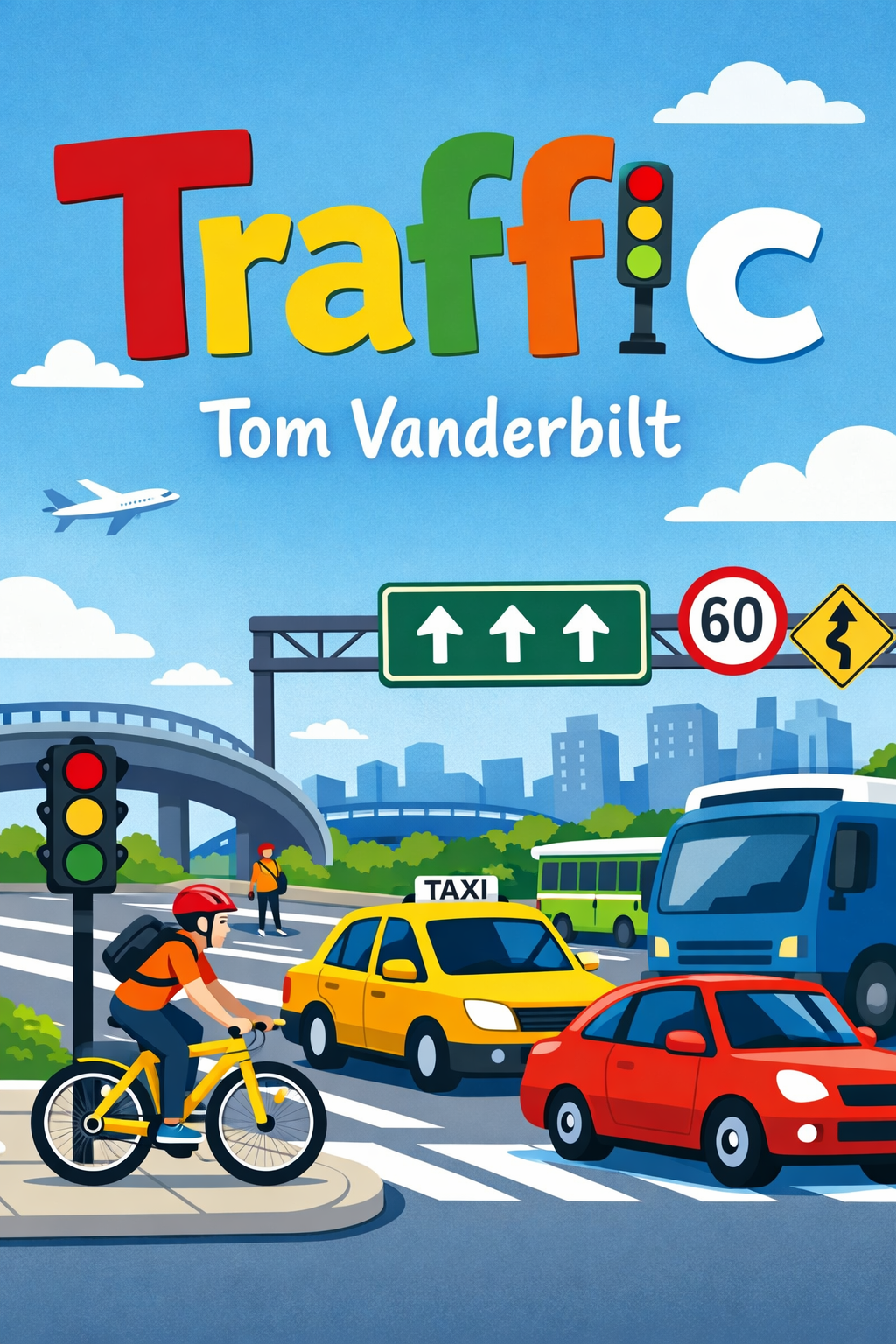
Book Title: Traffic