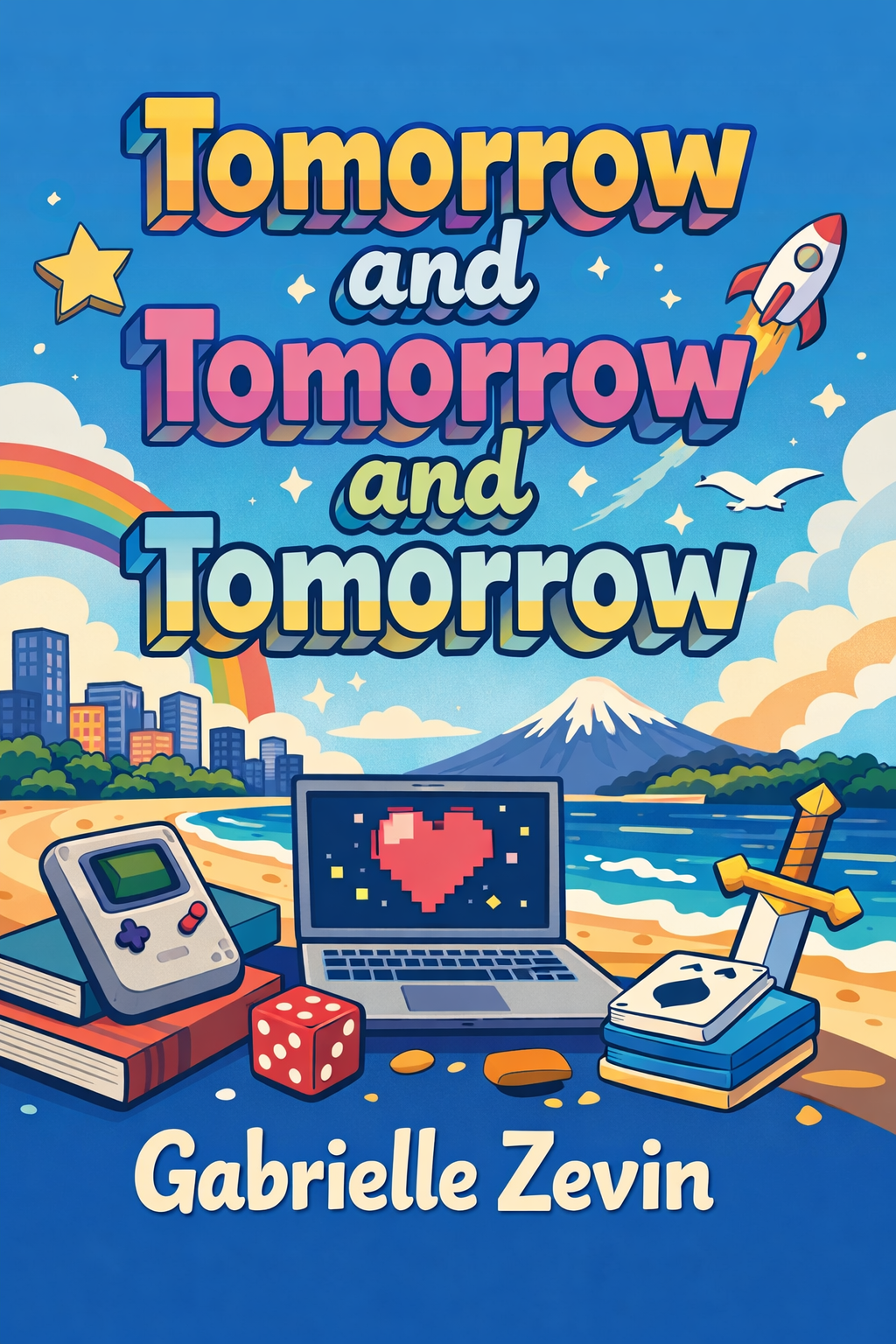
Description
At its heart, this is a story about creation and the worlds we build, both digital and emotional. It follows Sam Masur and Sadie Green, who reconnect as adults after a childhood friendship fractured by misunderstanding. Their bond is reignited not through conventional romance, but through a shared language: the logic, art, and infinite possibility of video games. Together with Sam’s charismatic roommate, Marx, they form a company and pour their combined genius, trauma, and ambition into a groundbreaking game called “Ichigo.” Its unexpected success catapults them from struggling students to icons of the gaming industry, partners in a creative marriage that defines their lives.
The narrative unfolds across decades, from the pixelated landscapes of their youth in the 1990s to the expansive virtual realities of the future. It is a chronicle of brilliant collaboration, examining how two people can be perfectly in sync within the confines of a project yet painfully out of step in their personal needs. Sam, living with a chronic disability from a childhood accident, finds agency and expression in code. Sadie, grappling with private grief and the weight of being a woman in a male-dominated field, channels her intensity into design and narrative. Their partnership is the engine of their greatest work and the source of their most profound wounds. Miscommunications, betrayals, and ego fester in the spaces between late-night coding sessions and public triumphs.
Marx, the third pillar of their company, Unfair Games, is more than a producer; he is the emotional catalyst, the translator between Sam and Sadie’s distinct wavelengths, and the keeper of their shared vision. His presence highlights that their creation is not a duet but a trio, a fragile ecosystem that requires careful tending. The story explores the very nature of work and play, asking what it means to spend a lifetime building realms of joy and escape for others while struggling to find a habitable world for oneself. The games they create—”Ichigo,” “Pioneers,” “Both Sides”—are not mere products but extensions of their inner lives, maps of their desires, fears, and unresolved histories.
Tragedy strikes, as profound and reshaping as any plot twist in one of their own games. A devastating loss fractures the foundation of their lives and their company, sending Sam and Sadie spiraling into separate orbits of grief and guilt. The aftermath is a long, cold silence, a level in their relationship that seems impossible to complete. They must navigate fame, failure, new partnerships, and the relentless passage of time, all while carrying the ghost of what they built together.
Ultimately, the story is about the possibility of resurrection—not in a fantastical sense, but in the human, messy way we rebuild after catastrophe. It asks if a connection forged in the act of creation can survive the destruction that life inevitably brings. The digital worlds Sam and Sadie built remain, played by millions, while their real-world relationship lies in ruins. The question becomes whether they can apply the same iterative, problem-solving logic of game design to their own lives: to debug their misunderstandings, to load an earlier save point of empathy, and to find a way to play again, not as the bright young pioneers they were, but as the scarred and complex adults they have become. It is a testament to the enduring power of collaboration, the art that arises from friction, and the idea that sometimes, the most real lives are lived inside the stories we make together.