Description
Every year, millions of people set out to transform their lives, resolving to eat better, exercise more, or finally learn a new skill. For a while, fueled by initial enthusiasm, they succeed. But as motivation inevitably wanes, those grand ambitions often crumble, leaving a familiar sense of frustration and self-blame. The common assumption is that this failure is a personal shortcoming—a lack of discipline or willpower. But what if the problem isn’t you, but your strategy? The core insight of this approach is that monumental, lasting change doesn’t come from monumental effort. It grows from seeds so small they seem almost insignificant. By focusing on actions that are incredibly easy to do, you bypass the reliance on fleeting motivation and build success from the ground up.
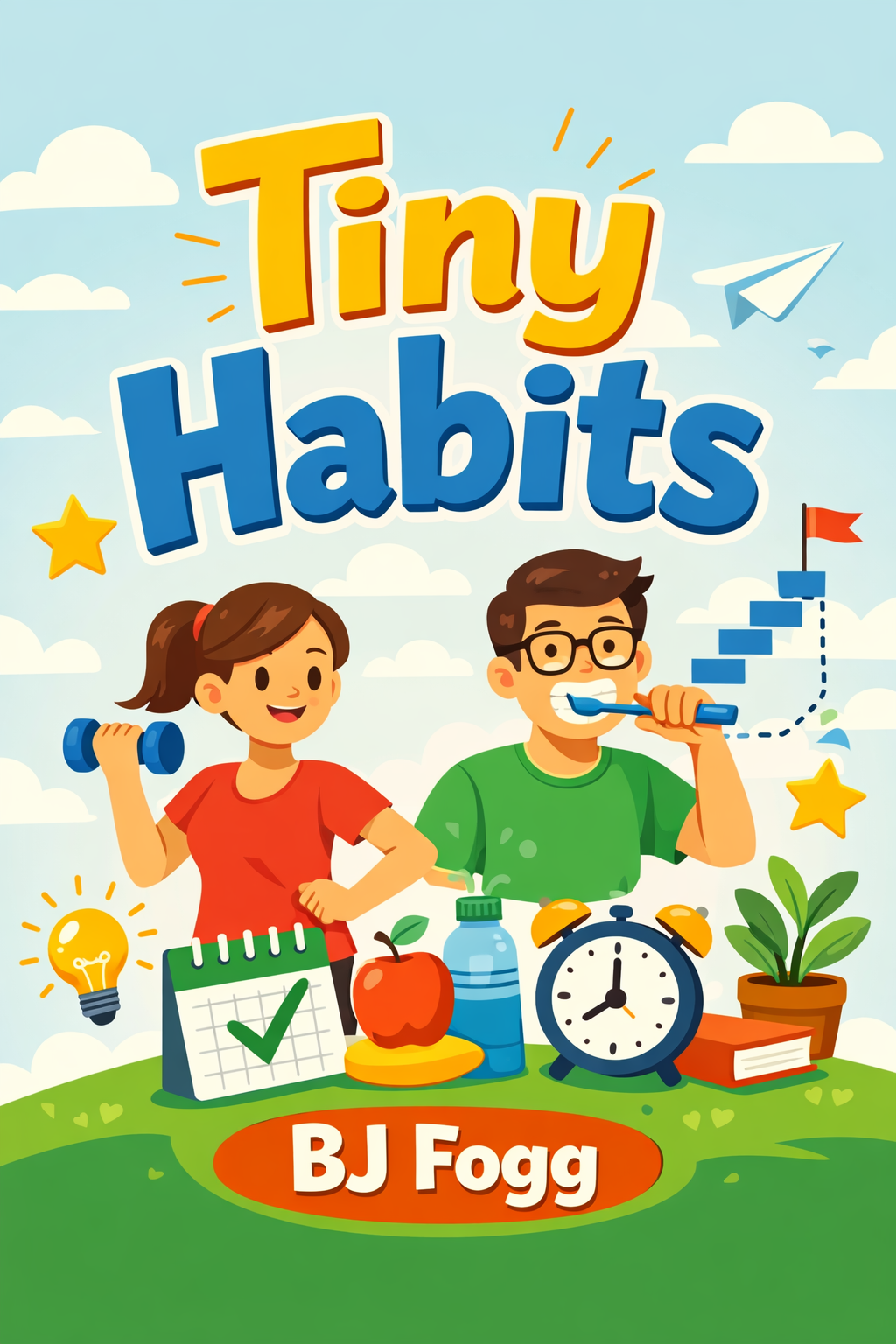
The traditional model of change is built on what’s known as the Information-Action Fallacy: the idea that if people just know what’s good for them, they will do it. This is why we are inundated with facts about nutrition, sleep, and productivity, yet struggle to apply them. Real, sustained behavioral change springs from three sources: sudden epiphanies, significant shifts in environment, or small adjustments to existing routines. Since we can’t schedule revelations and often can’t control our entire surroundings, the most reliable path is through tiny habits. These are behaviors that take less than thirty seconds to complete and are designed to be so simple that you can’t say no. Flossing one tooth, doing two push-ups, or writing one sentence of a novel. The goal is not the immediate outcome, but the consistent repetition that rewires your neural pathways over time.
To understand how to build these habits, you must first understand what drives any behavior. All actions, from brushing your teeth to checking your phone, result from the convergence of three elements: Motivation, Ability, and a Prompt. Motivation is your desire to do something. Ability is your capacity to do it at that moment. The Prompt is the cue that triggers the action. For a behavior to occur reliably, these three must align. Relying solely on motivation is a recipe for failure because motivation is a fickle resource that spikes and crashes. It might help you run an extra mile once, but it won’t get you out the door every rainy Tuesday. The secret, then, is to make the desired behavior incredibly easy (high ability) and to attach it to a reliable prompt in your existing routine.
This is where the magic of “tiny” comes in. By shrinking a new habit down to its most minimal version, you eliminate the friction of low ability. Want to practice yoga? Start with simply rolling out your mat each morning. Aspire to meditate? Begin by taking one deep, intentional breath after your morning coffee. The ease of the action ensures success, and each success generates a small feeling of accomplishment—a positive emotion that helps cement the habit. This celebration is a crucial, often overlooked step. By consciously feeling good after your tiny habit, you wire your brain to associate the behavior with a reward, making it more likely to stick and naturally expand.
The architecture of a tiny habit follows a simple formula: After I [Existing Routine], I will [New Tiny Habit]. For example: After I pour my morning coffee, I will floss one tooth. The existing routine (pouring coffee) serves as a powerful and consistent prompt. The new habit is intentionally minuscule. The key is to choose an “anchor” moment in your day that is already automatic and stable. Effective prompts are specific, considering location, frequency, and theme. A prompt tied to a daily, contextual action like “after I sit down at my desk” is far more reliable than a vague intention like “sometime today.”
Ultimately, this method is about self-compassion and redesigning your life from a place of understanding, not self-criticism. It shifts the focus from lofty, distant aspirations to concrete, present-moment actions. You stop blaming yourself for a lack of willpower and start engineering for success by making the right behaviors easy and the wrong ones harder. By stacking these tiny wins day after day, you create a compound effect of change. The two push-ups become a ten-minute workout. The one sentence becomes a page. You are not climbing a mountain in a single leap, but laying a path, one small, sure stone at a time. This is how you build a life of sustainable change, where positive habits become as automatic and effortless as the routines they are built upon.