Description
Ilhan Omar’s memoir, *This Is What America Looks Like*, is a deeply personal narrative that charts an extraordinary journey from a childhood shattered by civil war to a seat in the United States House of Representatives. It is less a political manifesto and more a raw, intimate portrait of resilience, detailing how her experiences forged an unshakeable belief in democracy, community, and justice. The story begins in Somalia, with memories of a happy early childhood that was violently upended. Omar recounts the fear and dislocation of war, the family’s flight to a refugee camp in Kenya, and the years of waiting in limbo. These chapters are not just about survival but about the bonds of family that held fast amidst chaos, particularly the influence of her father and grandfather, who instilled in her a profound sense of dignity and the importance of education, even when living in a shack with a dirt floor.
The narrative then shifts to the bewildering transition to America, a land of promised opportunity that presented its own steep challenges. Settling first in Arlington, Virginia, and later in Minneapolis, Minnesota, Omar writes candidly about the struggle to assimilate. She describes the difficulty of learning a new language and culture while also navigating the complexities of a teenage identity caught between Somali tradition and American adolescence. The book powerfully explores the experience of being a Muslim refugee in a post-9/11 America, facing suspicion and prejudice from the outside while sometimes confronting restrictive expectations within her own community. Her account of these years is a poignant examination of what it means to search for belonging, a theme that resonates throughout her life and eventual political career.
A central and compelling thread of the memoir is Omar’s relationship with her father, who remained her guiding star even after her mother’s early death. His unwavering dedication to his children’s future, his insistence on civic engagement, and his lessons on thinking critically about the world laid the foundation for her future activism. His sudden death when Omar was a teenager was a devastating blow, but his teachings became her internal compass. The book follows her through young adulthood—becoming a parent herself, pursuing an education, and working as a community organizer. These experiences in the neighborhoods of Minneapolis, helping her fellow East African immigrants navigate healthcare, education, and employment systems, opened her eyes to the structural barriers facing marginalized communities. It was here, in the practical work of improving lives block by block, that her political consciousness was galvanized.
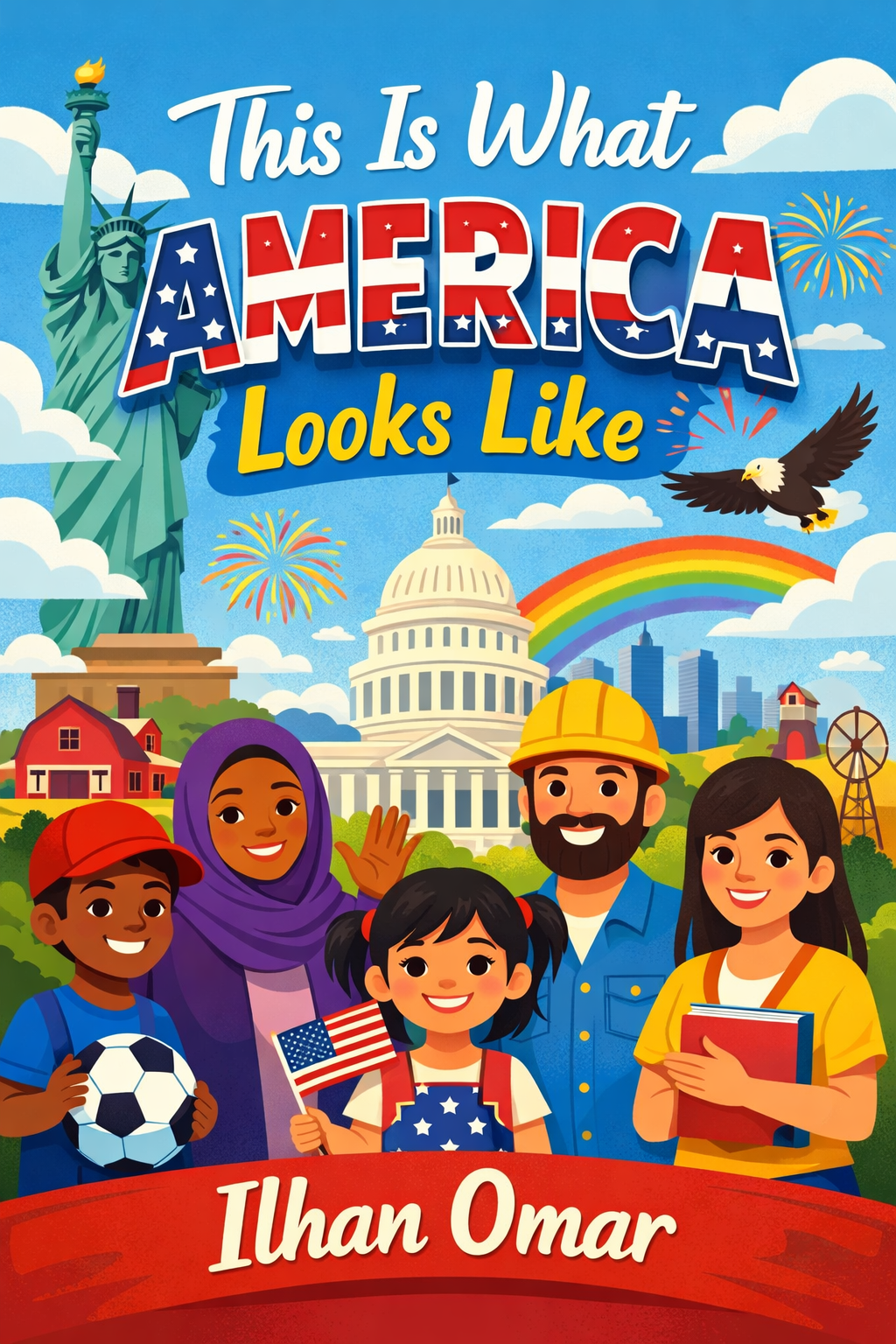
Omar’s foray into electoral politics feels like a natural, if daunting, extension of her community work. She writes with refreshing honesty about the doubts, the intense scrutiny, and the vitriolic backlash—much of it racially and religiously charged—that she faced as a Black, Muslim, immigrant woman daring to run for office. Her historic victories, first in the Minnesota state legislature and then in the U.S. Congressional race, are presented not as individual triumphs but as victories for the diverse coalition that rallied behind her vision. She argues that her presence in the halls of power challenges a monolithic and outdated idea of who gets to shape American policy. The title of the book is her declarative answer: America looks like her. It looks like a nation built and continually rebuilt by immigrants, refugees, and people of all faiths and backgrounds.
Ultimately, the memoir is a love letter to an America that is still a work in progress. It is a call to expand the country’s imagination about itself, to embrace a more compassionate and inclusive politics. Omar does not shy away from critiquing policies she views as cruel or unjust, from immigration detention to endless war, but her criticism is rooted in a deep belief that America can and must do better. She frames her often-controversial stances as an extension of the values she learned as a child: to speak truth to power, to protect the vulnerable, and to fight for a world where no child has to endure what she did. The book concludes not with a sense of arrival, but with a sense of purpose and ongoing struggle. Ilhan Omar’s story is a powerful testament to the idea that the American dream is not a passive inheritance but an active, collective project—one that requires the voices and votes of everyone, especially those who have been told they do not belong.