Description
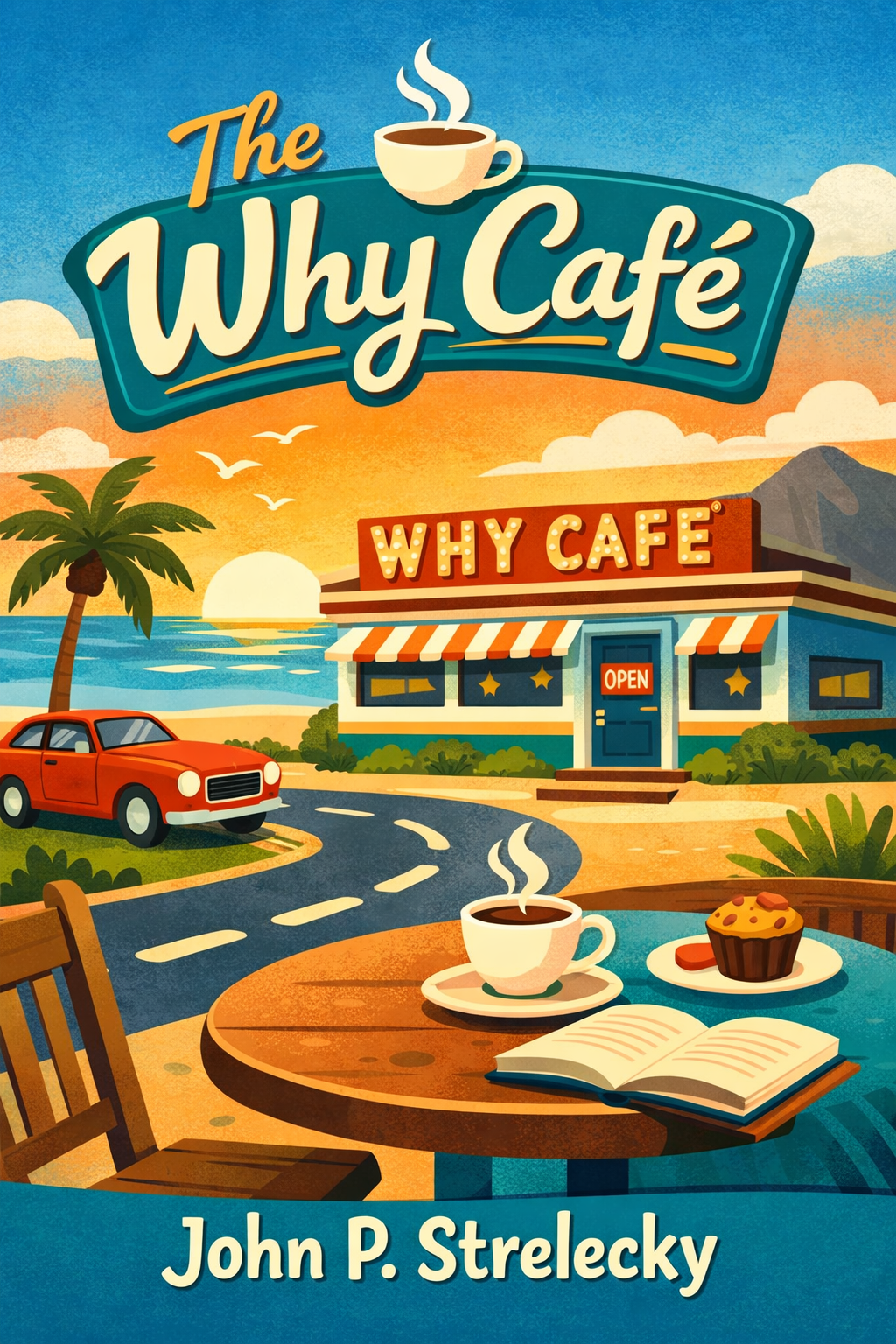
John’s vacation takes an unexpected turn when a closed highway and an empty gas tank leave him stranded. Seeking help, he stumbles upon a remote diner called The Why Café. This is no ordinary roadside stop. The menu, alongside the offerings of coffee and pie, presents three profound questions: “Why are you here?” “Do you fear death?” and “Are you fulfilled?” These simple queries launch John on an introspective journey, guided by the café’s insightful staff and patrons, to examine what it means to live a life of genuine meaning.
The first and most crucial lesson John learns is that a comfortable life is not the same as a fulfilling one. To find fulfillment, one must identify a personal purpose and align daily actions with it. A waitress named Casey illustrates this with a story about a green sea turtle she observed while diving. The turtle moved with remarkable efficiency by working with the ocean’s currents, not against them. It swam hard only when necessary to maintain position, and then allowed the natural flow of the water to carry it forward when the direction was favorable. Many people, John realizes, exhaust themselves by constantly paddling against invisible currents—the demands of jobs they dislike, societal pressures, and personal obligations that drain their energy and leave no room for what truly matters. The path to purpose involves learning to recognize and ride the currents of one’s own passions and desires.
A significant obstacle on this path is the pervasive influence of advertising and consumer culture. Anne, a former advertising executive and café regular, explains how marketing expertly equates products with happiness, subtly shaping our desires and convincing us that fulfillment can be purchased. This creates a vicious cycle: we take unfulfilling jobs to afford more things, hoping those things will bring satisfaction, which only leads to more work and more consumption. This cycle clouds our vision, making it difficult to discern what we truly want from what we’ve been told to want. Breaking free requires questioning our financial obligations and recognizing that many of the chains holding us back are self-imposed. A simpler life with fewer material burdens often provides the freedom necessary to explore one’s true calling.
Furthermore, the fear of social judgment and the weight of others’ expectations can be just as paralyzing as consumerism. People often make life choices based on what their family, friends, or society will approve of, rather than what resonates with their inner self. This disconnect leads to a deep-seated anxiety, connected to the second menu question about fearing death. The fear is not of death itself, but of arriving at the end of one’s life filled with regret for never having lived authentically. Letting go of the need for external validation is a liberating step. One must have the courage to “pick up the golf ball,” as a parable shared in the café suggests, and place it where *you* want to play from, regardless of the perceived rules or the watching eyes of others. A self-determined life, aligned with personal purpose, naturally alleviates this existential dread.
Discovering one’s purpose is a highly individual endeavor with no single correct method. Some find clarity in solitude, meditation, or long walks in nature. Others find it through conversation, travel, or immersing themselves in art and music. The key is to experiment with different practices and pay close attention to your own reactions. Your purpose often reveals itself in moments of deep engagement and flow—activities that electrify you, bring profound satisfaction, or make you lose track of time. Whether it’s creating art, solving technical problems, teaching, or building community, the feeling is unmistakable. The journey of discovery itself, with all its trials and errors, gathers the impressions and insights that gradually point the way.
Finally, once a sense of purpose is identified, every person possesses the freedom to decide how, or even whether, to integrate it into their life. There is no mandated path. For some, it might mean a dramatic career change; for others, it could involve dedicating weekends to a passion project or simply bringing a new intentionality to their existing roles. A story shared by Mike, the café owner, underscores this point. A businessman tries to convince a contented fisherman to expand his operation into an empire, promising eventual retirement and leisure. The fisherman calmly replies that the leisure and family time the businessman promises for the future is the life he is already living. Fulfillment is not a distant destination reached through relentless striving; it is available in the present moment through conscious choice. People who live in alignment with their purpose often find that happiness seems to find them almost magically, not as a frantic pursuit but as a natural byproduct of a meaningful existence. John leaves The Why Café with more than just a full tank of gas; he departs with a new framework for viewing his life, empowered to ask the right questions and seek his own authentic answers.