Description
For most of human history, societies across the globe were built upon a common foundation: the extended family, or clan. These kin-based institutions dictated life, fostering a collectivist mentality where loyalty to one’s family trumped all else, conformity was valued, and strangers were viewed with suspicion. This was the norm. Then, something peculiar happened in one corner of the world: Western Europe began to develop a strikingly different psychology. Its people became more individualistic, analytical, trusting of strangers, and guided by universal moral principles rather than familial obligation. What caused this dramatic divergence? The answer lies in a centuries-long social revolution quietly engineered by an unlikely force: the Western Church.
Beginning in the early Middle Ages, following the collapse of Rome, the Church embarked on a relentless campaign to reshape the most intimate aspects of life. Historians call this the “Marriage and Family Program.” Its rules were specific and far-reaching. The Church banned marriages between cousins and other close relatives, a practice that had been common for strengthening clan bonds. It aggressively promoted monogamous marriage for all, attacking the polygynous practices of elites. It introduced the concept of “illegitimate” children, cutting off those born outside of Church-sanctioned unions from inheritance. It demanded that weddings be public ceremonies, undermining the tradition of arranged marriages brokered by patriarchs. Perhaps most shrewdly, it encouraged the wealthy to bequeath their fortunes to the Church as an act of charity, rather than keeping wealth consolidated within family lineages.
The cumulative effect of these policies was nothing short of revolutionary. By forbidding cousin marriage, the Church chemically dissolved the dense, interconnected webs of the clan. Without the ability to marry within the family, individuals were forced to look outward, building alliances and trust with more distant relatives and non-kin. The enforcement of monogamy had a profound leveling effect. In polygynous societies, high-status men hoarded wives, leaving a significant pool of low-status, unmarried men who were desperate, competitive, and prone to violence. Monogamy redistributed marital opportunity, creating a larger pool of men with a stake in a stable social order. These men, now able to form families, became more patient, cooperative, and invested in long-term planning.
As the old clan structures crumbled, a new social unit rose to prominence: the nuclear family. This smaller, independent household became the primary economic and emotional unit. Within this context, the unique Western psychology began to crystallize. With weaker ties to extended kin, individuals learned to rely more on themselves and on voluntary associations with non-relatives. This fostered individualism and a greater willingness to trust strangers. The breakdown of rigid, inherited clan roles opened space for nonconformity and innovation. When your destiny is not preordained by your family’s status, you are freer to define your own path.
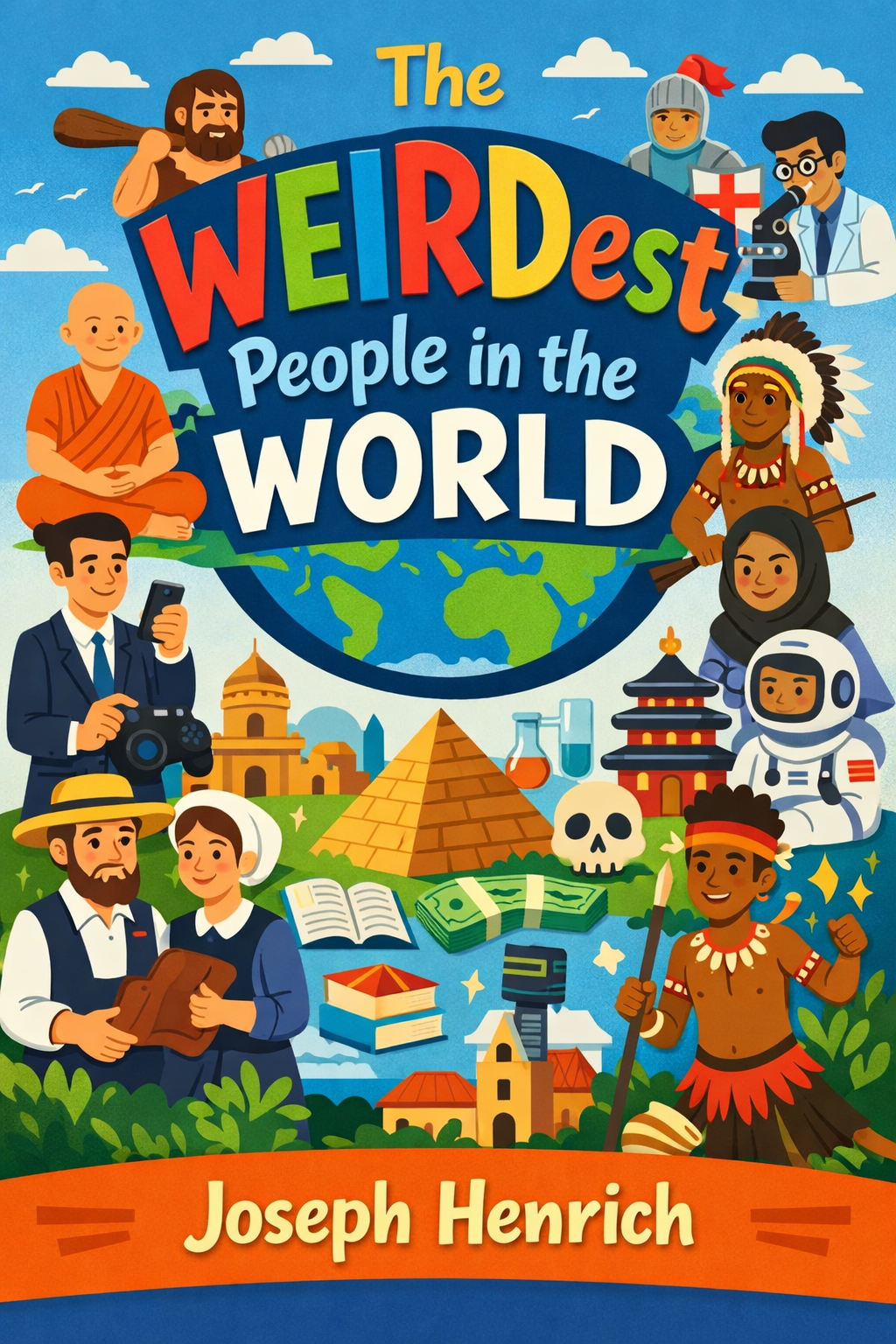
This psychological shift, centuries in the making, laid the essential groundwork for the modern Western world. The trust and impartiality necessary for large-scale commerce, anonymous market transactions, and effective legal institutions could only flourish once the “moral circle” had expanded beyond the family. The analytic thinking that fuels science and bureaucracy is easier in a society less bound by holistic, tradition-bound worldviews. Thus, the very strangeness of the West—its WEIRD (Western, Educated, Industrialized, Rich, Democratic) characteristics—is not a product of inherent genetic superiority or sudden intellectual enlightenment. It is the long-term, unintended consequence of a peculiar set of rules about sex and marriage, relentlessly promoted by a powerful medieval institution. The world we inhabit today was shaped, in no small part, by the Church’s ancient obsession with the family.