Description
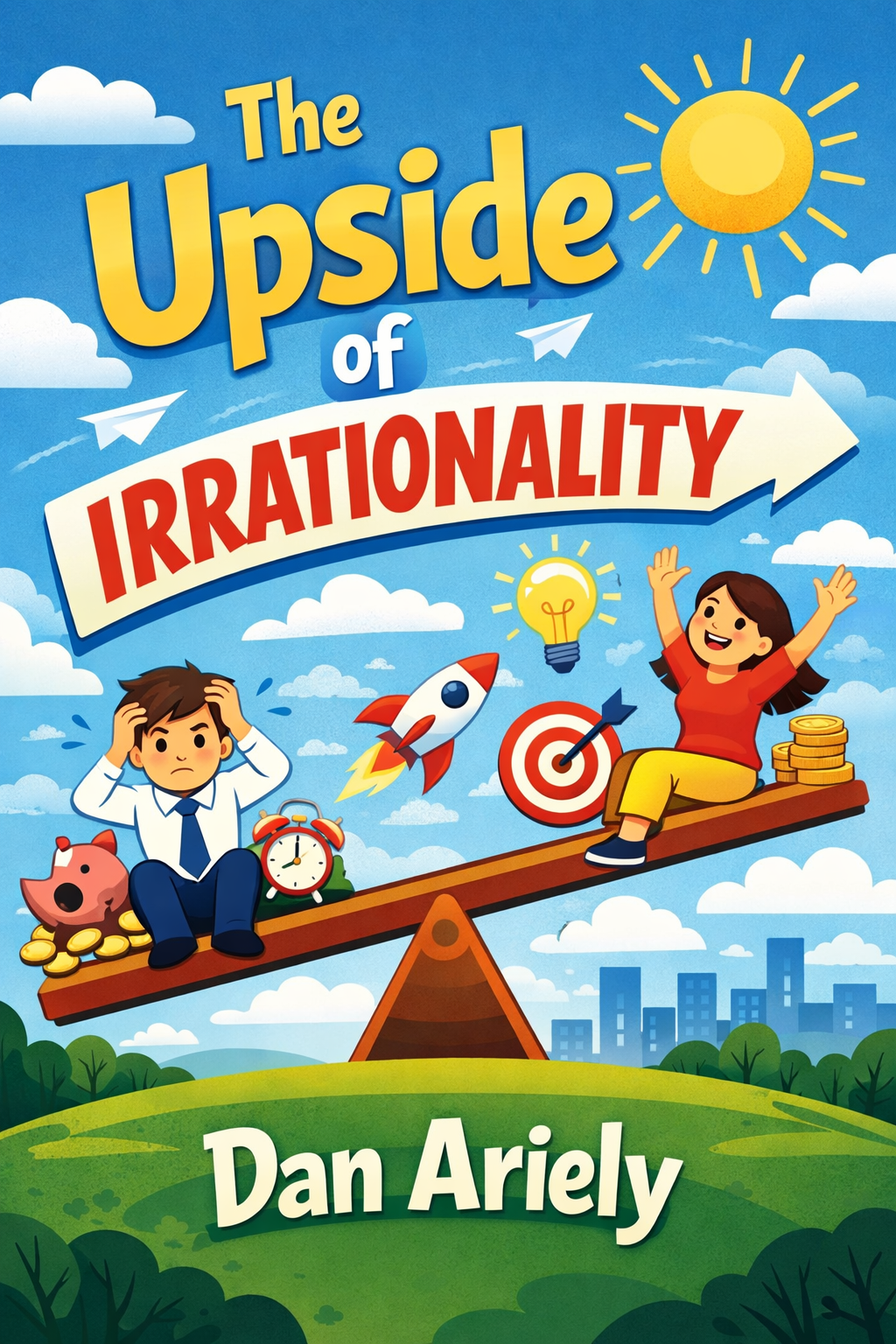
We often believe that perfect rationality is the key to a better life, imagining that flawless logic would lead to optimal decisions in love, work, and finance. Yet, we are consistently and predictably irrational. Rather than dismissing this as a human flaw, this book argues there is a hidden logic to our illogic. By examining the quirky underpinnings of our decisions, we can understand not just why we act against our own interests, but how this very irrationality can be harnessed to improve our lives, relationships, and workplaces.
Consider the workplace, where a fundamental assumption is that bigger financial rewards lead to better performance. While this holds for simple, mechanical tasks, it backfires spectacularly when creativity and cognitive skill are required. The intense pressure of a massive bonus can cause mental paralysis, much like an animal freezing under extreme stress. For complex jobs, moderate, predictable rewards often foster superior results by reducing anxiety. Furthermore, our drive to work isn’t fueled by money alone. We possess an innate desire to find meaning in our labor. Experiments show that when people see their work immediately destroyed or devalued, their motivation plummets, even if the pay remains the same. We are not mere profit-maximizers; we are meaning-seekers who need to feel that our efforts matter.
This need for meaning connects to a powerful bias: we irrationally overvalue what we create ourselves. The mere act of investing effort into something—be it assembling furniture or adding an egg to a cake mix—makes us prize it more highly. Companies leverage this “creator’s bias” by offering customization, knowing we will cherish a product we had a hand in designing. This bias extends to our personal lives, influencing how we value potential partners. However, effort alone isn’t enough; we also crave a sense of completion. Without it, our positive feelings can curdle into frustration, explaining why perpetual rejection eventually extinguishes interest.
A central force behind many irrational behaviors is our profound capacity for adaptation. We are remarkably good at getting used to both wonderful and terrible circumstances, returning to a baseline level of happiness. Lottery winners and accident victims alike often report similar happiness levels a few years after their life-changing events. This hedonic adaptation is a double-edged sword. It helps us recover from hardship, but it also means the thrill of a new purchase or a new relationship inevitably fades. To combat this, we can strategically interrupt pleasurable experiences to keep them fresh, while pushing through unpleasant tasks without breaks to avoid prolonging the pain.
Our adaptive nature is vividly displayed in the dating world. We instinctively gravitate towards partners at a similar level of attractiveness, a process known as assortative mating. When faced with rejection from those deemed “out of our league,” we don’t simply give up. We adapt by recalibrating our standards, often beginning to find beauty in imperfect features or placing greater value on non-physical traits like kindness or humor. This isn’t settling; it’s a sophisticated cognitive adjustment that helps us find fulfilling connections within a realistic social hierarchy.
This natural sorting mechanism, however, is thrown into chaos by online dating platforms. While markets traditionally succeed by efficiently matching supply and demand, the romantic “market” online is flawed by excessive choice and shallow information. Presented with endless profiles, people struggle to choose, often seeking perfection and making superficial comparisons based on limited data. This overload leads to dissatisfaction and paradoxically fewer genuine connections. The very design meant to expand our options can inhibit the adaptive processes that help us find compatible partners in the real world.
Our irrationality also profoundly shapes our emotions and social connections. We might believe our capacity for empathy is a noble, rational response to suffering. In reality, it is highly selective and biased. We feel profound empathy for a single identifiable victim—a lost child, a sick neighbor—but that feeling numbs dramatically when faced with statistics about millions in need. This isn’t a moral failing but an evolutionary glitch in our emotional wiring. Similarly, our reactions to provocation are lopsided. The intense, short-lived pleasure of revenge is vastly outweighed by the long-term negative feelings it breeds, poisoning relationships and personal well-being far beyond the initial conflict.
Ultimately, this journey through our irrational minds reveals that our deviations from cold logic are not mere bugs in the system. They are fundamental features of what makes us human. Our quirks—overvaluing our own creations, adapting to our social standing, finding meaning beyond money—are not obstacles to a good life but often the very pathways to it. By understanding the hidden upsides of our irrational tendencies, we can design better workplaces, foster more meaningful relationships, and make peace with the wonderfully flawed decision-makers we all are.