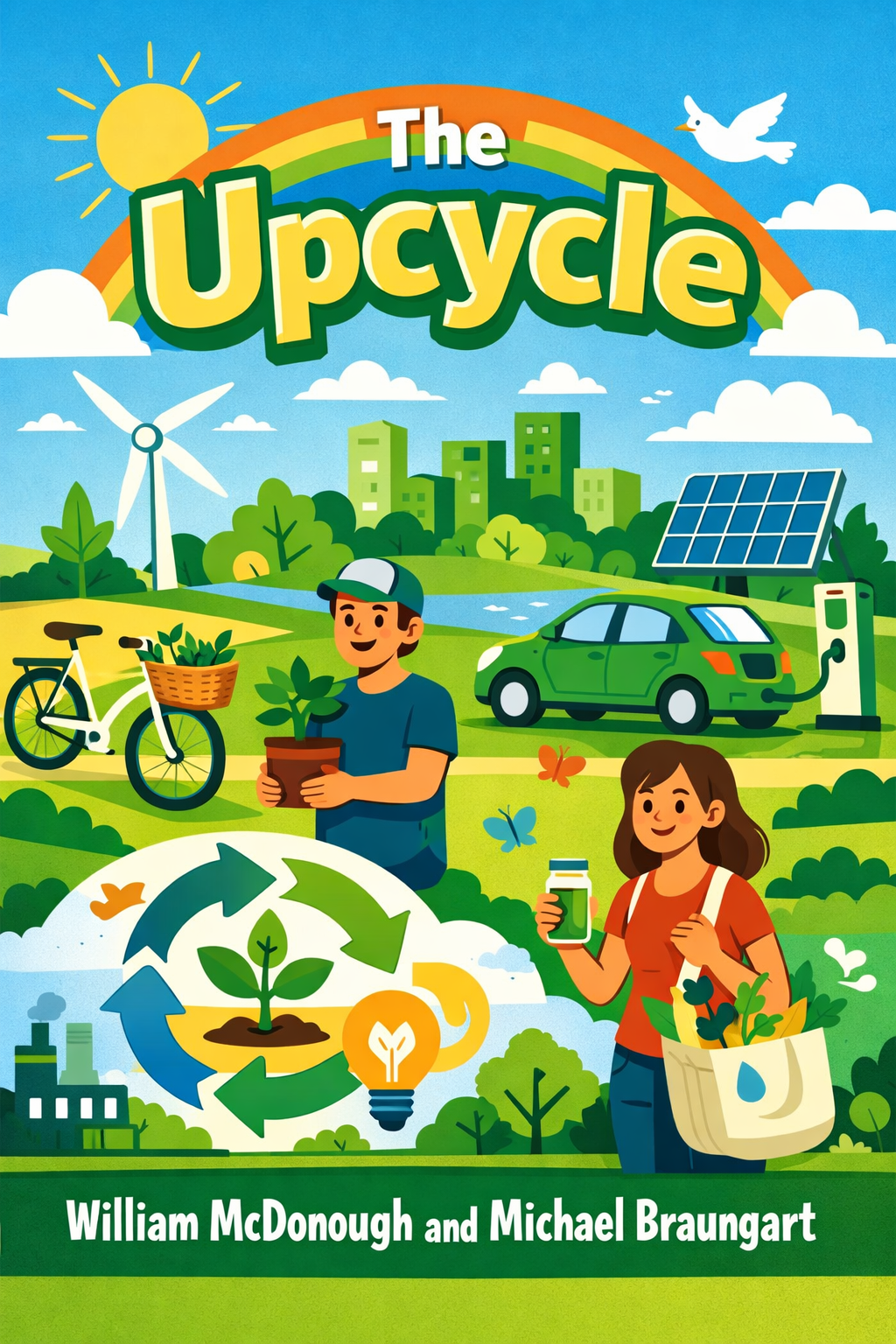
Description
The book presents a powerful and optimistic evolution of the environmental conversation, moving beyond the familiar goal of simply minimizing our negative footprint. The core argument is that being “less bad” is no longer a sufficient or inspiring objective. Instead, we must aim for a positive, regenerative approach the authors term “upcycling.” This philosophy challenges us to see waste and problems not as endpoints, but as nutrient streams and design opportunities. It’s a call to move from a linear “cradle-to-grave” industrial model, which extracts, uses, and discards, to a “cradle-to-cradle” framework where materials are seen as nutrients circulating in healthy, safe cycles.
The text delves deeply into the concept of material health, proposing that everything we make should fall into one of two metabolic cycles: the biological nutrient cycle or the technical nutrient cycle. Biological nutrients are organic materials that can safely decompose and return to the earth, enriching the soil. Technical nutrients are synthetic or mineral materials, like metals or certain plastics, that should be designed from the outset to be recovered and perpetually recycled at high quality, without becoming contaminated or downcycled into lesser products. This distinction is crucial—it transforms waste into food for either the natural world or the industrial system, eliminating the very concept of waste.
This vision is not merely theoretical. The book is rich with tangible examples and case studies that demonstrate how this principle can be applied across diverse sectors. It explores buildings designed like trees, which produce more energy than they consume and purify their own water. It examines the redesign of everyday products, from carpets to clothing, where manufacturers take responsibility for the entire lifecycle of their materials, leasing performance rather than selling ownership of a polluting product. This shift in business model incentivizes quality, durability, and recoverability.
A significant portion of the discussion is dedicated to the power of intelligent, positive design. The authors argue that trying to solve problems by tackling negative symptoms—making toxic processes slightly less toxic, or inefficient machines slightly more efficient—often leads to unintended consequences and merely slows the decline. True innovation comes from asking a different set of questions at the design stage: How can this product benefit all children? How can this factory’s effluent be cleaner than the water it takes in? This reframing unleashes creativity and leads to solutions that are inherently beneficial, not just less damaging.
The book also tackles the economic and social dimensions of this transformation. It makes a compelling case that upcycling is not a costly burden but an engine for innovation, job creation, and long-term economic resilience. By designing products and systems that are restorative, businesses can open new markets, reduce their dependence on scarce virgin resources, and build deeper trust with communities. It advocates for a new social contract where growth is good, but it must be defined by qualitative improvement—more well-being, more beauty, more health—rather than quantitative extraction.
Ultimately, the work is a manifesto for hope and human ingenuity. It rejects the doom-laden narrative of sacrifice and limitation that often surrounds environmentalism. Instead, it paints a picture of an abundant future where human industry and the natural world can thrive together. It calls on designers, business leaders, policymakers, and citizens to become active participants in this redesign, to be not just consumers but creators of a world where our activities leave a positive legacy. The message is clear: sustainability is the floor, not the ceiling. Our goal should be to go beyond being efficient and become generative, leaving ecosystems, communities, and economies better than we found them.