Description
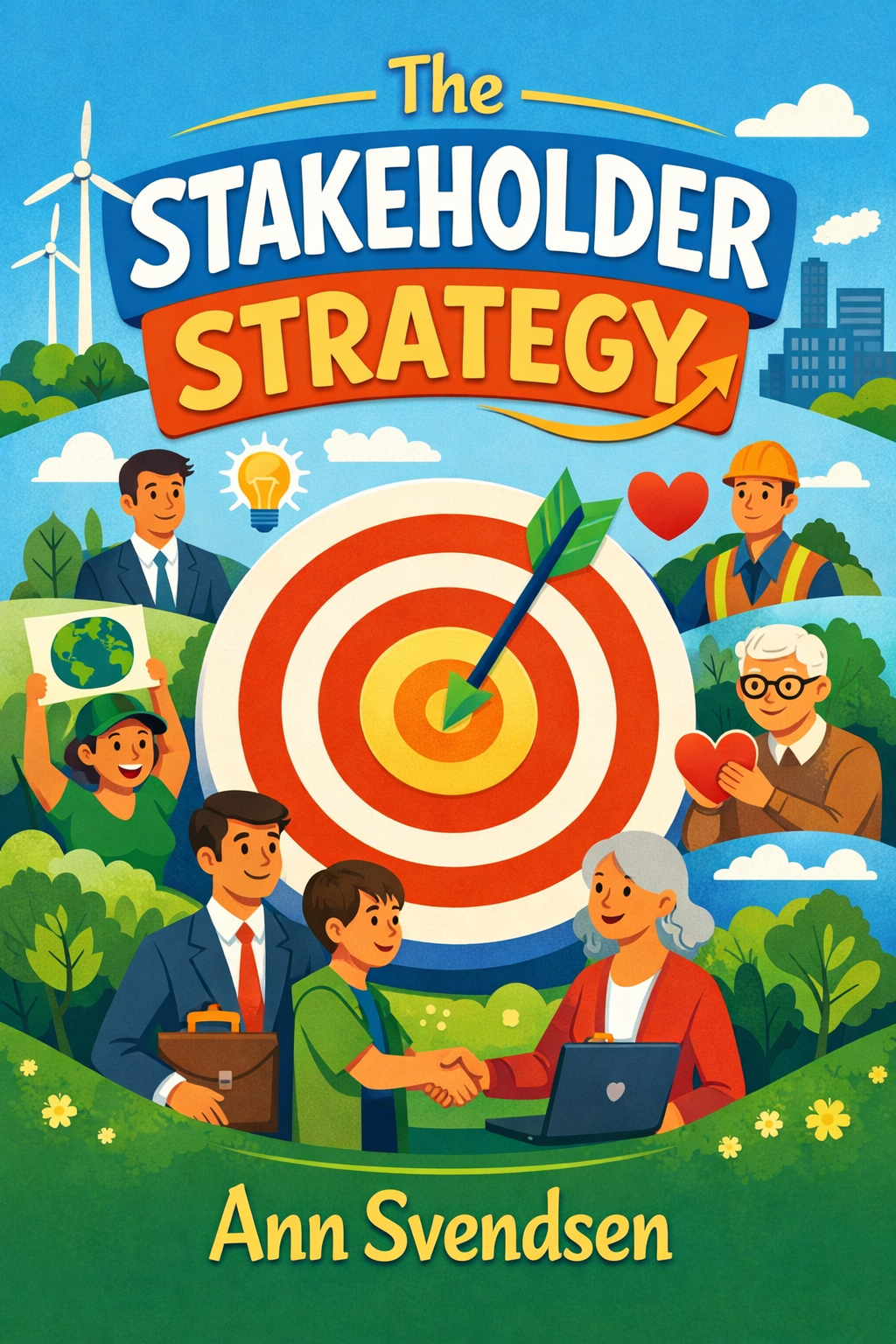
At its core, business is about relationships. Yet, many organizations remain trapped in a transactional mindset, viewing stakeholders—employees, customers, suppliers, communities—as parties to be managed or adversaries to be overcome. This book argues that this approach is not only outdated but counterproductive. The true path to sustained success and resilience lies in a fundamental shift: from extraction to collaboration. By fostering genuine, symbiotic partnerships, companies can unlock greater innovation, loyalty, and profitability while making a meaningful social impact. This is not a soft-hearted ideal but a hard-nosed strategy, supported by research and real-world case studies, that redefines the very purpose of a modern enterprise.
The journey begins with a new way of seeing. Traditional business views stakeholders as competing for a slice of a fixed pie, leading to a zero-sum game. Systems theory, however, reveals a different reality: every business operates within a complex, living ecosystem. Each stakeholder is an interconnected part of the whole, and the health of one affects the health of all. A company’s societal footprint is shaped by the quality of these relationships—from public perception to supplier reliability. The “Third Way” emerges from this understanding, moving beyond the old dichotomies of pure competition or reluctant compliance. It is a philosophy that prioritizes the overall health of the system, recognizing that investing in positive, trust-based relationships strengthens the entire network and, in turn, the business itself.
To operationalize this philosophy, the book introduces a practical, cyclical framework for building these essential partnerships. This method begins with establishing strong Foundations, ensuring all parties share common goals and a vision for mutual success. Next comes Organizational Alignment, which involves restructuring internal processes and training teams to support collaboration as a core ethic, not an occasional project. With this base, the Strategy can be co-created with stakeholders, embracing flexibility and shared ownership of the plan. The indispensable heart of the process is building Trust, which is cultivated through transparency, consistent action, and deep empathy—seeing stakeholders as human partners, not mere entities. This ongoing work requires continuous Evaluation to celebrate wins and navigate challenges, and deliberate Repetition to deepen the bonds over time. This framework transforms stakeholders from passive recipients into active co-creators of value.
A collaborative strategy must be anchored by an authentic social mission—a clear, purposeful declaration of the positive change the company seeks to create in the world. This mission acts as a magnetic north star, attracting partners who share its values and amplifying its impact through united effort. However, a mission statement is meaningless if it is not woven into the daily fabric of the organization. It must be reflected in core values like integrity, sustainability, and inclusion, which then guide every decision and interaction. The mission gains further power when it is shared and sharpened through dialogue with stakeholders, as their perspectives help refine and realize its true potential. Crucially, authenticity is non-negotiable; any disconnect between proclaimed values and actual actions will quickly erode the hard-won trust upon which everything depends.
To track progress and maintain accountability, a new form of measurement is required. Traditional financial accounting tells only a fraction of the story, focusing on economic transactions while ignoring social and relational capital. Modern social accounting expands this narrative, integrating the social mission directly into operational and strategic reporting. This approach can take various forms, from auditing negative environmental impacts to mapping stakeholder perceptions and engagement. The most advanced methods embed social and environmental considerations directly into the core decision-making calculus of the company. This ensures that the pursuit of purpose is measured, managed, and reported with the same rigor as financial performance, closing the loop between intention and action.
Ultimately, the business case for this profound shift is overwhelming. Moving from transactional stakeholder management to deep collaboration is a powerful driver of long-term profitability and competitive advantage. It leads to enhanced brand loyalty, sparks innovation through diverse input, mitigates risks by fostering goodwill, and attracts top talent who want to work for a purpose-driven organization. The book dispels the persistent myth that a strong social mission conflicts with financial performance, illustrating instead how they are mutually reinforcing. The health of a company’s stakeholder relationships is its ultimate asset, providing the resilience and adaptability needed to thrive in an uncertain world. By choosing partnership over parsimony, businesses can build a legacy of shared success and significant, positive impact.