Description
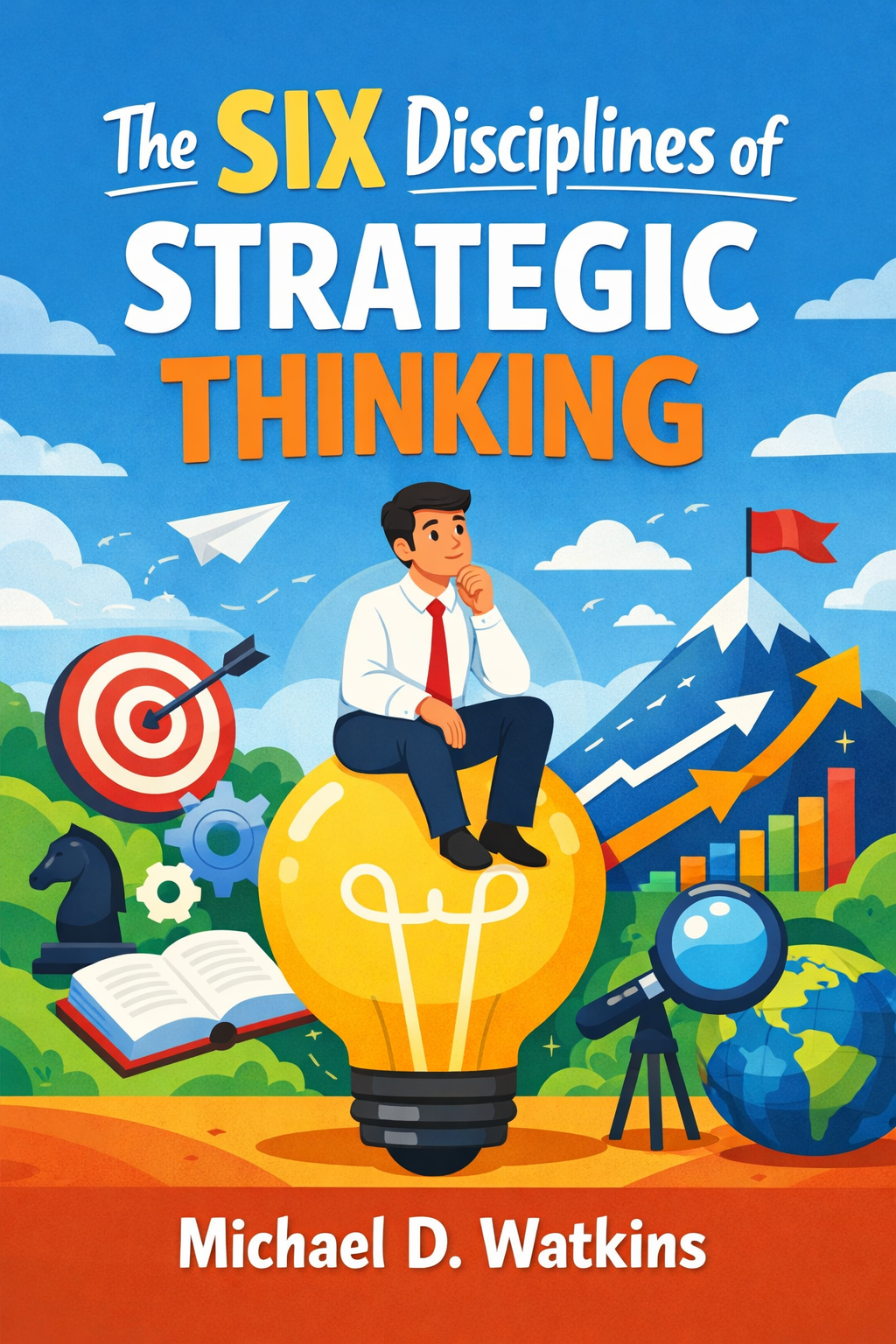
In a world of constant change and overwhelming complexity, the ability to think strategically is what separates effective leaders from the rest. This isn’t about rigid planning, but about cultivating a flexible and insightful mindset. True strategic thinking is a learnable craft, built upon six core disciplines that work in concert to help you navigate uncertainty, seize opportunities, and shape the future rather than just react to it.
The journey begins with the art of seeing what others miss. Pattern recognition is the discipline of discerning meaningful trends and signals within the noise of data and daily events. It involves moving beyond simple observation to understanding the underlying stories and causal relationships. A practical cycle for applying this is to first recognize critical shifts in your environment, then prioritize them based on their potential impact, and finally mobilize your resources to respond. While technology like AI can process vast amounts of data, the human ability to interpret patterns in ambiguous situations remains irreplaceable. You hone this skill by deeply immersing yourself in your field, studying both successes and failures, and continuously refining your mental models of how the world works.
Recognizing patterns, however, is only the first step. You must also understand how the pieces fit together. This is where systems analysis comes in. Every organization operates within a web of interconnected parts—internal teams, market forces, customer behaviors, regulatory frameworks. Systems thinking teaches you to map these relationships and see the whole, not just isolated components. It reveals how a change in one area can create ripple effects throughout the entire structure. Consider a disruption in a global supply chain: a single blocked canal can halt factories worldwide. By building mental and formal models of these systems, you can anticipate challenges, identify leverage points for intervention, and avoid the unintended consequences that come from a narrow, siloed perspective.
With a clear view of the present system, you need the cognitive flexibility to adapt. Mental agility is the discipline of thinking on multiple levels simultaneously. It combines level-shifting—the ability to zoom out to the big-picture strategy and zoom in to operational details—with the anticipatory skill of game-playing. Like a chess master, you must think several moves ahead, considering how competitors, partners, and customers might react to your decisions. This requires holding uncertainty and complexity in mind without becoming paralyzed, allowing you to pivot your strategy as new information emerges. Cultivating this agility involves practices like scenario planning and deliberately switching your perspective to ensure your grand vision remains grounded in practical reality.
When complex challenges inevitably arise, you need a reliable method to tackle them. Structured problem-solving provides a framework to dissect even the most daunting issues. It replaces panic and intuition with a phased approach: first, clearly defining the problem and involving the right stakeholders; second, creatively exploring a wide range of solutions; and third, critically analyzing options to decide on the best course of action before committing resources to implementation. This structured creativity ensures that you address root causes, not just symptoms, and that you turn both threats and opportunities into actionable pathways forward.
A strategy without a compelling destination is merely a list of tasks. The discipline of inclusive visioning is about shaping that destination. A powerful vision isn’t a top-down decree; it’s a shared picture of a desirable future that inspires and aligns people. Crafting such a vision requires looking beyond short-term metrics to articulate a purpose that resonates emotionally. Crucially, the process must be inclusive, weaving together the insights and aspirations of diverse stakeholders. This builds deep ownership and commitment, transforming the vision from a statement on a wall into a guiding force that motivates every decision and action across the organization.
Finally, even the most brilliant strategy is useless if you cannot make it a reality. This brings us to the discipline of political savvy and strategic influence. Organizations are human ecosystems filled with competing interests, alliances, and informal power structures. Strategic thinkers must navigate this landscape adeptly. This involves building trust-based alliances, understanding the motivations of key players, and skillfully persuading others to support critical initiatives. It’s about exercising influence without formal authority, communicating your ideas with clarity and resonance, and ensuring your strategic vision gains the traction needed to move from concept to execution.
Mastering these six disciplines—pattern recognition, systems analysis, mental agility, structured problem-solving, inclusive visioning, and strategic influence—creates a powerful synergy. They form a comprehensive toolkit for thriving in ambiguity. This approach to thinking transforms you from a passive participant in events into an active shaper of your future, enabling you to lead with confidence, innovate with purpose, and steer your team or organization toward lasting success.