Description
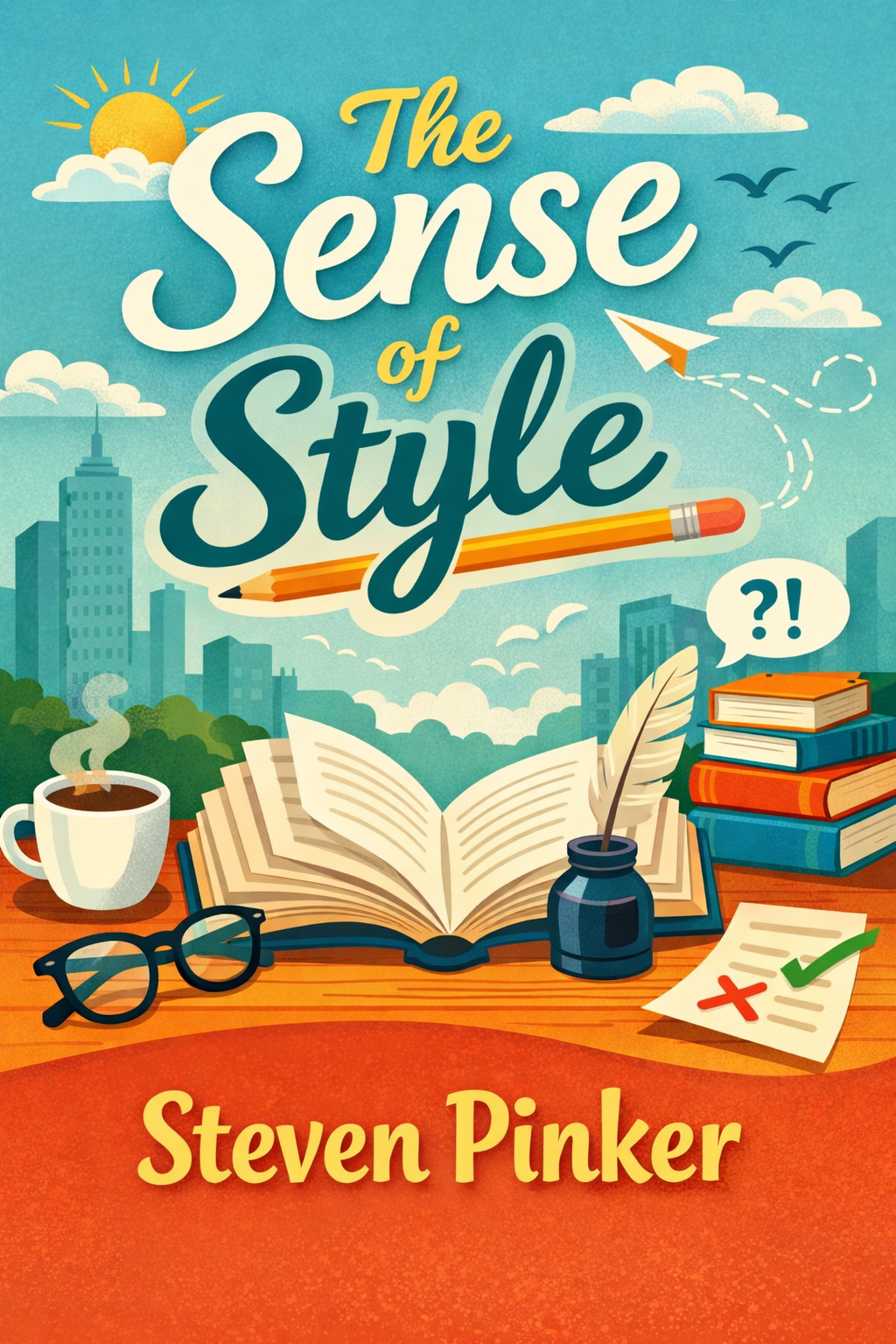
The art of writing well is not a mysterious gift but a skill that can be cultivated through mindful practice and a deeper understanding of how language works. This book serves as a contemporary guide for anyone who wishes to move beyond dry rules to develop a genuine sense of style—one that is both graceful and effective. It argues that the foundation of good writing is not found in rigid prescriptions but in the conscious emulation of excellent prose, the strategic application of grammatical knowledge, and, above all, a profound consideration for the reader’s experience.
True stylistic fluency often begins not with a manual, but with reading. By attentively studying the works of skilled writers across genres—from scientific literature to newspaper obituaries—one absorbs the rhythms, structures, and techniques that make prose compelling. Observing how a masterful writer can open with a bold statement, use vivid imagery to cement an abstract idea, or capture a lifetime in a playful phrase teaches lessons no rulebook can. This process builds an intuitive feel for language, which is then refined by understanding the principles behind the intuition.
Among the various stylistic models, the classic style stands out as a powerful ideal for clear communication. Its core premise is a conversation between equals: the writer acts as a guide, presenting the world to the reader with clarity and confidence. The goal is to make the reader feel intelligent, not bewildered. This style avoids the hedging, jargon, and pretentiousness that plague much academic, corporate, and technical writing. Instead, it strives for prose that is direct and transparent, using concrete metaphors to illuminate complex topics, making the intricate seem straightforward. The writer’s posture is not that of a pedant lecturing a novice, but of two people looking together at a shared subject.
A primary obstacle to this clarity is a cognitive trap known as the curse of knowledge. When deeply familiar with a topic, a writer can forget what it is like not to know it. This leads to prose filled with unexplained jargon, insider abbreviations, and assumptions that lose the reader. Combating this requires deliberate empathy. The writer must constantly step outside their own expertise to see the text through the reader’s eyes, replacing opaque technical terms with plain language, defining necessary specialist vocabulary, and stripping away any language used merely to signal erudition rather than to communicate.
To execute these intentions cleanly, a functional grasp of syntax and grammar is indispensable. Syntax is the architecture of a sentence, the code that dictates who is doing what to whom. Understanding this structure allows a writer to diagnose and fix confusing sentences, ensure subject-verb agreement, and place phrases where they belong to avoid comic or tragic misinterpretations. This knowledge is not about blind obedience to outdated decrees, but about wielding the machinery of language with precision. It enables the writer to distinguish between a necessary long sentence rich with clauses and a tangled mess, or to see how a single comma can prevent a headline from suggesting cannibalism.
Even contentious elements like the passive voice have their place when used with purpose. While often rightly criticized for creating wordy, evasive, or dull prose, the passive voice is a legitimate tool. It can be the clearest way to structure a sentence when the action’s recipient is more important than its doer, or when the doer is unknown or irrelevant. The key is intentionality—choosing the active or passive voice based on what you want to emphasize and how you want to guide the reader’s attention through a narrative, not on a dogmatic rule.
Ultimately, strong writing is coherent writing. This means building a text where each sentence logically follows from the last and contributes to a unified whole. Coherence is achieved by carefully managing topics, making clear connections between arguments, and using pointers that keep the reader oriented. It’s the difference between a scattered collection of statements and a compelling journey of ideas. Furthermore, credibility depends on a respectful and accurate use of vocabulary. Misusing words, relying on clichés, or falling for malapropisms can undermine a reader’s trust, suggesting carelessness with language that may extend to carelessness with facts.
The journey to better writing is therefore a blend of art and craft. It involves developing an ear for elegant prose through wide reading, adopting the reader-focused clarity of the classic style, and overcoming the curse of knowledge with empathy. It is supported by a practical understanding of syntax that allows for both power and precision, and a flexible approach to tools like the passive voice. By integrating these principles, any writer can learn to communicate with simplicity, authority, and grace, transforming everyday writing into something both effective and distinguished.