Description
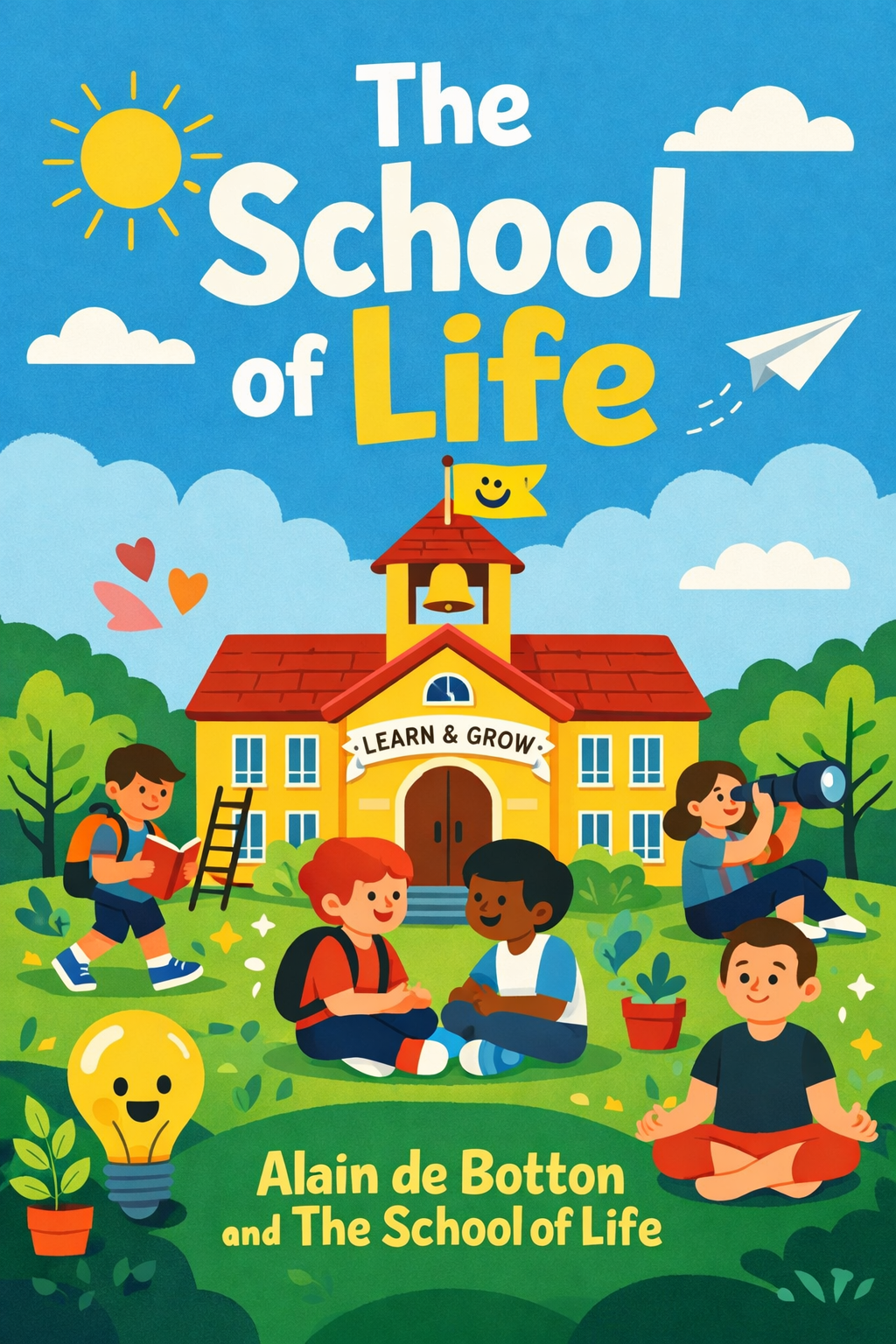
The modern world, for all its advancements, often leaves us feeling adrift. We are surrounded by more information and opportunity than ever before, yet we frequently struggle with anxiety, dissatisfaction, and a vague sense that we are not living as we should. This text proposes that the core issue is not a lack of material success, but a deficit in emotional education. We are taught mathematics and history, but we are rarely given structured guidance on how to navigate our inner lives—how to understand our anxieties, build lasting relationships, find work that resonates, or cope with loss. This work serves as a compassionate curriculum for this missing school of life, arguing that wisdom about ourselves is the most important knowledge we can acquire.
The journey begins with an honest look at the self. We are introduced to the idea that much of our adult behaviour is shaped by childhood experiences, a period we often dismiss but which silently scripts our patterns of love, fear, and ambition. By examining our past with kindness rather than blame, we can start to untangle the roots of our insecurities and repetitive struggles. This process of self-understanding is not about self-absorption, but about liberation. It allows us to see our flaws and quirks not as personal failures, but as understandable responses to our unique histories. From this foundation of self-acceptance, we can begin the work of emotional maturation, learning to manage our reactions, forgive ourselves for our imperfections, and develop a sturdier sense of our own worth that isn’t so easily shaken by external events.
A central pillar of a good life is our relationship with work. The book challenges the simplistic notion that work is merely a means to a financial end or a path to prestige. Instead, it frames fulfilling work as a vital form of therapy and a channel for our innate capacities. The goal is to align our careers with our authentic interests and values, to find something that feels like a genuine expression of ourselves. This might mean redefining success away from fame and wealth and towards mastery, contribution, and the quiet satisfaction of solving meaningful problems. It encourages a thoughtful audit of our skills and passions, suggesting that the right work absorbs our anxieties and connects us to something larger than our own worries, providing a crucial anchor in the chaos of existence.
Of course, our wellbeing is profoundly tied to our connections with others. The text delves into the art of relationships with refreshing realism. It moves beyond fairy-tale ideals to address the inevitable frustrations and misunderstandings that occur when two complex emotional worlds collide. Healthy relationships, it argues, are not found but built through skills like intelligent communication, the graceful management of expectations, and the courage to be vulnerable. It teaches us to see arguments not as catastrophes but as failed translations of inner needs, and to view our partner’s flaws through a lens of compassionate history, much as we learn to view our own. The aim is to create a generous, forgiving space where two people can feel seen and accepted, not for a perfect fantasy, but for their complicated, evolving reality.
Underpinning all these areas is the need to manage our mental state, particularly our susceptibility to anxiety and despair. The book offers tools for developing resilience, not by eliminating suffering, but by changing our relationship to it. It explores how philosophy, art, and culture are not mere decorations but essential tools for living. They provide perspective, solace, and a language for our deepest feelings, reminding us that our pains are part of the shared human condition. By learning to appreciate beauty, to engage with big ideas, and to find moments of calm, we build an inner sanctuary. This practice helps us withstand life’s inevitable storms and appreciate its quiet joys, leading us toward a state of what the book might call “calm melancholy”—a serene acceptance of life’s imperfections coupled with a determined commitment to make the best of it.
Ultimately, this is a guide to becoming a true adult—not in terms of age or responsibility, but in emotional depth and clarity. It reassures us that the quest for a meaningful life is a gradual, often non-linear process of learning and unlearning. There is no final graduation, only a continuous practice of self-knowledge, empathy, and courage. By engaging with its lessons, we equip ourselves not with a rigid set of rules, but with a flexible, compassionate intelligence. We learn to navigate the complexities of our hearts and the world around us with greater grace, purpose, and resilience, finally giving ourselves the thoughtful education in living we always deserved.