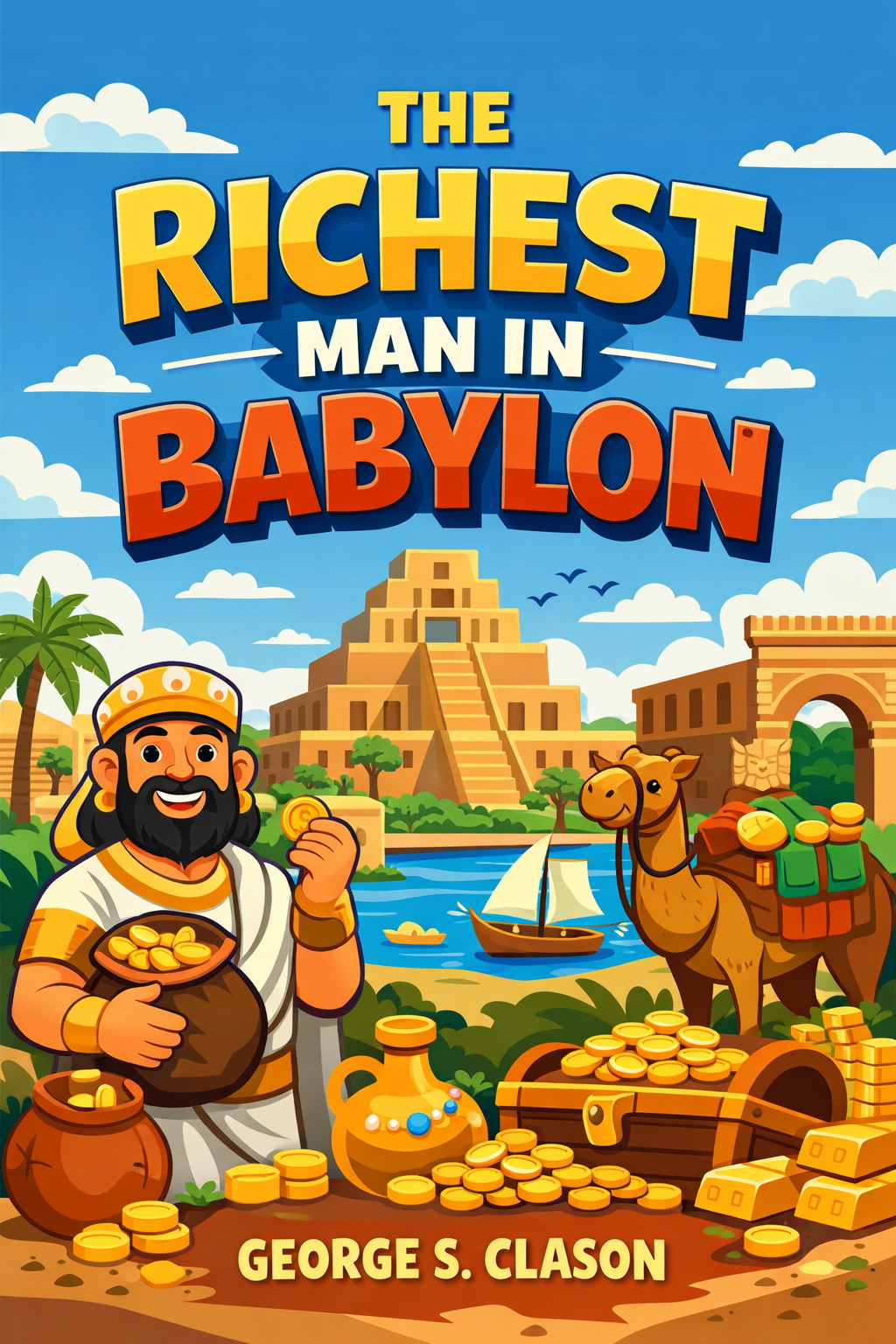
Description
The path to prosperity is not a secret reserved for the few, but a series of timeless laws available to all who are willing to learn and apply them. This classic work distills these universal principles of wealth-building into a series of engaging parables, set against the backdrop of the ancient, glittering city of Babylon. Through the struggles and triumphs of its citizens—a chariot builder burdened by debt, a talented musician with empty pockets, a merchant seeking the wisdom of the richest man—we discover that the fundamentals of financial success are as relevant today as they were millennia ago.
The journey begins with a simple but profound realization: a part of all you earn is yours to keep. The first law of wealth is to pay yourself first, setting aside no less than one-tenth of your income before any other expenses are met. This act of disciplined saving is the seed from which all fortune grows. The gold that is saved must then be put to work, for money is a diligent worker that can multiply itself when placed in wise investments. The stories illustrate that wealth grows not from frantic effort alone, but from the steady, compounding labor of your capital working for you. The rich man’s purse fattens not because he hoards, but because his gold earns children, and those children earn grandchildren, creating a lasting lineage of prosperity.
Yet, accumulating gold is only half the battle; the other half is guarding it from loss. The tales warn against the siren song of the naive investor or the smooth-talking schemer who promises impossible returns. Counsel with those wise in the ways of money, and invest only in ventures where your principal is safe. A fool and his gold are soon parted, but a wise man seeks advice from those skilled in the craft he wishes to master. This principle extends to all financial endeavors, emphasizing that true wisdom lies in recognizing the limits of one’s own knowledge and seeking the guidance of experienced masters.
The parables further delve into the practicalities of a prosperous life. They teach the importance of making your dwelling a profitable investment, of desiring to own your own home as a foundation for security and a wise use of income. They address the necessity of planning for the future, of ensuring a steady income for one’s later years and for one’s family. This forward-thinking is not mere worry, but an active cultivation of a lasting estate. The stories also confront the reality of debt, offering a clear, step-by-step plan for any person laboring under its weight. The solution is not magic, but method: a portion of earnings must be allocated to repaying creditors faithfully, thereby restoring one’s honor and financial freedom.
Underpinning all these practical rules is a deeper philosophy of personal energy and intent. The book argues that wealth flows most readily to those who are prepared to receive it. This preparation is an inner work. It involves cultivating opportunity, for good luck is often what happens when preparation meets chance. It demands decisive action, as opportunities are fleeting and must be seized. Most importantly, it requires a persistent will to succeed—a determination to follow the proven laws, to continue learning, and to act consistently over long periods. The men who become rich in Babylon are not necessarily the most brilliant or the most lucky from the start; they are the ones who, once they discover the laws, adhere to them with unshakable resolve.
Ultimately, this is not merely a book about money, but about freedom, dignity, and self-mastery. The wealth it describes buys more than fine robes and spacious homes; it purchases the freedom from fear, the ability to care for loved ones, the capacity to enjoy the pleasures of life, and the dignity to face the world with confidence. The wisdom of Babylon teaches that financial independence is a worthy and achievable goal for any person, regardless of their starting point. By applying these ancient, simple, and powerful laws—to save consistently, invest wisely, insure against loss, own your home, plan for the future, and increase your ability to earn—any individual can build their own citadel of wealth, brick by golden brick, and claim their rightful place in a prosperous life.