Description
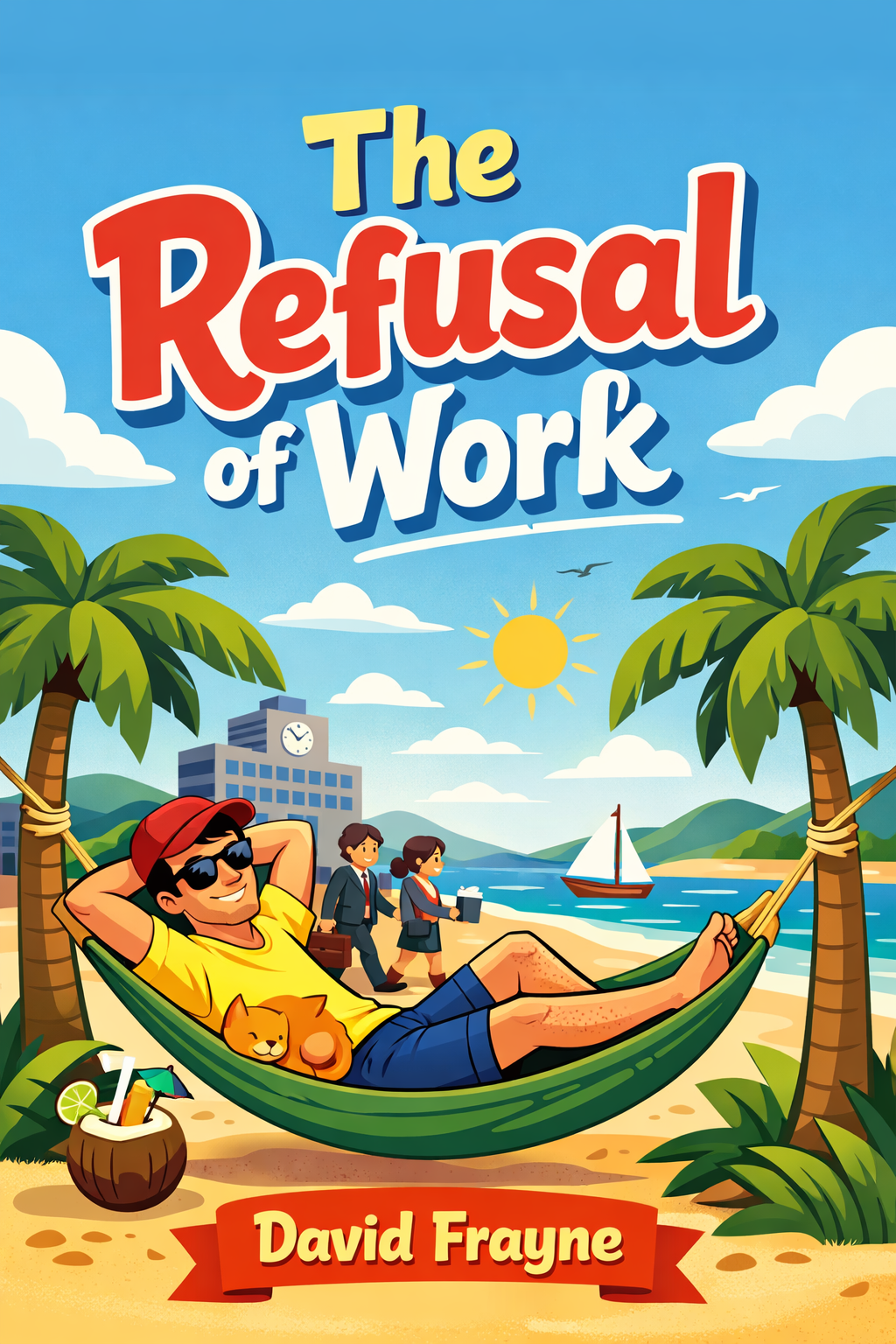
We live in a society that worships work. Our identities, our social status, and our very sense of worth are inextricably tied to our jobs. We are taught from a young age that a life of diligent labor is not only virtuous but essential for a meaningful existence. Yet, beneath this universal creed lies a profound and unsettling question: what if a great deal of the work we do is fundamentally pointless, a hollow performance that drains our time and spirit without contributing anything of real value to the world or ourselves? This is the central, incendiary premise explored in this challenging text. It is a manifesto against the tyranny of the job, a call to dismantle the moral and economic structures that keep us chained to unfulfilling labor, and a vision for reclaiming our time for truly human pursuits.
The author begins by dissecting the modern mythology of work. They argue that work has been elevated from a mere economic necessity to a secular religion, complete with its own doctrines of salvation through career success and its own hell of unemployment. This “work ethic,” far from being a natural human impulse, is a relatively recent social construct, meticulously engineered during the rise of industrial capitalism to ensure a compliant and disciplined workforce. We internalize this ethic, believing that being busy is synonymous with being important, and that our productivity defines our moral character. Consequently, we submit to long hours, accept meaningless tasks, and tolerate soul-crushing environments, all for the promise of a paycheck and a sliver of social validation. The book forces us to confront the sheer absurdity of spending the majority of our waking lives on activities we would not choose if not for the financial imperative, activities that often seem designed to frustrate rather than fulfill.
A particularly devastating section of the analysis focuses on the proliferation of what the author terms “bullshit jobs.” These are positions that are so completely pointless, unnecessary, or pernicious that even the people who hold them secretly believe their roles should not exist. Think of the middle managers who manage nothing, the corporate lawyers who devise loopholes for the sake of devising them, the public relations specialists who spin empty narratives, or the administrative coordinators trapped in cycles of generating and processing paperwork for its own sake. These jobs do not create, build, heal, teach, or improve anything. Instead, they exist to justify their own existence, to facilitate the bureaucracy of other pointless jobs, or to serve the interests of capital in ways that are actively harmful to society. The psychological toll of these roles is immense, leading to a specific form of spiritual misery where one is paid well but feels a deep, eroding sense of worthlessness and fraud.
The critique then expands beyond obviously useless jobs to question the very foundation of the economy. Our system is not designed to maximize human well-being, leisure, or creativity; it is designed to maximize consumption and growth. Therefore, it must constantly invent new needs, new industries, and new forms of labor to keep the engine running, regardless of whether these contribute to genuine flourishing. We are trapped on a treadmill, working longer hours to buy more things we are told we need, which only forces us to work more to pay for them. This cycle crowds out the space for everything else that makes life rich: community, family, art, play, political engagement, and simple idleness. The book posits that this is not an accident but a necessary feature of a system that depends on our perpetual busyness and dissatisfaction.
So, what is the alternative? The author is not advocating for mere laziness or a retreat from all effort. Rather, they propose a radical “refusal” of work as it is currently defined—a political and personal withdrawal of consent from the work-dominated life. This refusal is the first step toward reclaiming autonomy. The vision that follows is one of a post-work society, or at least a society where work is radically reduced and reimagined. Inspired by utopian thinkers and moments of historical possibility, the argument turns to practical and provocative ideas like a universal basic income, a drastic reduction of the standard workweek to perhaps 15 or 20 hours, and the democratization of the workplace. The goal is to sever the absolute link between survival and employment, freeing individuals to decide how to use their own time.
With this newfound freedom, the book suggests, human activity would not cease but transform. People would engage in what the author calls “liberated play” or “useful activity”—work driven by intrinsic motivation, curiosity, and a desire to contribute to the common good. This could encompass caring for others, making art, growing food, building communities, pursuing knowledge, or repairing the environment. These activities have value in themselves, not because they generate a profit. The book argues that humans are naturally creative and cooperative; when freed from the coercion of the wage, we would naturally gravitate toward productive and meaningful pursuits, but on our own terms and at our own pace. The result would be a society less obsessed with stuff and more rich in time, connection, and experience.
This is not presented as a simple or immediate political program. The author acknowledges the monumental power of the status quo and the deep fears people have about economic security. However, the text serves as a crucial intellectual weapon, a tool for deprogramming ourselves from the cult of work. It encourages readers to start the refusal in their own minds: to question the necessity of their own busyness, to identify and resist the performance of pointless labor, and to begin carving out spaces of idleness and creativity within the existing system. By imagining a world where work does not dominate life, we start to make that world possible. The book is ultimately a deeply humanistic plea, arguing that our time on earth is too precious to be sold in bulk to the highest bidder, and that a good life is not a well-employed life, but a free one.