Description
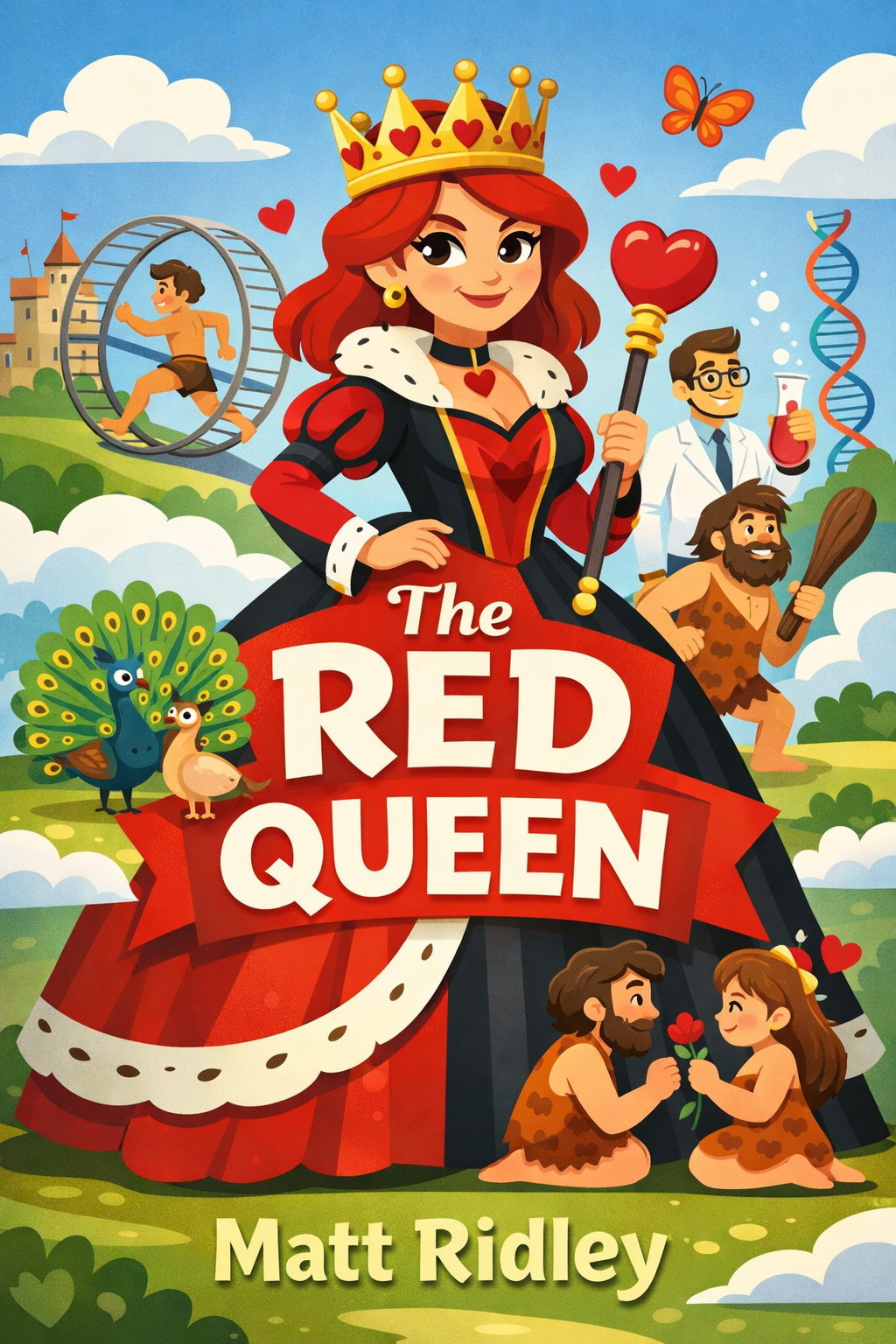
At first glance, sexual reproduction seems like a terribly inefficient way to perpetuate a species. It requires finding a mate, combining genetic material, and producing offspring that are a genetic gamble. Many organisms, from bacteria to plants, reproduce asexually with far greater speed and simplicity. So why has sex become the dominant method for complex life, including humans? The answer lies in a never-ending evolutionary arms race, perfectly captured by the metaphor of the Red Queen from *Through the Looking-Glass*, who explains that one must run as fast as one can just to stay in the same place. For species, this means constantly adapting and evolving merely to survive against relentless threats. The greatest of these threats are not predators, but parasites—microscopic adversaries that evolve at a blistering pace. An asexual species, producing near-identical clones, is a sitting duck; once a parasite cracks its defensive code, it can wipe out the entire population. Sex is nature’s brilliant solution to this problem. By shuffling genes from two parents, sexual reproduction creates unique individuals in each generation, constantly changing the lock that parasites must pick. This genetic diversity, a library of potential defenses, is our primary weapon in the evolutionary race for survival.
This imperative for genetic mixing also explains the very existence of two distinct sexes. It began with a microscopic competition within early organisms. Certain energy-producing structures within cells, called organelles, found they could only be passed on through large, nutrient-rich egg cells, not through small, mobile sperm. This gave an evolutionary advantage to organisms that specialized in producing eggs—females. Once females existed, it became advantageous for others to specialize in producing vast numbers of sperm to fertilize them—males. Hermaphrodites, which perform both functions, could not compete with this efficiency of specialization. The two-sex model won out. Furthermore, evolutionary pressures continue to influence the sex of offspring in subtle ways. In species where size and strength give males a reproductive edge, well-nourished mothers often produce more sons. In societies where social rank is inherited, high-status females might have more daughters to carry on their legacy. Even in humans, studies have suggested a link between a mother’s dominant personality and a higher likelihood of having sons, as if evolution is betting that dominant traits will benefit male offspring more.
The evolutionary paths of males and females, driven by different reproductive challenges, have led to profound and often controversial differences. Biologically, these distinctions are real and measurable, influencing everything from cognitive strengths to hormonal responses. For instance, spatial reasoning and mathematical aptitude often show average differences between the sexes, linked to biological factors like hormone levels. However, these average differences are just that—averages. The variation among individual men or among individual women is far greater than the difference between the typical man and woman. More importantly, acknowledging biological differences in no way justifies social inequality or sexism. Society itself is a powerful evolutionary force. Cultural practices, from childcare systems to mating rituals, shape which genes are passed on. The attempt by 1920s Israeli kibbutzim to erase gender roles ultimately failed not because biology is destiny, but because social and economic pressures slowly pushed the community back toward traditional divisions of labor, demonstrating the complex interplay between our innate predispositions and our cultural environment.
Much of the apparent extravagance and competition in the animal kingdom, particularly among males, is a direct result of these evolutionary imperatives. The stunning tail of a peacock, the complex song of a bird, or the dramatic antlers of a stag are not arbitrary decorations; they are advertisements of genetic fitness. This process, known as sexual selection, operates alongside natural selection. Females, who typically invest more in each offspring through pregnancy and nurturing, become the choosier sex. They select mates based on traits that signal health, good genes, or the ability to provide resources. This creates a feedback loop: if females prefer males with long tails, then males with genes for long tails will have more offspring, spreading both the tail genes and the female preference for them. This is known as the “sexy son” hypothesis—a female benefits by choosing a fashionable male because her sons will inherit those attractive traits and be successful in the next generation’s mating game.
This logic extends to human mating strategies, which can appear contradictory. For males, evolutionary theory suggests a tendency toward polygamy, as spreading genes widely with multiple partners can maximize reproductive success. However, this comes with costs, including conflict with other males and the risk of investing no care in offspring. For females, the calculus is different. Securing a long-term, investing partner provides crucial resources and protection for her children. Yet, there can also be an evolutionary incentive for discreet affairs. By mating with a genetically superior male outside her primary partnership, a female can potentially obtain better genes for her offspring while still retaining the stable resources provided by her long-term mate. This dual strategy highlights the complex and often hidden evolutionary pressures that have shaped human psychology and behavior.
Ultimately, the story of sex is the story of human intelligence. Our large, complex brains are arguably our most significant sexual ornament. Intelligence allows for innovation, social cooperation, and problem-solving—traits highly attractive to potential mates. The evolutionary race driven by sex and parasites didn’t just give us two genders and peculiar mating rituals; it fueled an expansion of cognitive ability that allowed us to manipulate our environment, build cultures, and transcend many of our biological limitations. We are the product of this endless race, creatures shaped by the need to outrun our microscopic foes and outthink our competitors in the game of genetic legacy. Understanding these deep evolutionary roots provides a powerful lens for examining human nature, our social structures, and the enduring differences and desires that define the human experience.