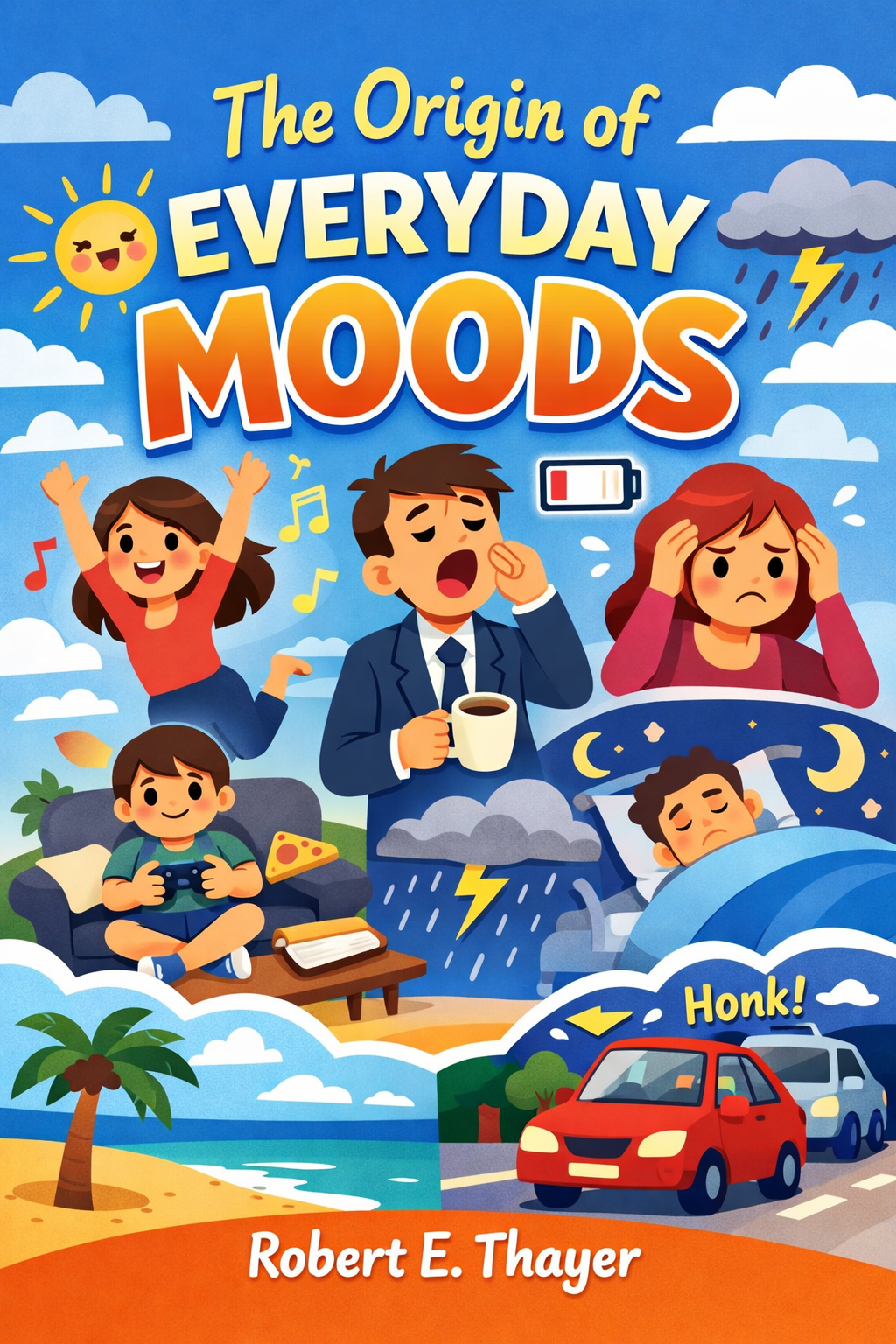
Description
Our daily emotional weather is not a mystery. At its core, every mood we experience is a combination of two fundamental forces: energy and tension. By understanding the dynamic between these two states, we can move from being passive victims of our feelings to active architects of our emotional landscape. This book provides a clear framework, rooted in psychological research, that demystifies why we feel the way we do and offers concrete, actionable steps for improvement.
The author presents a compelling model that defines four primary moods, each a unique blend of energy and tension. The most desirable state is calm-energy, characterized by high energy and low tension. This is when we feel focused, capable, and at ease. Its counterpart is calm-tiredness, where low energy meets low tension, resulting in a relaxed, sleepy, or peaceful state. On the more challenging side is tense-energy, a mix of high energy and high tension that makes us feel jittery, anxious, or driven, often under pressure. Finally, there is tense-tiredness, the most difficult mood, where low energy collides with high tension, leaving us feeling drained, irritable, and prone to negative thoughts.
Contrary to popular belief, our moods are not simply direct reactions to life events. While a stressful email or a pleasant surprise can influence us, they are just one piece of a complex puzzle. Our internal biological rhythms play a massive role. Energy levels naturally ebb and flow throughout the day for most people, typically peaking in the late morning, dipping to a low in the late afternoon—a notorious time for low mood—and experiencing a smaller surge in the early evening. This explains why bad news often feels more crushing at 4 p.m. than it might at 10 a.m. Other factors like nutrition, sleep, social interaction, and even neurochemical balances constantly shape our emotional baseline, making our mood a whole-body experience.
This mind-body connection is a product of evolution. Our moods are sophisticated survival tools inherited from our ancestors. The freeze-fight-or-flight response is a prime example. A state of tense-energy, with its heightened alertness and readiness, prepared early humans to assess and react to threats. The optimal state of calm-energy would have been essential for effective, sustained action, like fleeing from danger. Even the need for rest, seen in calm-tiredness, and the wary exhaustion of tense-tiredness, served purposes in a dangerous world where resources needed replenishment and threats could linger. Our modern stressors—deadlines, conflicts, information overload—trigger these same ancient biological programs, often at inopportune times.
The relationship between tension and energy is not linear but inverse. Initially, as tension rises, so does energy, creating that driven, anxious state of tense-energy. However, there is a tipping point. When tension becomes too high, it begins to deplete our perceived and actual energy, plunging us into tense-tiredness. Similarly, as energy increases, it can help dissolve tension, leading us toward the ideal state of calm-energy. This is why psychological stress alone—like worrying about an impossible deadline—can make us feel instantly exhausted, regardless of our physical reserves. Our body’s assessment of its resources is a holistic calculation of both physical and mental demands.
The key to mastering our moods lies in adopting active, rather than passive, regulation strategies. Many common coping mechanisms, like snacking on sugar, drinking alcohol, or mindlessly scrolling, are passive. They offer a fleeting distraction but often worsen our mood in the long run by depleting energy or adding guilt. Active strategies directly and positively alter our physiological state. The most effective method for breaking a tense-tired mood is to address its two components separately: first, reduce tension, then increase energy. A short, brisk walk is a perfect example, as physical movement metabolizes the stress hormones causing tension and simultaneously boosts circulation and alertness.
Building a better emotional life requires self-observation and deliberate practice. Begin by simply noticing your mood throughout the day, identifying whether you are experiencing calm-energy, tense-tiredness, or another state. Analyze the patterns: when do your lows typically occur? What activities or thoughts precipitate a shift? With this awareness, you can proactively intervene. Replace an unhealthy passive habit, like reaching for a cookie when stressed, with an active one, like five minutes of deep breathing or stepping outside. Regular exercise and meditation are foundational practices that build resilience, training your nervous system to recover from stress more efficiently and maintain a higher baseline of calm-energy.
Ultimately, this journey is about empowerment. By decoding the simple formula of energy and tension, you gain the tools to navigate your inner world. You learn to respect your natural rhythms, interpret your body’s signals accurately, and choose responses that genuinely restore balance. The goal is not to eliminate negative moods entirely, but to understand their origin, shorten their duration, and cultivate more frequent periods of the sustainable well-being found in calm-energy. This knowledge transforms mood management from a reactive guessing game into a skillful and creative part of everyday life.