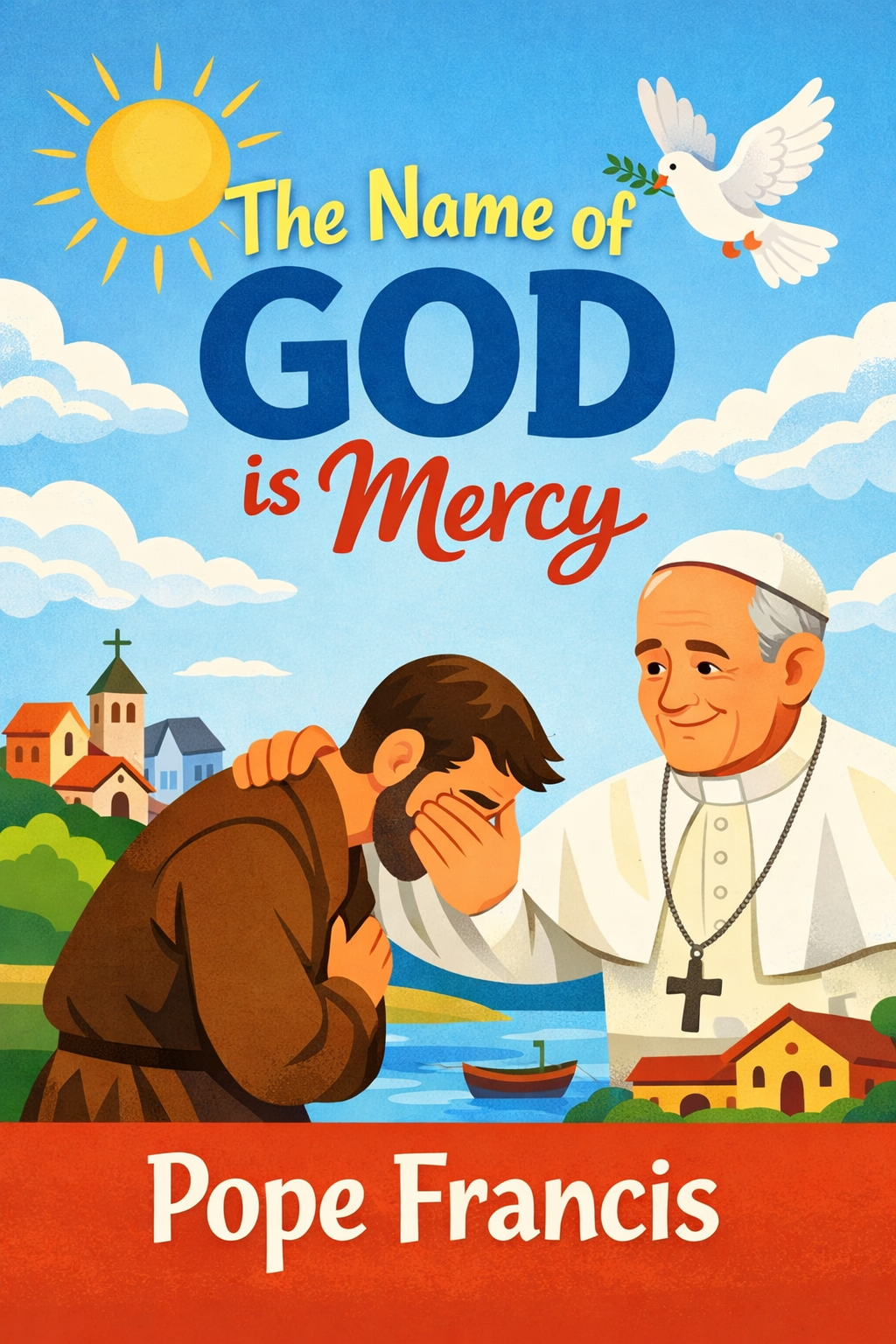
Description
In a series of profound reflections, Pope Francis presents a compelling vision of faith centered not on judgment, but on an inexhaustible, loving mercy. He argues that mercy is the most essential attribute of God, the very name by which we should understand the divine. This is not a distant or abstract concept, but a living force that chooses compassion over punishment at every turn. The familiar scriptural advice to not let the sun go down on one’s anger is reframed as a divine model of releasing resentment daily, a daily practice of mercy that mirrors God’s own heart. This mercy is the anchor for human life, preventing a spiral into despair and reminding every person that their life has meaning and that their efforts to live well are never in vain. It is this belief in a merciful God that inspires people to repent, to strive for better lives, and to extend help to others, creating a ripple effect of goodness in the world.
This divine principle found its perfect human expression in Jesus Christ. Pope Francis illustrates how every action and parable of Jesus radiates mercy. Jesus deliberately sought out the marginalized—the sick, the sinners, the societal outcasts like lepers—demonstrating that God’s love specifically flows to those who feel most abandoned. His teachings consistently prioritized compassion over rigid legalism, as seen when he protected the woman caught in adultery, challenging her accusers to confront their own sinfulness. His ultimate act of mercy was his sacrificial death, an offering meant to redeem all of humanity. This establishes a clear legacy and a mission: the work of mercy must continue. The Church, therefore, is called not to be a fortress for the pure but a field hospital for the wounded. Its priests and confessors are tasked with acting in the spirit of Christ, offering a welcoming, healing presence that draws people in rather than pushing them away with harshness or inappropriate scrutiny. The Church must be found everywhere people struggle, especially in places of suffering like prisons, embodying the always-available mercy of God.
At the core of this message is the image of God as a loving parent. God’s love is described as unconditional and paternal—or even maternal, as some scriptural language suggests. Like a parent who never stops loving a child despite their mistakes, God’s commitment is unwavering. This parental love is often our first experience of mercy through our own parents’ patience and guidance. Even when we, like the prodigal son, wander and squander our inheritance, the focus is on the joyous celebration of return. This leads to a crucial, humbling step: we must accept our own sinful nature. Pope Francis openly includes himself in this category, stating we are all weakened by original sin and prone to failure. Denying this reality is a greater obstacle than the sin itself, because it closes us off from the very mercy we need. God understands our weakness, and a sinner who genuinely repents is incredibly precious to him.
However, Pope Francis draws a critical distinction between sin and corruption. Sin is a failure, a fall in a moment of weakness that a humble heart can acknowledge and bring to God’s mercy. Corruption is something far more insidious: it is the hardening of the heart that justifies sin, weaving it into a lifestyle. The corrupt person builds a facade of righteousness while being inwardly devoted to idols like power, money, or fame. This state is especially dangerous because it is self-deceptive and isolating, making the return to God a monumental struggle. Corruption also has a devastating social dimension, as corrupt individuals often refuse to take responsibility for their actions, projecting blame onto others and perpetuating cycles of injustice. The antidote to this, both personally and societally, is compassion. By showing each other the same mercy God shows us—by seeing the suffering of others and responding with a parent’s heart—we participate in healing a wounded world. Ultimately, the book is an invitation to trust in this boundless mercy, to seek it in confession and prayer, and to become a conduit of it for others, thereby fulfilling the deepest mission of faith.