Description
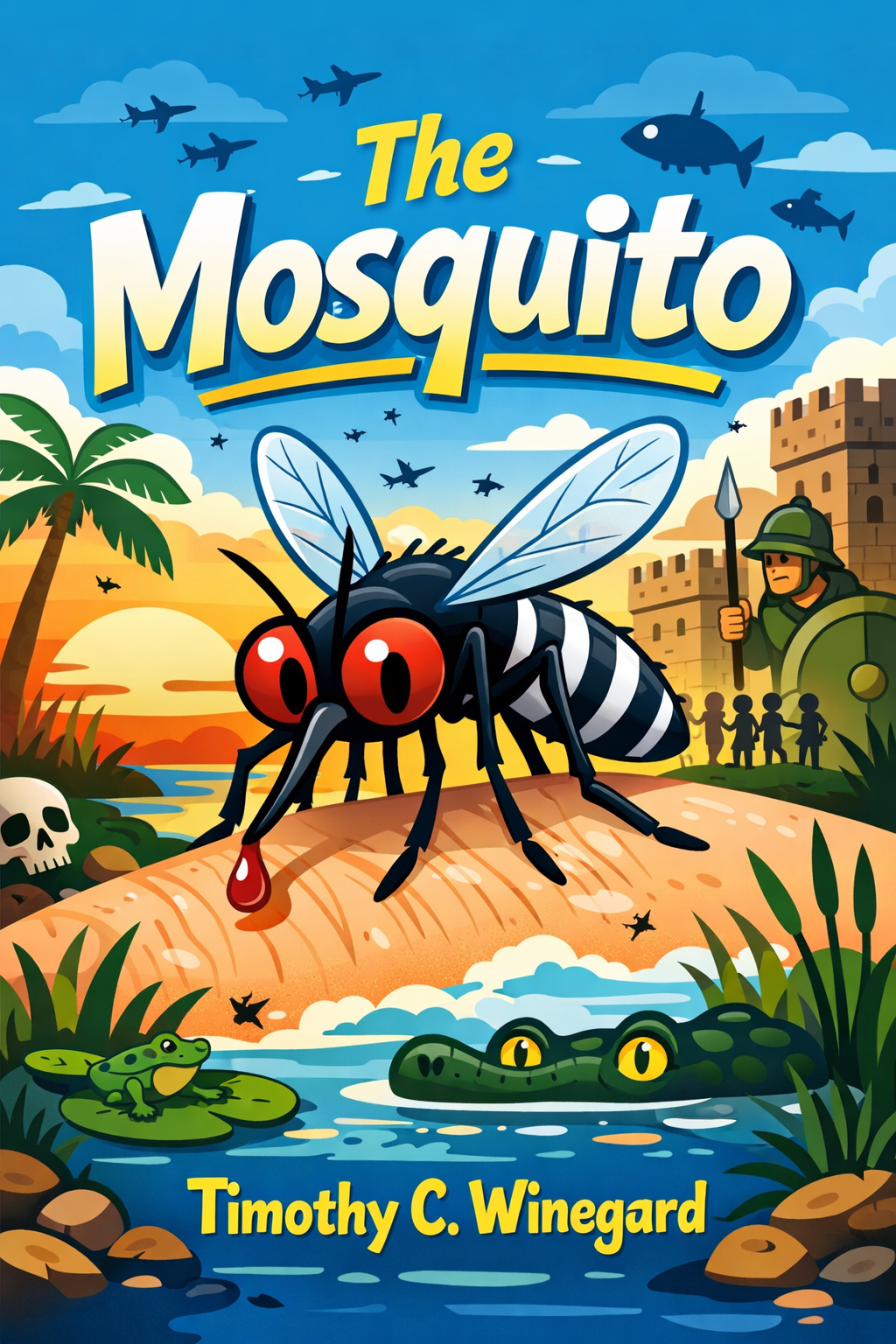
Often dismissed as a mere nuisance, the mosquito has been a relentless architect of human destiny. Its true power lies not in its bite, but in the deadly pathogens it transmits, with malaria standing as the most formidable historical executioner. This relationship between insect, parasite, and human has silently redirected the flow of civilizations, influencing the rise and fall of empires, the outcomes of pivotal wars, and even the genetic makeup of populations. The story of humanity is, in many ways, a story of our struggle against this pervasive foe.
The mosquito thrives in warm, wet environments, with the female requiring blood to nurture her eggs. In the process, she can act as a vector for a suite of diseases, from yellow fever to dengue. Yet, malaria, caused by a cunning and shape-shifting parasite, has been the most prolific killer across millennia. Human defenses evolved in response, most notably the sickle cell trait in West Africa. This genetic mutation provided significant immunity to malaria but at a terrible cost, shortening lifespans. As Bantu-speaking peoples carrying this trait migrated across Africa, their biological advantage helped them establish dominant societies, later complicating European colonial advances into the continent’s malarial interior.
The insect’s influence on Western history began early. During the Greco-Persian Wars, mosquito-borne disease ravaged the invading Persian armies, contributing to their defeat and preserving the nascent Greek city-states. Later, in the Peloponnesian War between Athens and Sparta, malaria or a similar plague decimated Athens at a critical moment, and a later Athenian campaign in Sicily failed catastrophically when swamps around Syracuse sickened the fleet. The resulting weakness of Greece allowed the northern kingdom of Macedon to rise, paving the way for Alexander the Great. His vast conquests, however, met their limit in the Indus River Valley, where malaria exhausted his army and forced a retreat, ultimately contributing to the fragmentation of his empire.
Rome’s fate was similarly intertwined with the mosquito. The disease was a constant presence, weakening the population and the military. Some historians argue that repeated malaria epidemics sapped the strength of the Roman Republic and later the Empire, making it more vulnerable to external pressures and internal decay. Furthermore, as the Roman state faltered, the rise of Christianity was inadvertently aided by the disease; the Christian emphasis on caring for the sick and the promise of an afterlife appealed to populations living under the constant shadow of pestilence. Centuries later, malaria would also protect the Holy Land, helping to decimate European Crusader armies and contributing to the failure of their campaigns.
The collision of the Old and New Worlds unleashed a biological catastrophe. Europeans brought malaria and yellow fever to the Americas, where indigenous peoples had no immunity. The results were apocalyptic, with societies collapsing from disease even before facing direct military conquest. In the Caribbean and the American South, the mosquito then shaped the brutal institution of slavery. African laborers, often carrying genetic traits like sickle cell, possessed a comparative resistance to malaria that made them tragically valuable in the eyes of planters, cementing the transatlantic slave trade. Yet, the mosquito could also be a revolutionary force: during the American Revolution, British troops were decimated by disease in the South, and in the Haitian Revolution, yellow fever destroyed French armies, helping to secure the world’s first successful slave revolt.
In the United States, the mosquito prolonged the Civil War by infecting troops on both sides, but ultimately, by weakening the Confederate war effort and influencing European powers to withhold recognition, it helped ensure the conflict ended with the abolition of slavery. A generation later, during the Spanish-American War, American troops again suffered from yellow fever and malaria during the campaign in Cuba. However, subsequent successful public health efforts to control mosquitoes in Panama allowed the U.S. to complete the canal, a project that cemented its emergence as a global power.
The twentieth century saw humanity strike back with unprecedented force. The discovery of the mosquito’s role in disease transmission, the development of insecticides like DDT, and the creation of antimalarial drugs like chloroquine promised victory. These tools helped protect millions of soldiers during the World Wars and fueled optimistic eradication campaigns. But this triumph was short-lived. The mosquito and its parasites fought back through pesticide resistance and drug-resistant strains of malaria. Today, the battle continues on a global scale, a testament to the enduring power of this tiny, persistent adversary. Our history has been irrevocably shaped by its bite, and our future will be defined by our ongoing response.