Description
In the early 1940s, college football was a national obsession, a realm of heroes and glory. But as America entered World War II, that world was upended. The story follows the paths of several young men whose athletic prowess was eclipsed by a greater call to duty. Tony Butkovich, the son of Croatian immigrants, rose from the Illinois coal country to become a record-breaking running back, only to trade his cleats for combat boots as a Marine. Dave Schreiner, a humble and gifted All-American from Wisconsin, and his teammate Bob Bauman, left campus for officer training. John McLaughry, a coach’s son from an Ivy League background, sought purpose in the Marines after a frustrating stint in another branch. These athletes, and dozens like them, represented the very ideal of American vigor, and they were funneled into the grueling crucible of the Pacific Theater.
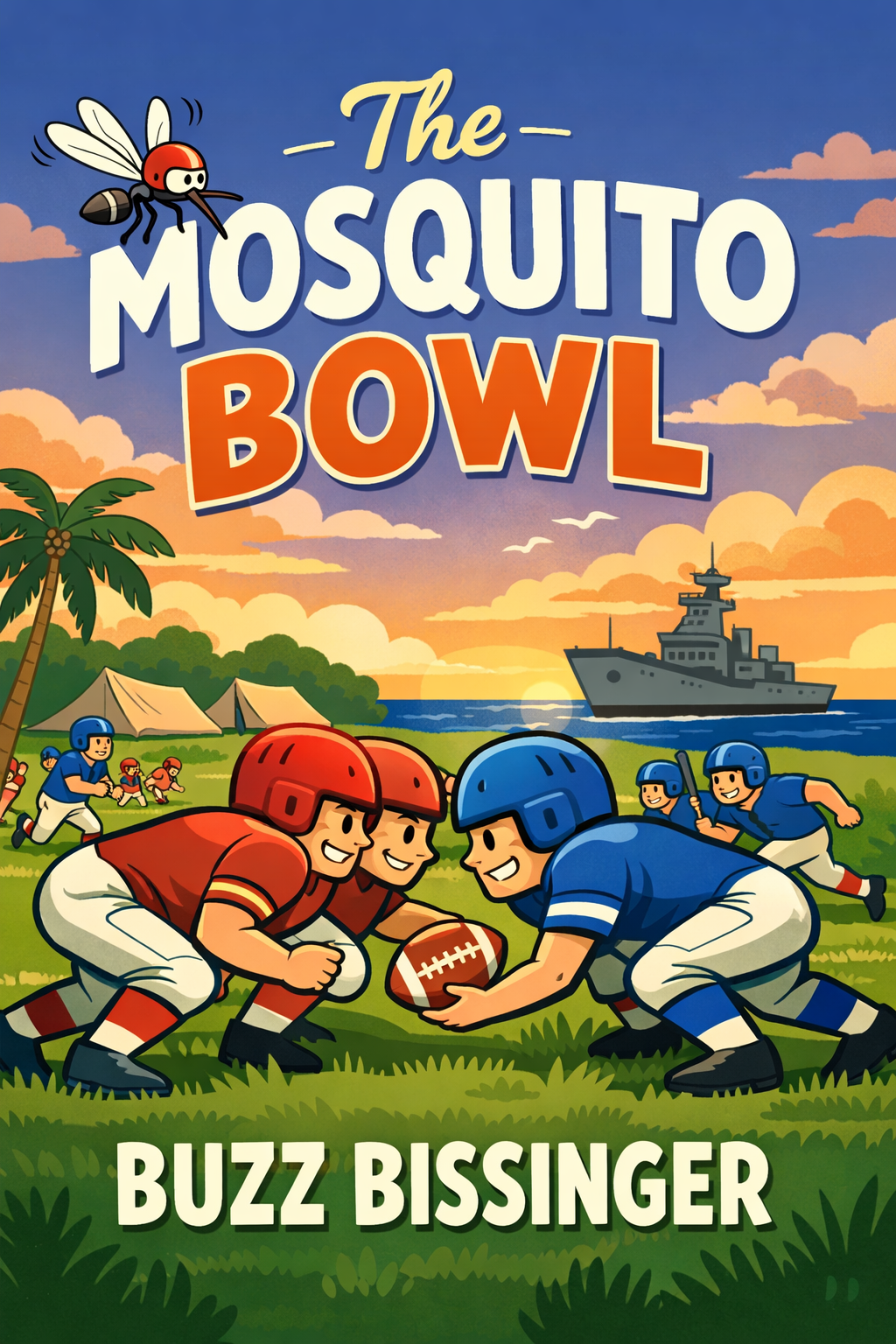
Their journeys converged on the island of Guadalcanal in 1944, a staging ground for the coming invasion of Japan. The 4th and 29th Marine Regiments found themselves packed with former college football players. Amid the tense monotony of preparation, rivalry and camaraderie sparked an improbable idea: to settle the debate over which regiment was superior through a game of football. What began as barracks bravado evolved into the “Mosquito Bowl,” named for the armed forces radio network that would broadcast it. On Christmas Eve, 1944, on a rough field of coral and dirt, two teams comprising some of the nation’s finest former athletes lined up. The game was a surreal spectacle, complete with printed rosters, a boisterous crowd of Marines, and heavy wagering. It was a fleeting return to normalcy, a violent but joyous echo of their past lives under a blistering sun, with the shadow of an unimaginable future looming over every play.
That future was the Battle of Okinawa. Soon after the final whistle, these same men were thrust into one of the war’s most savage campaigns. The narrative shifts from the controlled chaos of sport to the utter horror of modern warfare. The book meticulously details the brutal reality these footballer-soldiers faced: a fanatical enemy, treacherous terrain, and relentless casualties. The promise and talent celebrated on the gridiron were extinguished in the mud and fire of the Japanese defenses. The story does not shy from the visceral, tragic cost, following individuals into their final moments and tracing the profound grief that reverberated through their families and communities back home.
Ultimately, this is a story about the abrupt transition from youth to unimaginable responsibility, and the fragility of potential. These men were not just statistics; they were vibrant personalities, sons, brothers, and boyfriends, whose lives were defined by both extraordinary athletic achievement and profound sacrifice. The Mosquito Bowl itself becomes a poignant symbol—a last, brilliant flash of lighthearted competition and brotherhood before the darkness. It is a powerful exploration of American life during the war, touching on themes of immigration, class, and the racial segregation that persisted within the military itself, as witnessed by McLaughry during his training assignment. By intertwining the narratives of sport and war, the book creates a deeply human and devastating portrait of a generation that left their dreams on the field to face a fate they could never have trained for, reminding us that history is built not only on strategies and outcomes, but on the individual stories of those who lived and died within it.