Description
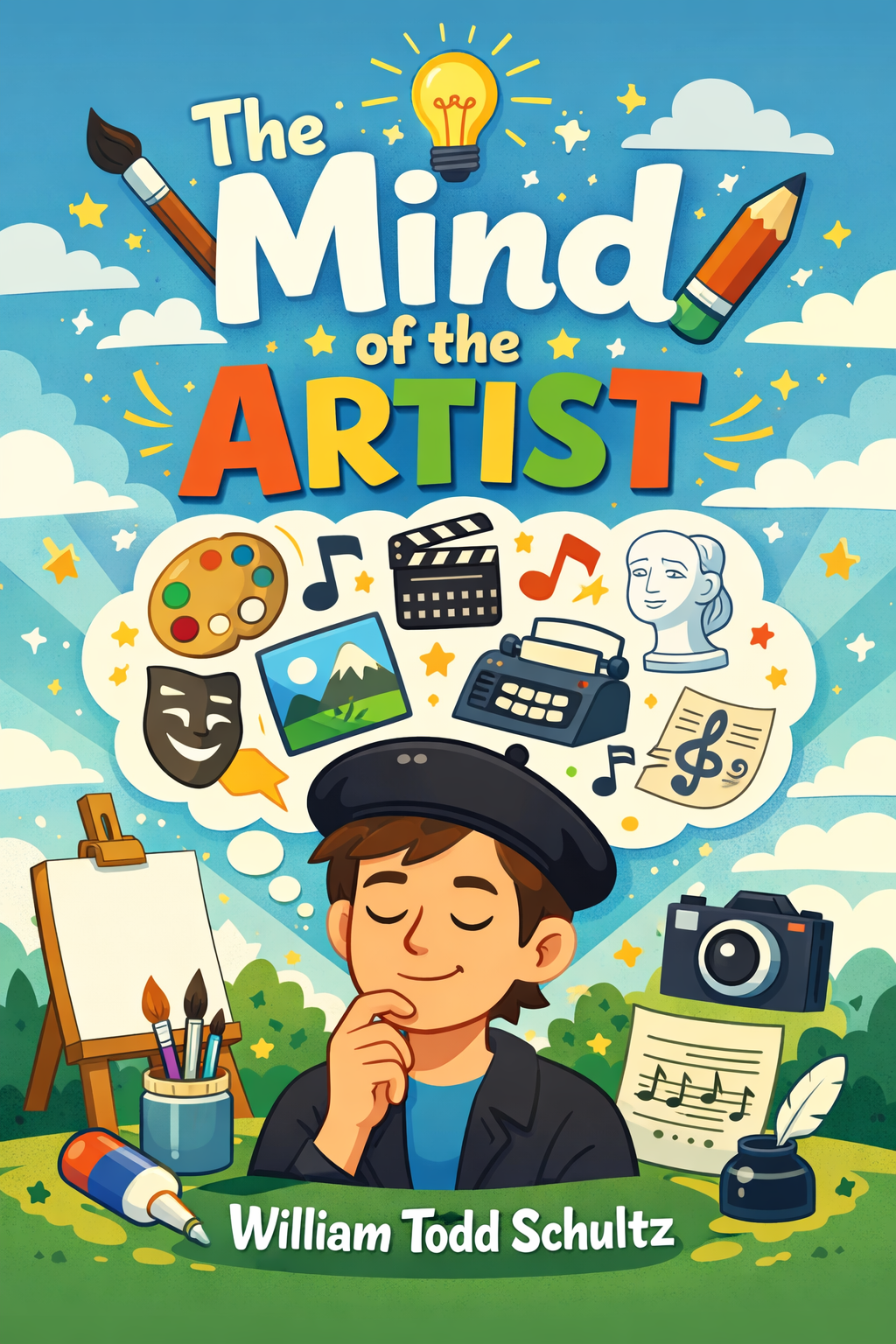
What truly happens inside the mind of an artist? This exploration ventures beyond the romantic clichés of tortured genius and divine inspiration to map the real, often messy, psychological terrain where art is born. It argues that creativity is not a magical exception to human nature but a profound expression of it, built on a foundation of disciplined habits, deep observation, and a continuous dialogue between chaos and order. The artistic mind is presented as a specialized workshop, where raw perception, memory, and emotion are the materials, and focused practice is the essential tool.
The book dismantles the myth of waiting for inspiration, positioning it instead as a fleeting guest that only visits those who are already diligently at work. It delves into the daily rituals and structured routines that countless celebrated artists—from painters and composers to writers and sculptors—have used to court their muse. This is not about rigid schedules for their own sake, but about creating a sacred, reliable space for the mind to wander productively. The paradox explored is that true creative freedom is often found within the confines of self-imposed limitations, whether a specific time of day, a particular medium, or a challenging formal constraint.
A central theme is the artist’s unique relationship with perception. The creative mind is portrayed as a perpetual student of the world, seeing not just objects but relationships, histories, and possibilities. It practices a form of deep attention, absorbing the play of light on a wall, the cadence of a stranger’s speech, or the emotional weight of a forgotten object with an intensity that borders on the sacred. This constant gathering of fragments—a color here, a feeling there—builds a vast internal library from which original combinations can later be drawn. The artist’s skill lies in translating this hyper-observed reality into a new form that allows others to see it afresh.
Inevitably, the path is strewn with internal obstacles. The book confronts the demons of doubt, fear, and self-criticism that haunt the creative process. It examines the fragile balance between the confidence needed to begin a work and the critical eye required to refine it. Imposter syndrome, the crushing weight of past masterpieces, and the fear of public judgment are treated not as personal failings but as universal aspects of the artistic journey. The narrative suggests that learning to manage this inner critic—to separate useful feedback from paralyzing noise—is one of the most crucial skills an artist develops.
Furthermore, the text explores the necessity of solitude alongside the need for connection. The deep work of creation requires periods of retreat, a turning inward to listen to the faint signals of a forming idea. Yet, this solitude is not the end goal. Art is fundamentally a conversation, and the mind of the artist is also shaped by the community of peers, the influence of mentors and predecessors, and the anticipated response of an audience. The book looks at how artists navigate this push and pull, drawing energy and ideas from the world while protecting the quiet core where those ideas are synthesized into something personal and new.
Finally, it addresses the moment of breakthrough—the so-called “eureka” moment. Rather than a bolt from the blue, these instances are framed as the logical, though unexpected, result of the mind’s subconscious labor. When the artist is deeply immersed in their work, the subconscious continues to connect dots, solve problems, and experiment with solutions outside the glare of conscious thought. The sudden insight is the moment this subsurface work bubbles up into awareness, often when the conscious mind is at rest. This underscores the importance of work followed by deliberate rest, of struggle followed by release.
In the end, the mind of the artist is revealed as a testament to human potential. It is a mind that embraces uncertainty, finds beauty in the mundane, possesses the courage to make private visions public, and accepts the long, often unrewarded, apprenticeship required for mastery. The book concludes not by defining the artist, but by inviting the reader to recognize and cultivate these same creative capacities within themselves, suggesting that the artistic mind is not a rare gift but a latent faculty waiting to be engaged through curiosity, courage, and consistent effort.