Description
Imagine never forgetting a name, a crucial date, or a complex sequence of information again. “The Memory Palace” reveals that this isn’t a superpower reserved for a gifted few, but a skill anyone can develop. The book argues that our memory functions much like a muscle; left unused, it grows weak, but with consistent and proper training, it can achieve remarkable strength. The frustration of misplaced keys or a forgotten grocery list is not a sign of a faulty mind, but of an untrained one. We all possess a vast, often untapped, reservoir of mnemonic potential waiting to be harnessed.
The secret lies in a specific, ancient part of our cognitive toolkit: our spatial memory. This is the mental GPS we use every day to navigate our world, remembering the layout of our home, the route to work, or the location of a favorite café. Evolutionarily, this memory system is primal and powerful, developed over millennia to help our ancestors remember locations of food, water, and shelter—information critical for survival. While modern life demands we remember abstract facts and figures, our brains are still wired to recall information best when it is tied to a physical place or a vivid image. The book suggests we stop fighting this natural inclination and instead, cleverly hijack it for our own purposes.
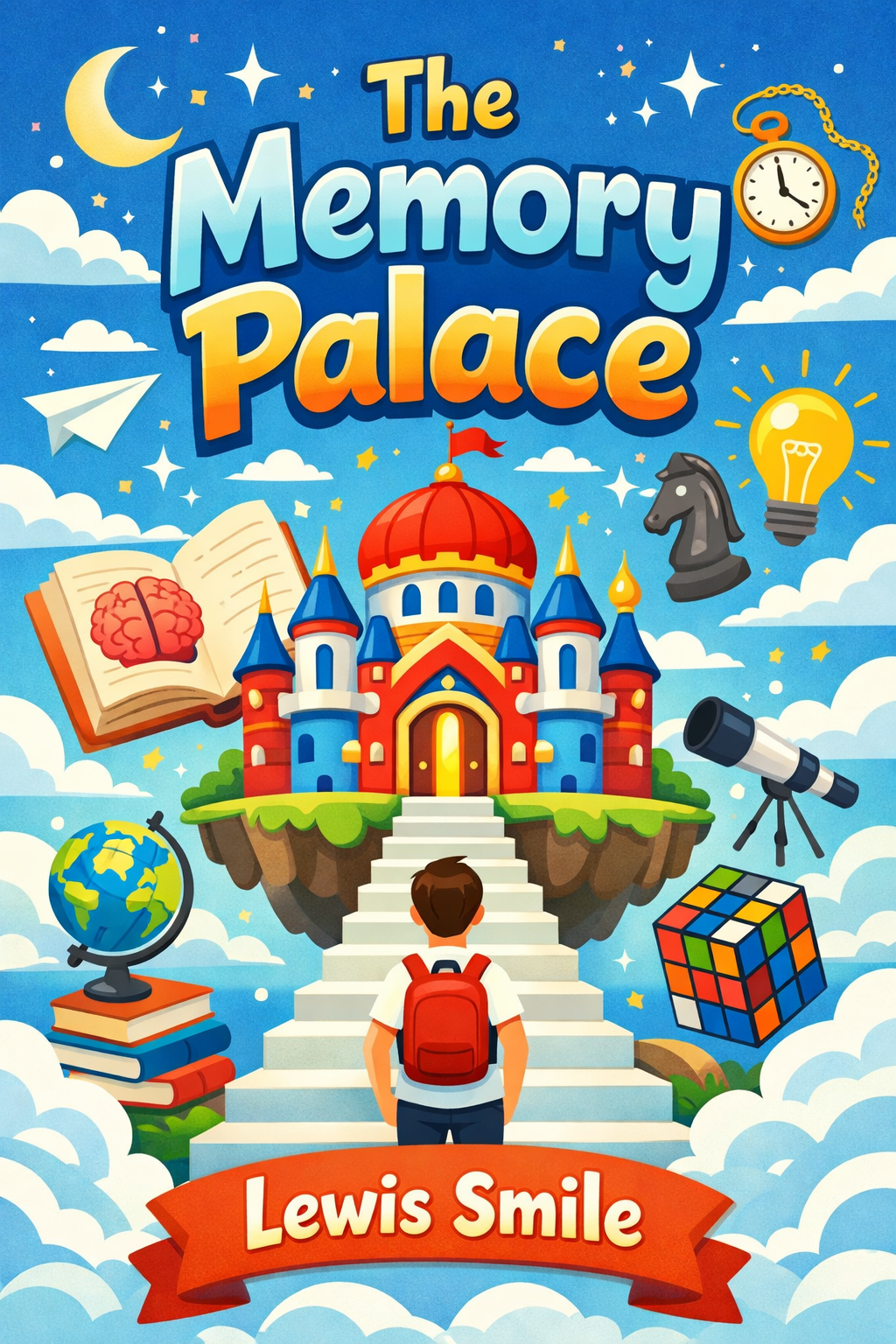
The core technique for doing this is the construction of a “memory palace.” This is not a literal palace, but any familiar physical location you can visualize in perfect detail. It could be your childhood home, your daily commute, or even the floor plan of your office. The key is intimate familiarity. You then take the information you wish to remember and transform it into bizarre, sensory-rich images or mini-stories, which you then mentally “place” at specific loci, or stations, within this palace. For instance, to remember that the Magna Carta was signed in 1215, you might imagine a former president (like Barack Obama) in your bedroom, laughing uproariously (“ha-ha”) while holding a giant quill, the numbers 1-2-1-5 glowing on the wall behind him. The absurdity and emotional engagement make the memory sticky.
To demonstrate the system’s power, the book provides a walkthrough for remembering a sequence of Shakespeare’s plays. You might start in your memory palace’s bedroom, where a tiny, tame shrew is being trained to jump through hoops (*The Taming of the Shrew*). Moving to the kitchen, you find four inebriated siblings botching their lines in a play, creating a *Comedy of Errors*. In the hallway, Julius Caesar arrives on a horse to give you a ride. Outside the theater, two teenagers share a dramatic kiss before declaring themselves *Romeo and Juliet* and collapsing. Finally, on stage, a portly Henry VIII and his wives are figure-skating, tracing perfect figure eights on the ice (*Henry VIII*). By mentally walking through this vivid, surreal narrative anchored in a known space, the information becomes unforgettable.
The ultimate message is one of profound empowerment. Our brains are not limited by hardwired capacity but by technique. By consciously engaging our powerful, innate spatial memory through the structured, imaginative exercise of building memory palaces, we can dramatically expand our ability to learn and retain information. This method transforms dry data into memorable adventures, proving that a strong memory is not about innate intelligence, but about understanding how your own mind works and learning to speak its native, visual language. With practice, this ancient art can turn anyone into a master of recall.