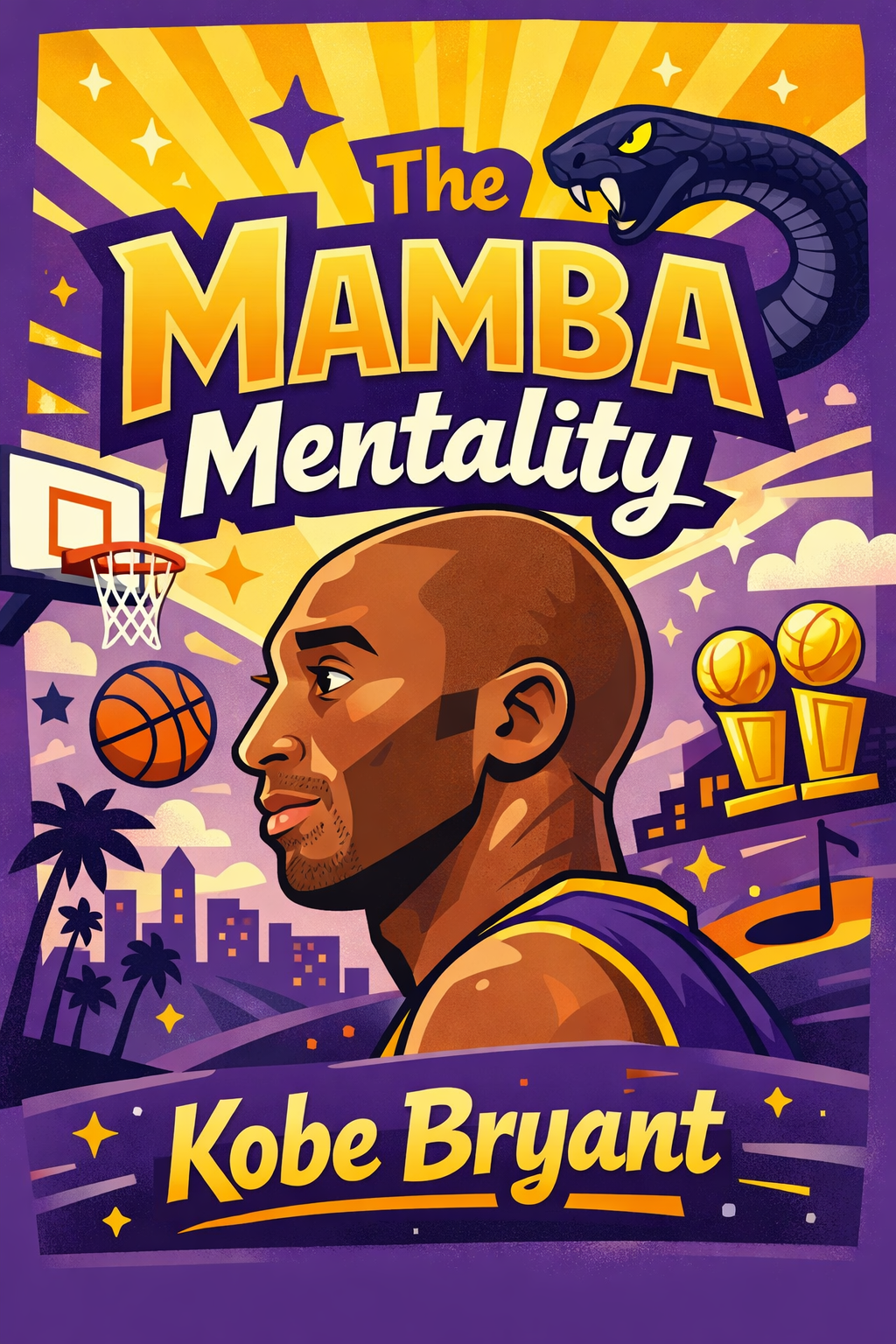
Description
Kobe Bryant’s journey from a seventeen-year-old draft pick to a Los Angeles Lakers legend is a masterclass in the pursuit of excellence. His self-proclaimed mentality is not merely a strategy for winning games but a comprehensive philosophy for life, centered on an unwavering commitment to the process. This mindset transforms the journey toward a goal into a defining way of being, where every action, thought, and moment of preparation is part of a larger tapestry of mastery. Bryant’s tragic passing did not diminish this legacy; instead, it cemented his approach as a timeless study in dedication, offering profound insights into how supreme achievement is forged.
The foundation of this philosophy is meticulous, relentless preparation. Bryant’s drive was intrinsic, fueled by a personal desire to improve that required no external motivation. This internal fire allowed him to experiment without fear of embarrassment, constantly adding new skills to his arsenal. His physical regimen was legendary, involving intense weightlifting and multiple daily training sessions, often starting before dawn. To balance his professional demands with family life, he famously sacrificed sleep, ensuring he was present for his children while never compromising his craft. His pre-game rituals were not rigid but intuitive; he listened to his body, engaging in shooting practice, meditation, stretching, or power naps as needed. Mental preparation was equally tailored, using music to evoke the precise emotional state required for competition—energizing, soothing, or serene silence. He trained his mind to be present through focused daily tasks and sought wisdom from mentors like Bill Russell and Magic Johnson, asking endless questions to absorb their knowledge, undeterred by occasional rejection.
This preparation extended to a forensic analysis of his competition. Bryant never entered a game without a deep understanding of his opponent. He studied game footage obsessively, identifying patterns and crafting specific counter-strategies. Against Allen Iverson, he learned to disrupt his timing during key attack windows. Facing Carmelo Anthony, he mastered subtle physical positioning to anticipate and steal passes. When guarding Chris Paul, he leveraged his physical advantages to cut off preferred pathways. Beyond studying others, he turned the same critical eye on himself, analyzing his own game to eliminate weaknesses and become indefensible. He also cultivated a strategic relationship with referees, building mutual respect by understanding their challenging role. By studying their handbook, he learned the limitations of their sightlines, knowledge he used to his tactical advantage within the unobserved “dead zones” on the court.
The true test of this mentality came in the face of adversity and injury. Bryant’s career was a testament to persistence and adaptation. Playing through a severe ankle sprain in the 2000 NBA Finals, he adapted his game to help secure a championship, later rehabilitating the injury through unconventional means like tap dancing to improve strength and footwork. He approached injuries not as catastrophes but as problems to be solved, assessing whether pain was manageable or truly debilitating. The most severe challenge came with a torn Achilles tendon in 2013. Undergoing surgery immediately, he embraced the long, arduous recovery with determination, viewing it as a mountain he was compelled to climb. Earlier, a finger injury forced him to reinvent his shooting technique, practicing thousands of shots daily to master a new release. These setbacks never broke his spirit; they were merely obstacles that demanded innovative solutions and stylistic evolution.
Ultimately, this mindset shaped his leadership. Bryant was an intense, demanding leader who pushed teammates out of their comfort zones to provoke introspection and growth. He tailored his approach for each individual, studying their game, history, aspirations, and even insecurities to unlock their best performance. Given command of the team’s offense early in his career, he faced skepticism from older teammates but earned their respect through the clarity of his vision and work ethic. Later, his tough mentorship of younger players like Jordan Clarkson yielded clear growth, a testament to the efficacy of his methods. As a leader, he also relished the direct challenge of facing rival leaders like Kevin Garnett, never backing down from these personal battles. His entire career, from a teenage rookie to a veteran champion, was dedicated to restoring the Lakers to glory, proving that leadership is about embodying the standard you wish to see.
Bryant’s philosophy is a holistic system where preparation, knowledge, resilience, and leadership are inextricably linked. It demonstrates that greatness is not a singular moment of triumph but the cumulative result of daily choices, a focused mind, and an unwavering commitment to the journey itself. His legacy is a powerful blueprint for anyone seeking to excel, emphasizing that the process, embraced fully, becomes the most rewarding part of any achievement.