Description
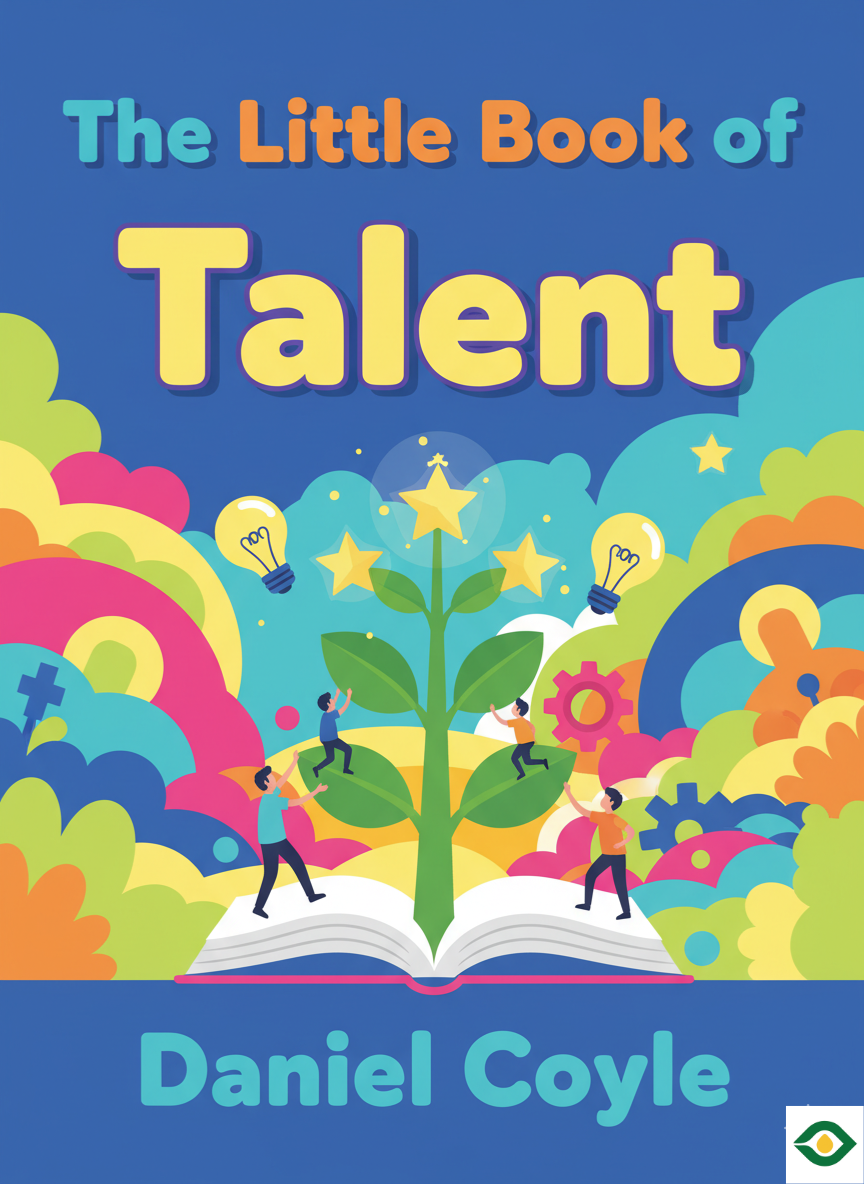
Many of us look at highly talented people—whether they are amazing athletes, brilliant musicians, or innovative thinkers—and assume they were simply born with a special gift. We believe that talent is something you either have or you don’t. This book presents a different, more empowering idea: talent is not born, but grown. It is the result of specific, repeatable actions and a particular way of thinking. With the right approach, anyone can develop exceptional abilities in any field they choose. The journey to high skill is a path that can be learned and followed.
The first step on this path is to find inspiration and create a clear mental picture of the skill you want to acquire. Look for role models who are the best at what they do. When you see someone you can identify with achieving greatness, it sparks a powerful belief that you can do it, too. This motivation is the fuel for your journey. Once you have your role models, don’t just admire them—study them. Watch them over and over, paying close attention to every small detail of how they perform. By flooding your brain with these images of perfect execution, you create a mental roadmap that your own body and mind can follow when you begin to practice.
Every talent is built upon a foundation of core components, often called hard skills. These are the fundamental, non-negotiable actions that must be performed with precision every single time. Think of a violinist needing to place their finger in the exact right spot to produce a perfect note. This is a hard skill. The emotional interpretation of the music is a soft skill, which allows for more variety. Without a solid foundation of hard skills, the more creative soft skills have nothing to stand on. Therefore, when you begin learning, you must focus on mastering these basics. Practice slowly and carefully, making sure you are doing it correctly from the very start. Each repetition carves a pathway in your brain, and it is much easier to create the right path from the beginning than to try and fix a wrong one later. Break the skill down into the smallest possible pieces and perfect each one before moving on to the next.
The old saying “practice makes perfect” is only half true. Simply repeating an action over and over without focus is not effective. To truly improve, you must practice in the right way. This means finding your “sweet spot”—a state of intense focus where you are operating at the very edge of your abilities. In this zone, the task is difficult but not impossible. You should be succeeding some of the time, but also making mistakes. These mistakes are not failures; they are the most important source of information you have. When you make a mistake, stop and analyze it. Figure out what went wrong and how to correct it. Likewise, when you do something right, pause for a moment to feel it and lock it into your memory. This kind of deep, engaged practice is what leads to rapid growth.
Developing a talent requires more than just physical effort; it also requires a strong mental game. Patience is essential. Scientific studies have shown that it takes at least eight weeks of consistent practice for new skills to create permanent changes in the brain. You cannot expect to become an expert overnight, so you must be willing to put in the time without getting discouraged. You can also use the power of your mind to help you along the way. Use positive framing by focusing on what you want to do, rather than what you want to avoid. Instead of thinking, “Don’t miss the shot,” think, “Make the shot.” Furthermore, use visualization. Before you go to sleep at night, play a mental movie of yourself performing the skill flawlessly. This helps program your mind for success.
As you get better, you may find yourself hitting a plateau where your progress stalls. This often happens because the skill has become so automatic that your brain is no longer actively engaged in learning. To break through this, you need to change things up. Make your practice harder, faster, or slower. Change the environment or the equipment you use. By introducing new challenges, you force your brain to switch off autopilot and start learning again.
Finally, one of the most powerful ways to deepen your own skill is to teach it to someone else. When you explain a concept to another person, you are forced to understand it on a much deeper level. You begin to see the skill from a new perspective and identify its core principles more clearly. Helping others overcome their struggles will solidify your own mastery. The idea that “those who can’t do, teach” is wrong. A more accurate saying would be, “Those who teach, do even better.” By helping others grow, you will accelerate your own journey toward becoming a truly talented individual.